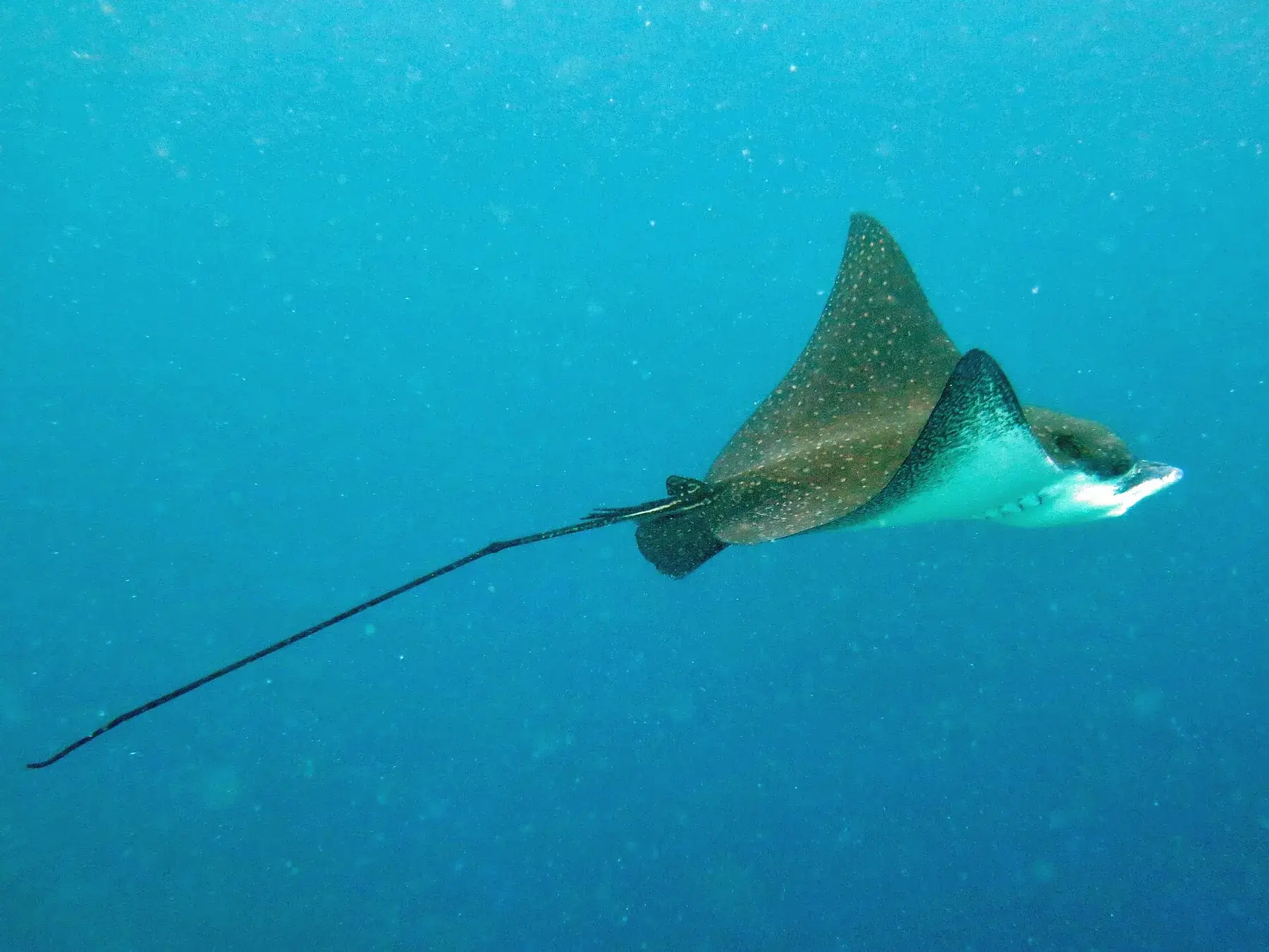
An elegant, white-spotted ray that seems to "fly" through the water on long pointed wings, gliding solo or in loose flocks over sandy reef flats. Its distinctive duck-bill snout is a tool for rooting molluscs out of the seabed. The constellation of spots on its dark back makes it one of the most beautiful rays in Maldivian shallows.
- Size
- ~3 m disc width; ~5 m incl. tail
- Weight
- Over ~200 kg in large specimens (disc to ~3 m).
- Diet
- Hard-shelled molluscs, crustaceans and small fish, dug from the sand.
- Lifespan
- Long-lived; likely 20+ years.
- Depth
- Mostly under 60 m coastal; down to ~90 m.
- Reproduction
- Live-bearing; low fecundity, ~1–4 pups, possibly 2–3 years between litters.
- Snorkel or dive
- Snorkel + dive
- Best season
- Year-round
- Conservation
- Endangered
How to recognise it
Dark back covered in white spots and rings; duck-like snout; long whip tail.
Behaviour in the wild
Cruises mid-water and over sand in current, often in small groups; digs molluscs from the sand.
Where to see it in the Maldives
Channels, sandy lagoon edges and thilas atoll-wide; flies along channel walls in current.
Visual field notes
See spotted eagle ray from more than one angle.
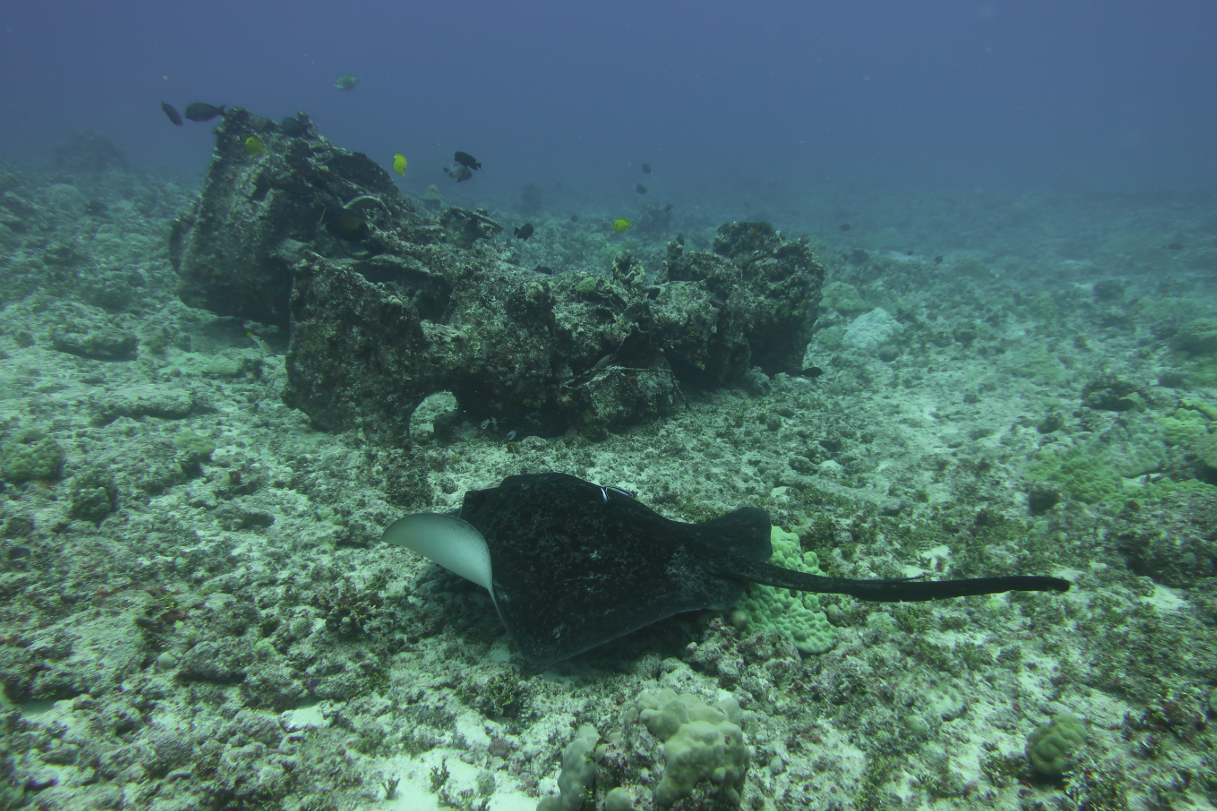
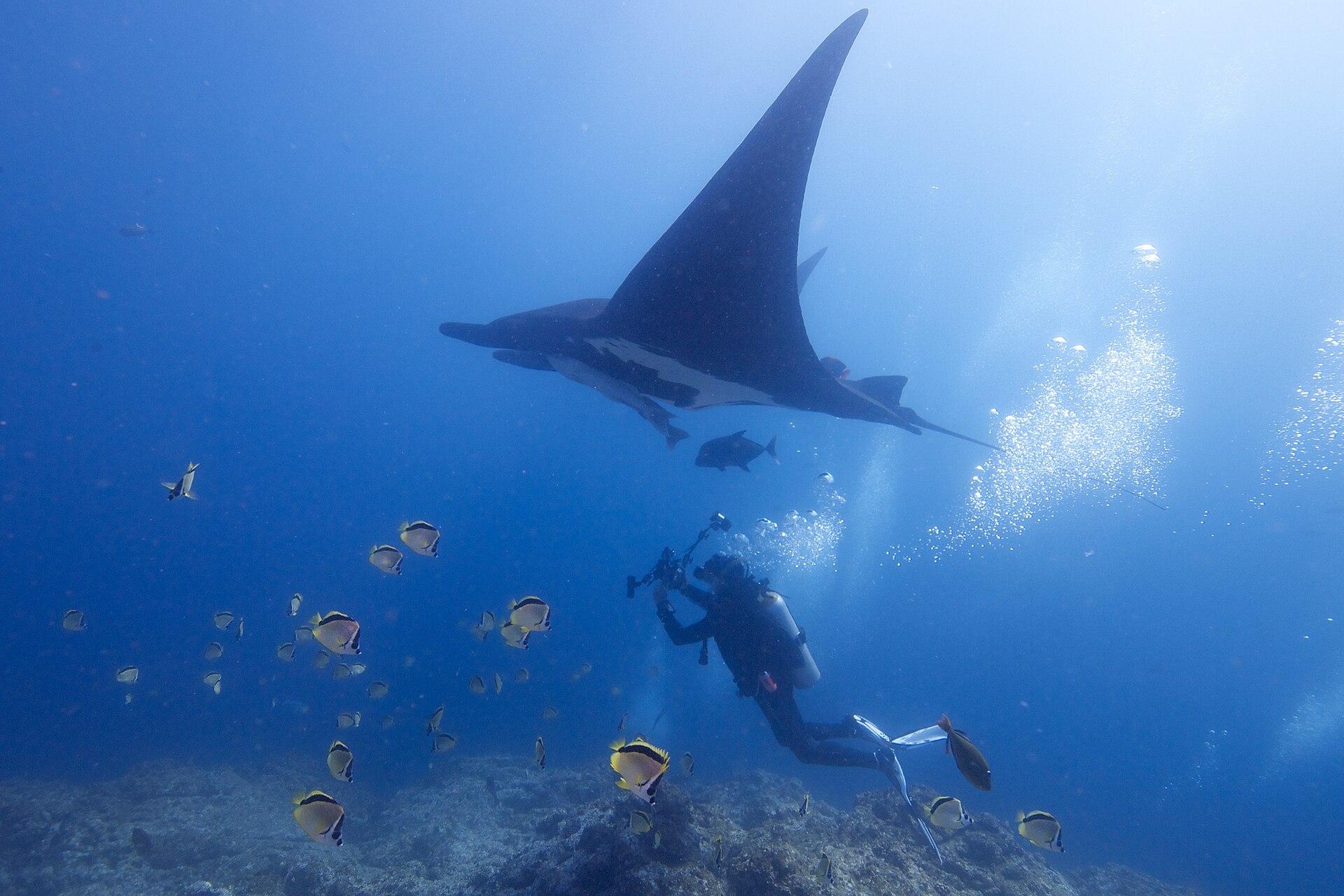
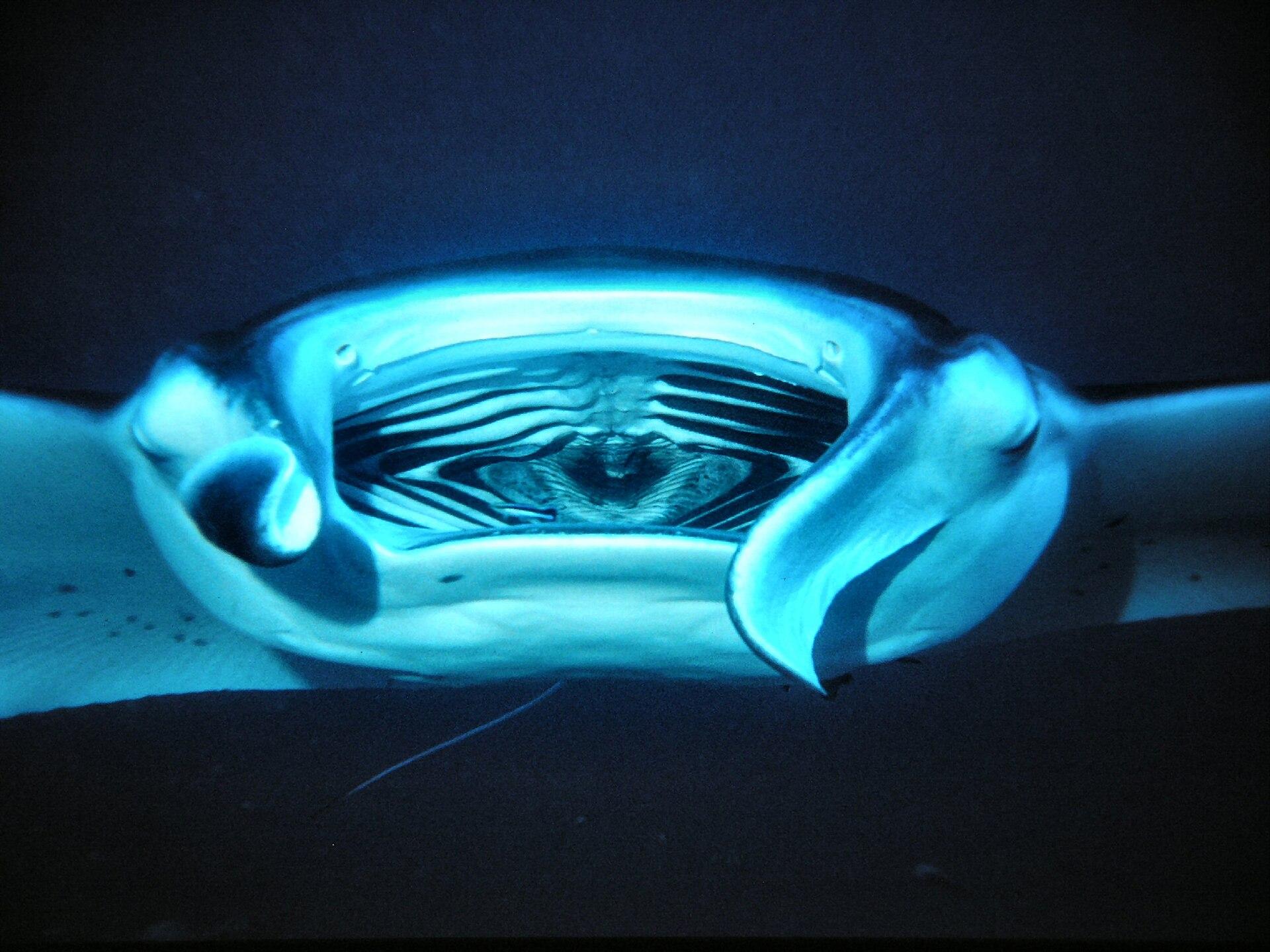
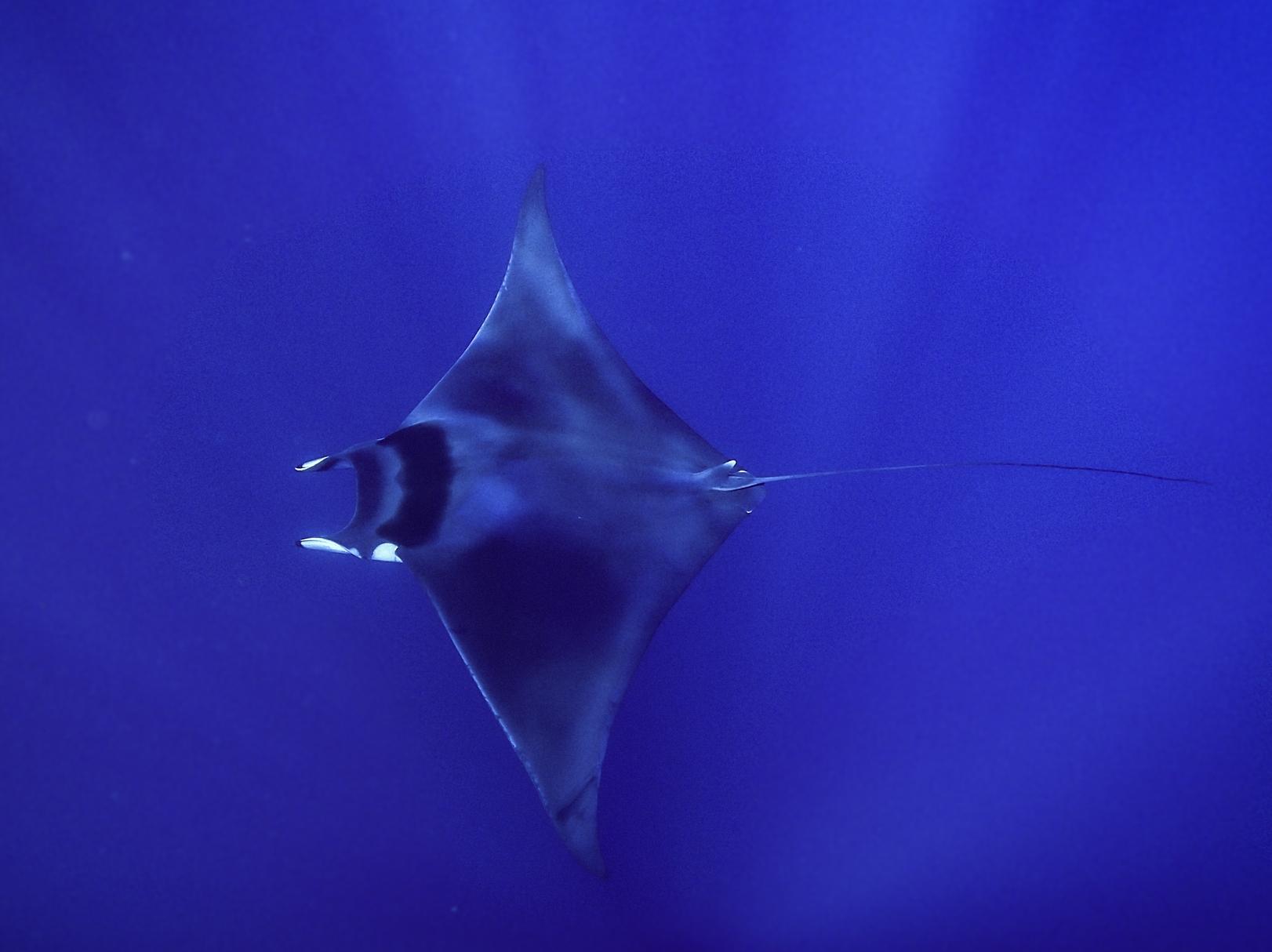
3 human-reviewed photographs chosen for identity, habitat and behaviour.
01 · Field portrait · Maldives photograph
PhotoAhmed Abdul RahmanCC BY-SA 4.0web-adapted
02 · Habitat · Maldives photograph
PhotoLaika ac from UKCC BY-SA 2.0web-adapted
03 · Behaviour & scale · Maldives photograph
PhotoLaika ac from UKCC BY-SA 2.0web-adapted
Recorded locations
Build a trip from real sighting records.
Atolls
Show 8 more atollsHide extra atolls
Dive and snorkel sites
Explore 22 more recorded sitesHide extra sites
Conservation context
Endangered (recently uplisted) — fisheries and a very low birth rate.
IUCN · Endangered
Watch responsibly
Keep distance and don't chase (they tire and flee); approach slowly from the side so they keep feeding.
Field notes
Can leap clear of the water — sometimes seen breaching.
Plate-like tooth bands work like a nutcracker to crush clam and whelk shells.
Collective noun · a fever of rays
Profile references
References are shown transparently; profile copy may also include editorial synthesis. Seasons and sightings vary with wild conditions.