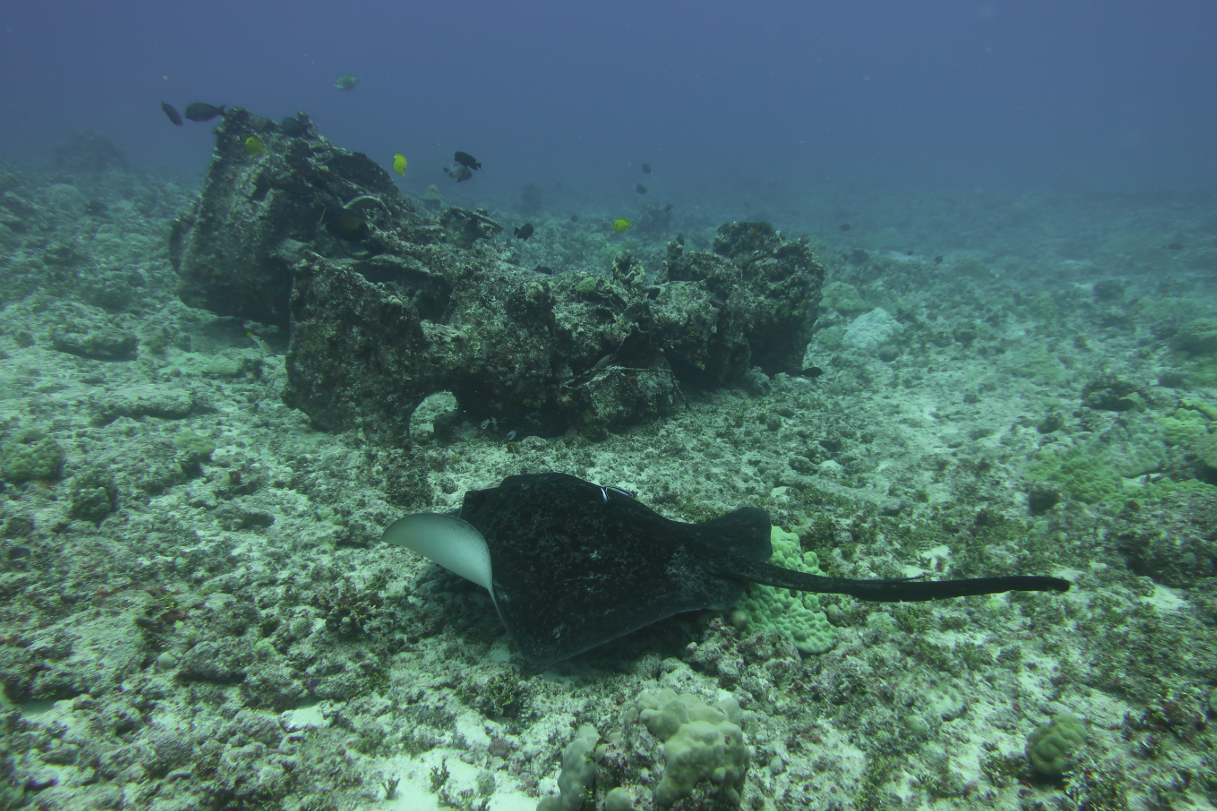
A massive, disc-shaped stingray cloaked in marbled grey-and-black mottling — among the largest stingrays on Maldivian reefs. Often seen resting on sand under coral ledges or tended at cleaning stations, it carries long venomous tail spines for defence. Discs up to ~1.8 m across make it an imposing sight.
- Size
- ~1.8 m disc width
- Weight
- Up to ~150 kg.
- Diet
- Bottom-dwelling molluscs, crustaceans and bony fishes.
- Lifespan
- Not well documented; likely well over a decade.
- Depth
- Mainly inshore ~20–60 m around reefs and sand (recorded to ~500 m).
- Reproduction
- Live-bearing; the mother nourishes embryos with protein-rich uterine "milk"; up to ~7 pups.
- Snorkel or dive
- Dive
- Best season
- Year-round
- Conservation
- Vulnerable
How to recognise it
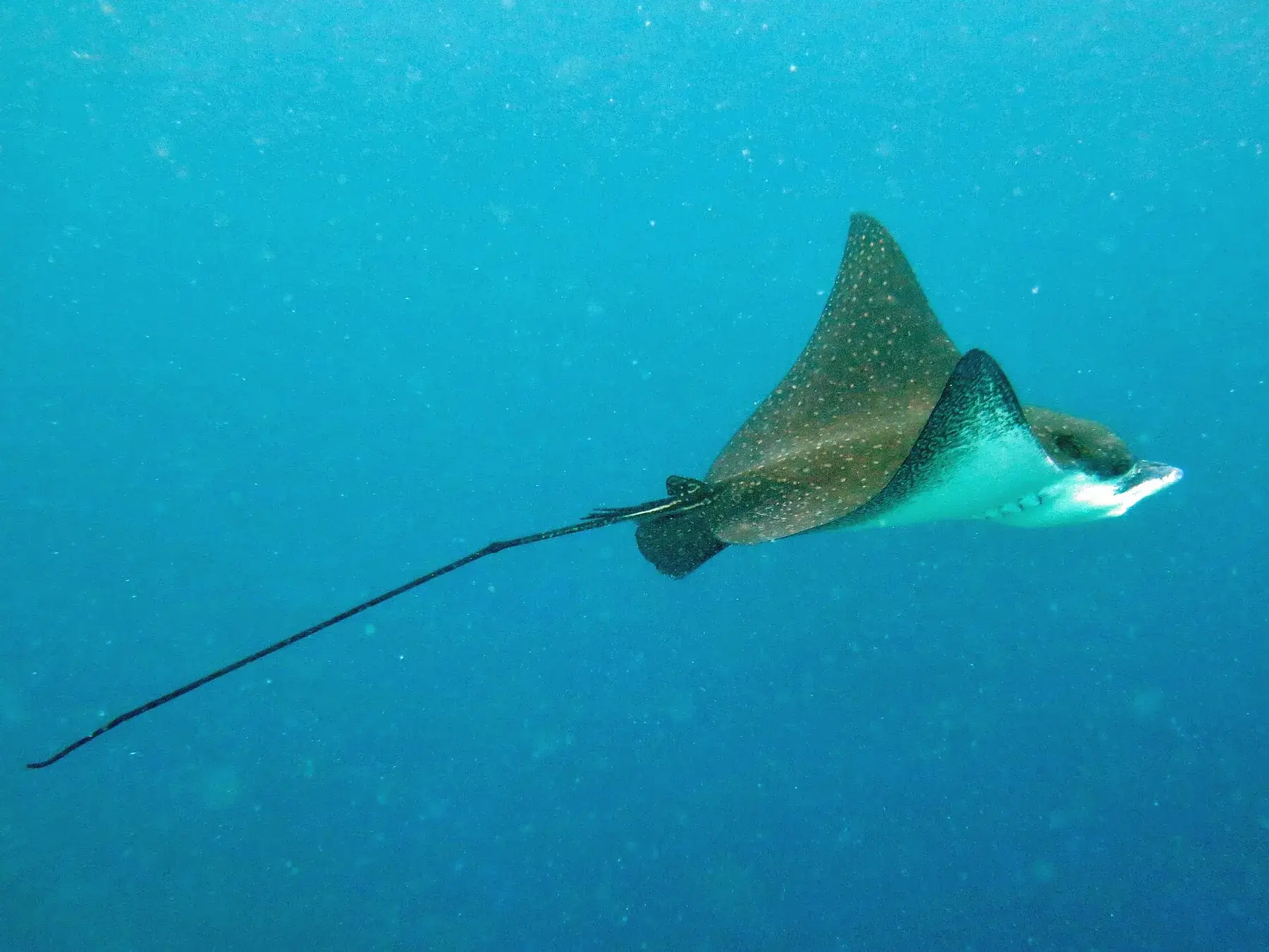
Large rounded disc with grey marbled/blotched mottling; short deep tail with a venomous spine.
Behaviour in the wild
Bottom-dwelling; rests on sand and under ledges by day; forages for crustaceans and molluscs.
Where to see it in the Maldives
Sandy bottoms beside thilas and channels atoll-wide; gathers on the Halaveli Wreck (N. Ari).
Visual field notes
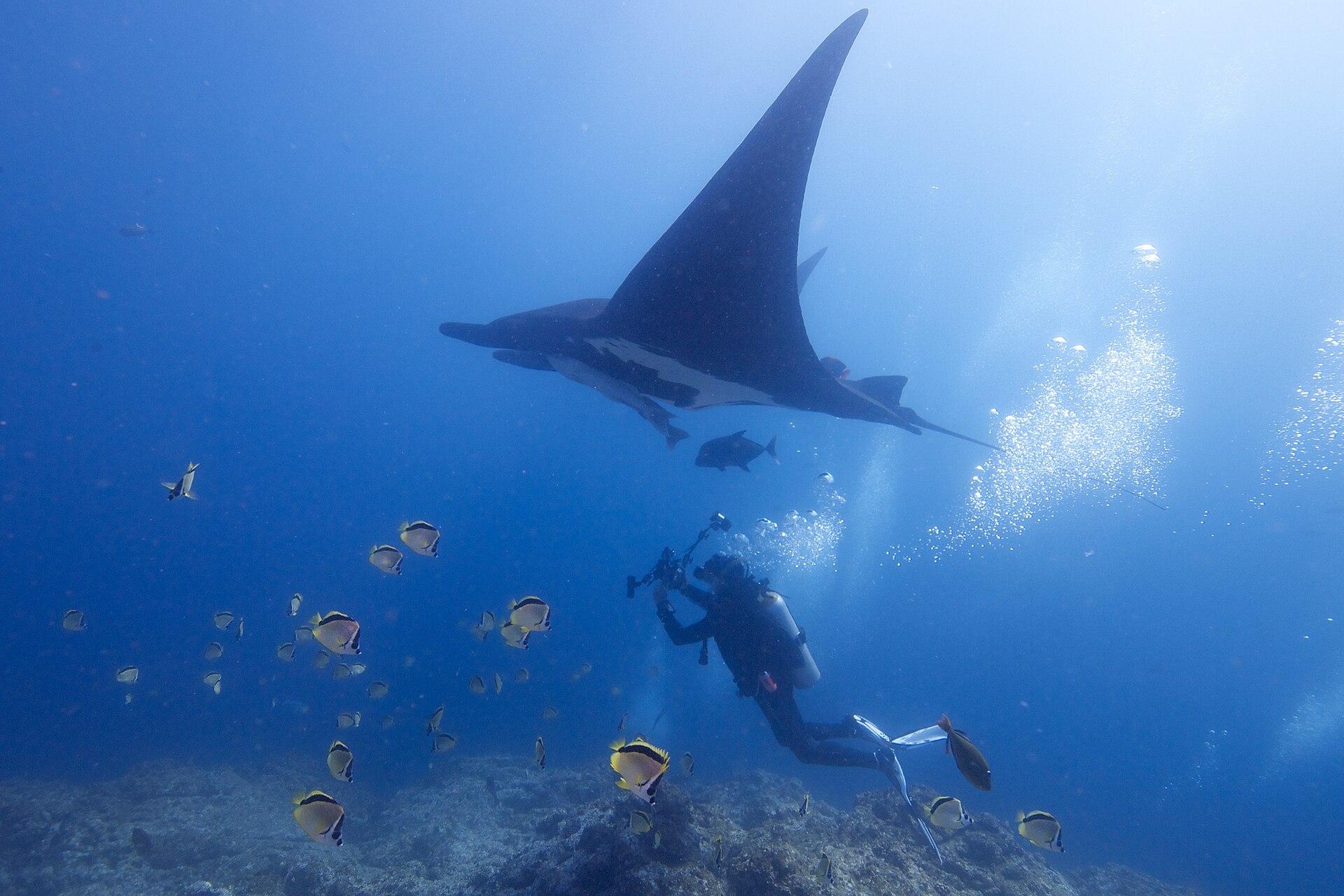
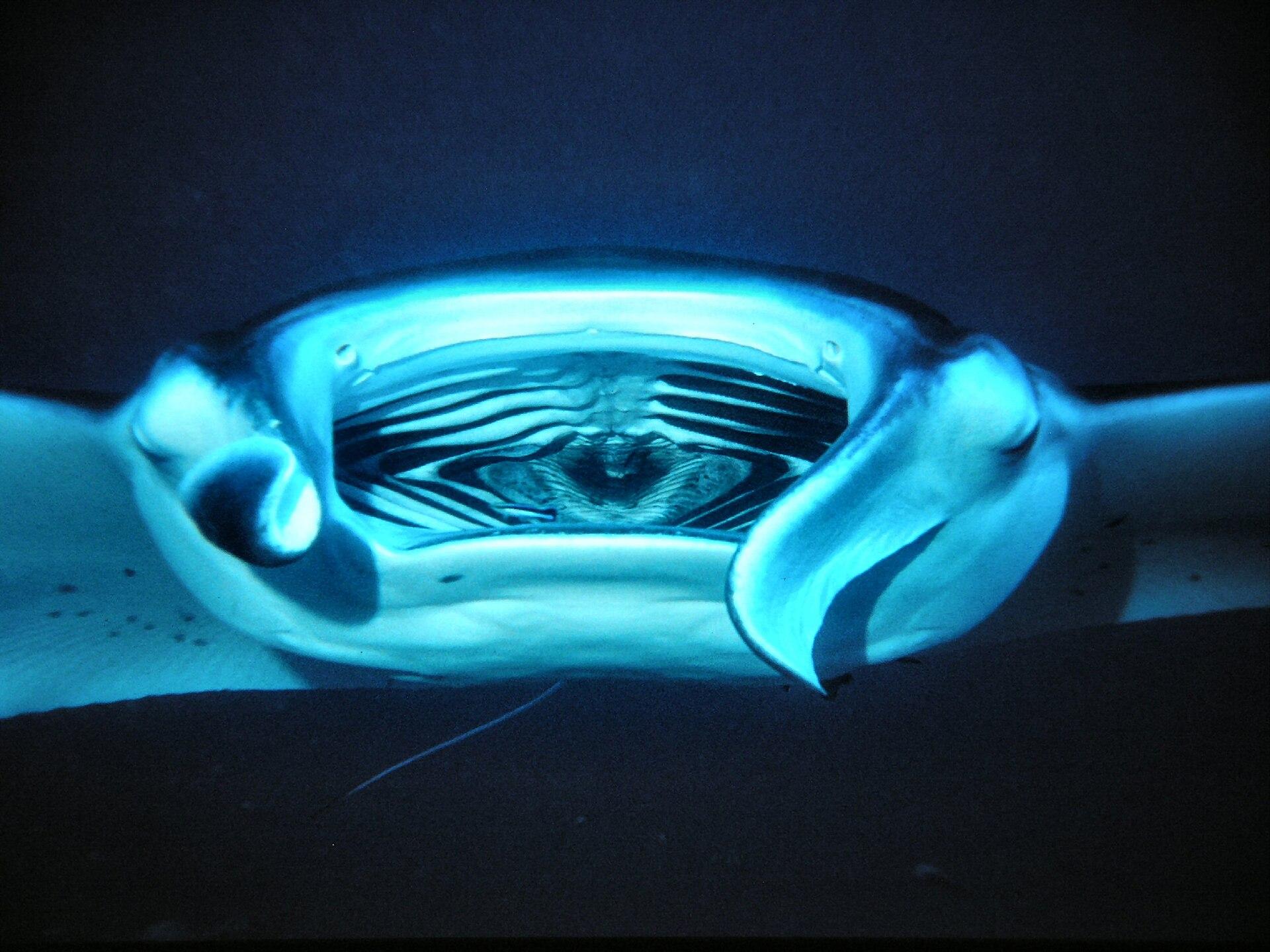
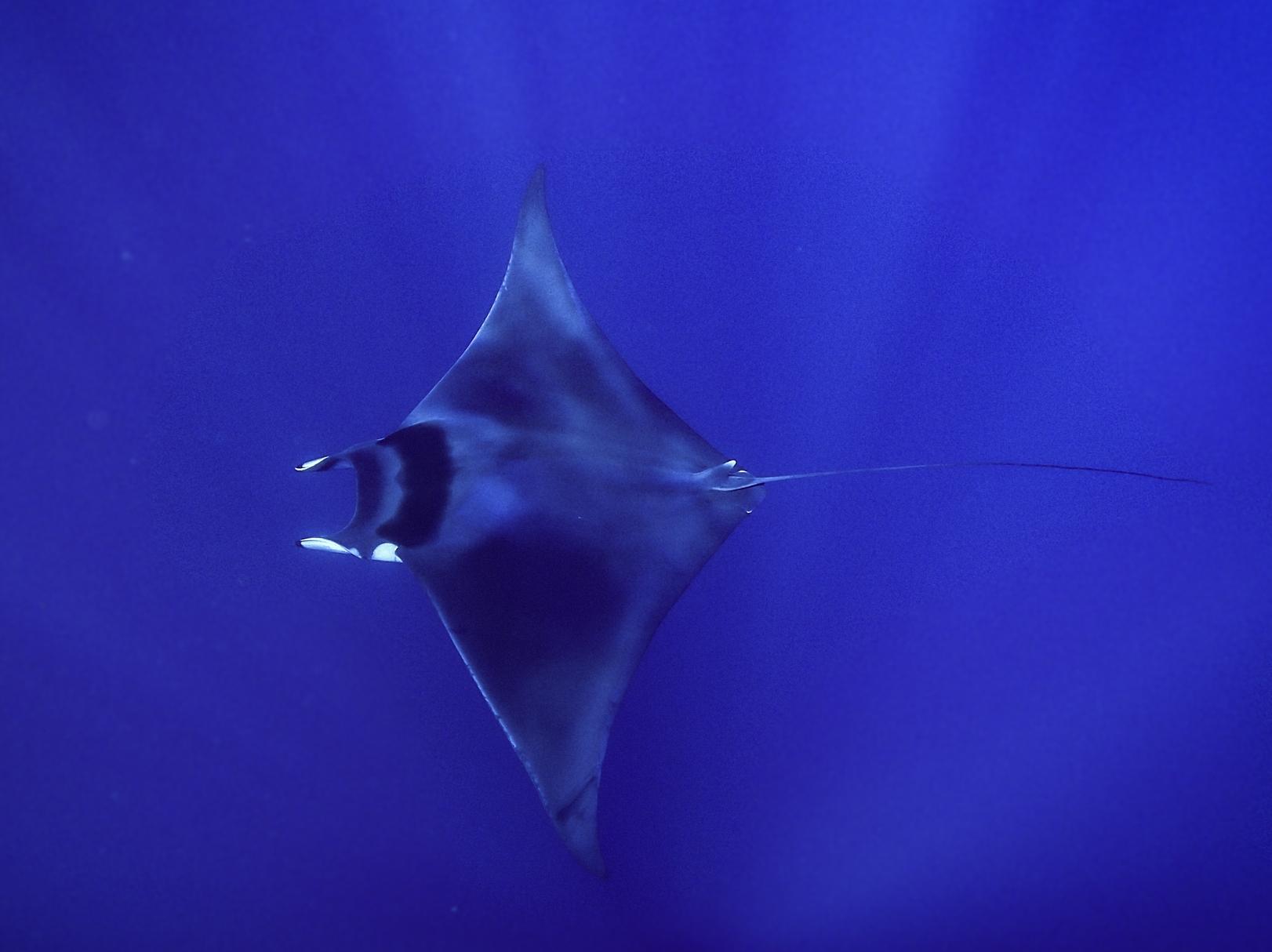
See blotched fantail ray from more than one angle.
3 human-reviewed photographs chosen for identity, habitat and behaviour.
01 · Field portrait · Species reference
PhotoNOAA (uncredited)Public domainweb-adapted
02 · Identification · Maldives photograph
Photono rights reservedCC0web-adapted
03 · Identification · Maldives photograph
Photono rights reservedCC0web-adapted
Recorded locations
Build a trip from real sighting records.
Conservation context
Vulnerable — fisheries and habitat degradation; slow to reproduce.
IUCN · Vulnerable
Watch responsibly
Never approach the tail or stand over it; keep clear of resting animals (the spine is venomous), no touching.
Field notes
One of the largest stingrays on Maldivian reefs; each marbled pattern looks unique.
After live birth, embryos are fed on "histotroph" (uterine milk) rather than via a placenta.
Collective noun · a fever of rays
Profile references
References are shown transparently; profile copy may also include editorial synthesis. Seasons and sightings vary with wild conditions.