
Thirty-two moments that shaped these islands.
Scroll down to travel through time. Each entry marks a moment when the course of the Maldives bent — from the first humans to step ashore, to the legendary explorer who served as its judge, to the guerrilla war that freed it, to the underwater cabinet meeting that told the world what rising seas really mean.
The night the demon fled
The sea-demon Rannamaari, a foreign scholar's vigil in the shrine, and the king who turned a nation to Islam.
Enter the story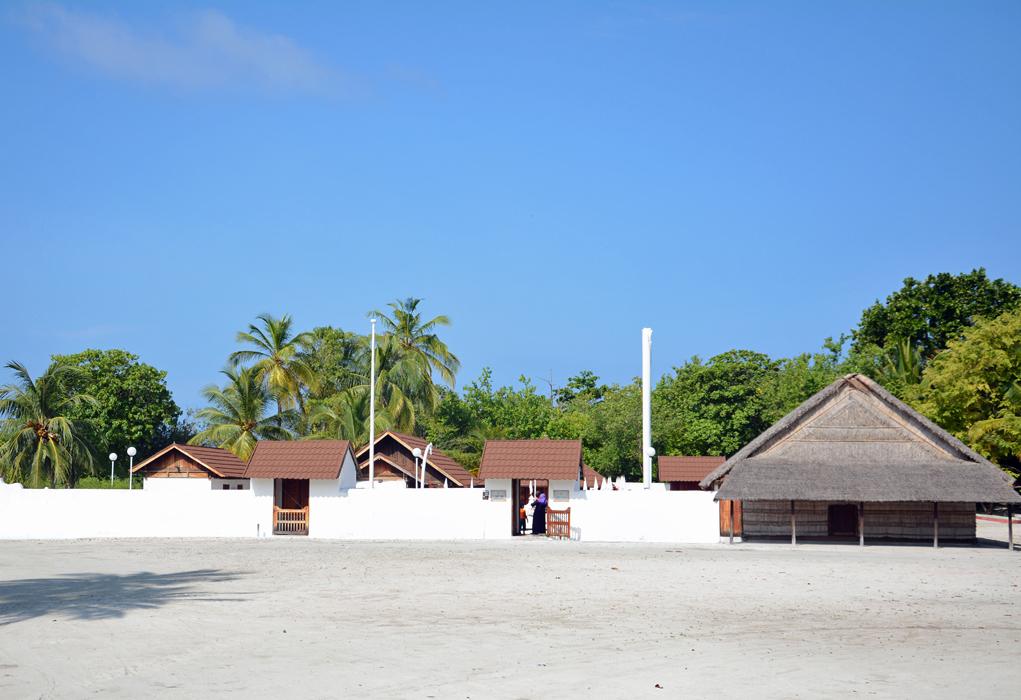
The night that ended an empire
Three brothers from Utheemu, a small ship called Kalhuoffummi, and the raid that ended fifteen years of Portuguese rule.
Enter the storyThree ways to wander the record.
 +18
+18The people who shaped the islands
A shipwrecked Breton, three sisters who ruled in succession, a president who held cabinet six metres underwater. Portraits, lifespans and bios of everyone who bent the story.

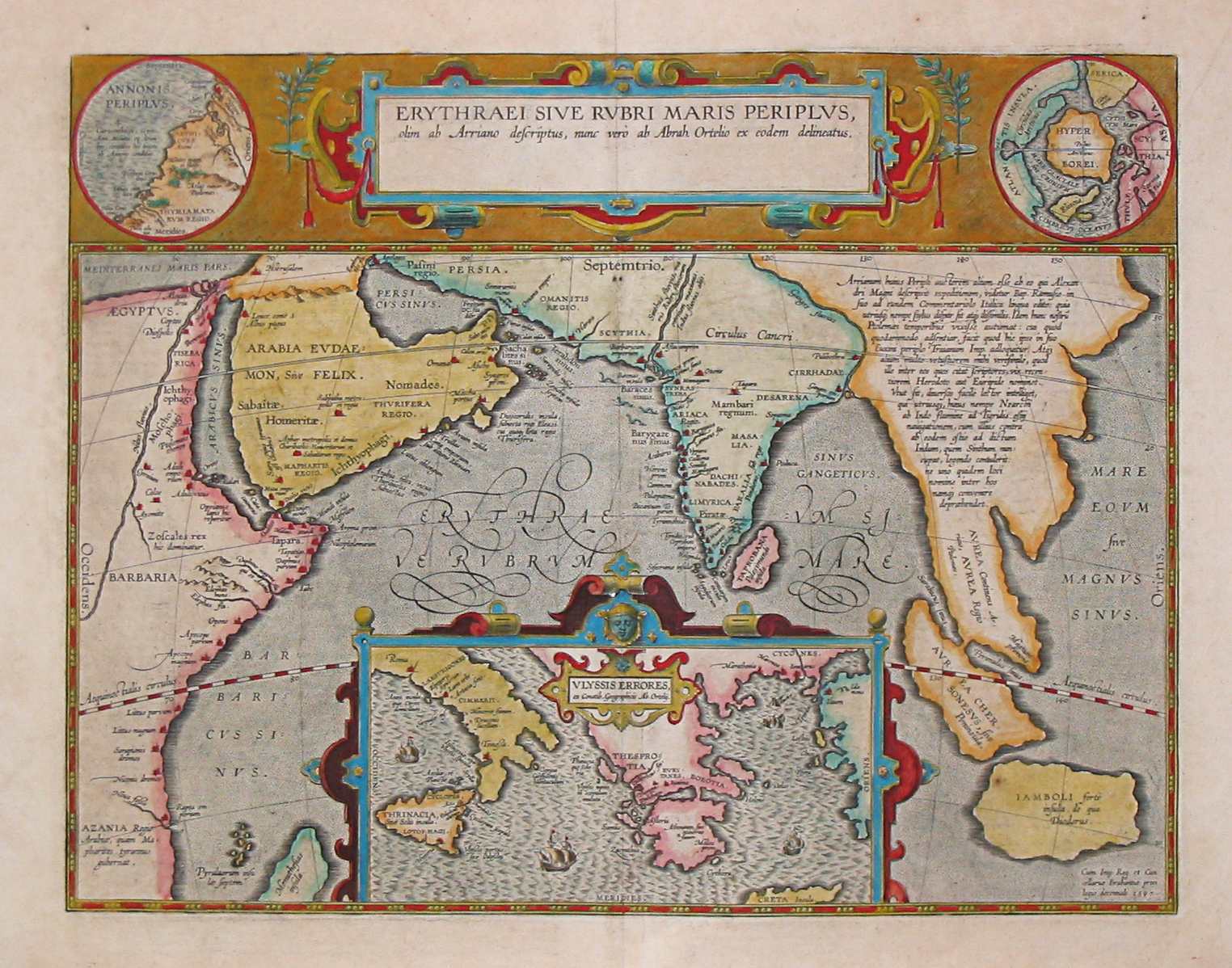
Maps, coins, manuscripts & a queen’s throne
An open-access museum wall — every artifact Public Domain or Creative Commons, mirrored with full credit. Filter by chapter, or follow any image back to its moment.
The words the islands are made of
Atoll, dhoni, cowrie, Loamaafaanu — a plain-language guide to the Dhivehi, Sanskrit and Arabic terms behind the timeline, each with pronunciation and where it came from.
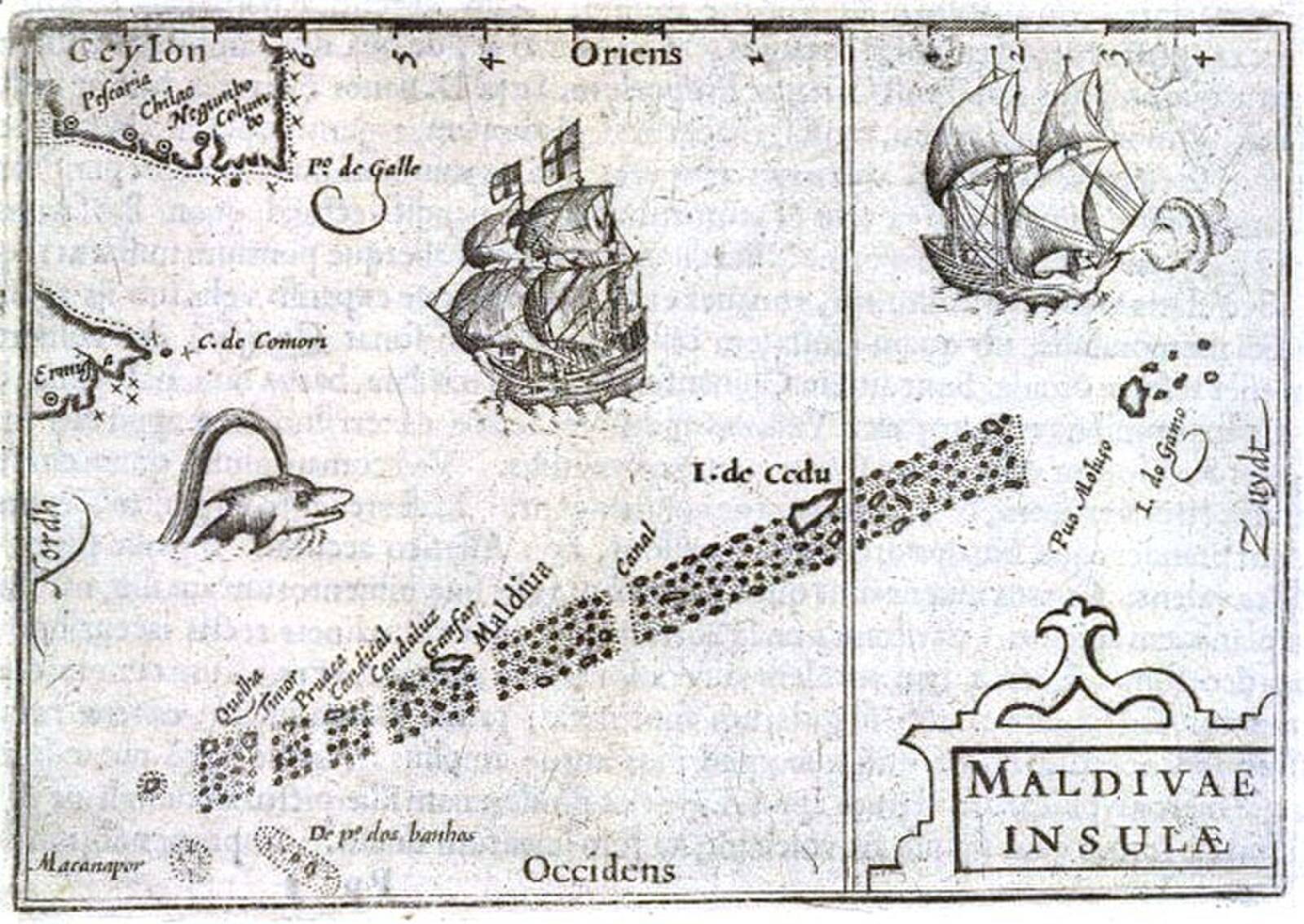
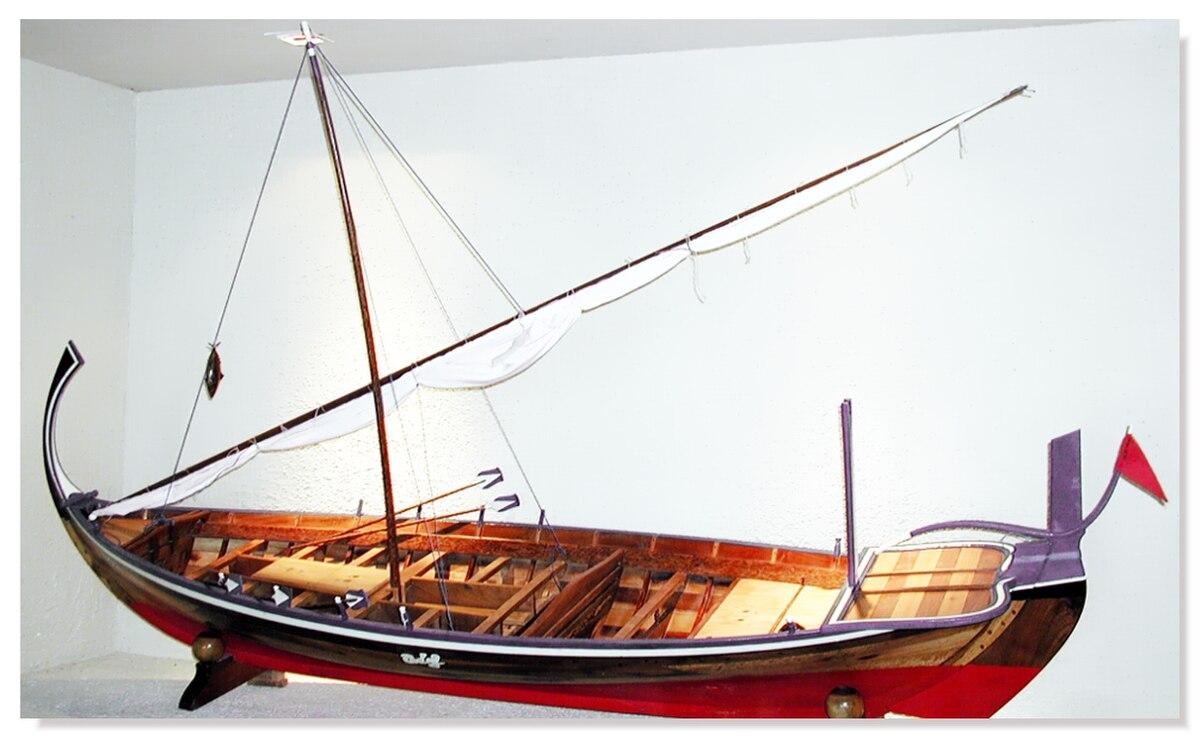
The same upturned prow and sewn-plank hull the Maldives call the mas dhoni — drawn by James Hornell among the bonito-fishers of Minicoy, where the Laccadive and Maldive seas share one boat-building tradition.
The dhoni
The hull that carried this whole history — sewn from coconut planks without a single nail, its prow swept upward into the curl that still marks a Maldivian boat. From the bonito-fishers' mas dhonito the trading vessels that ran to Bengal and beyond, the dhoni is the islands' oldest and most enduring invention.
Chapter 01
Origins.
1500 BCE — 150 CE
First seafarers, the world's earliest global currency, and the ancient world's first glimpses of the islands.
Background · Petrus Bertius, 1598
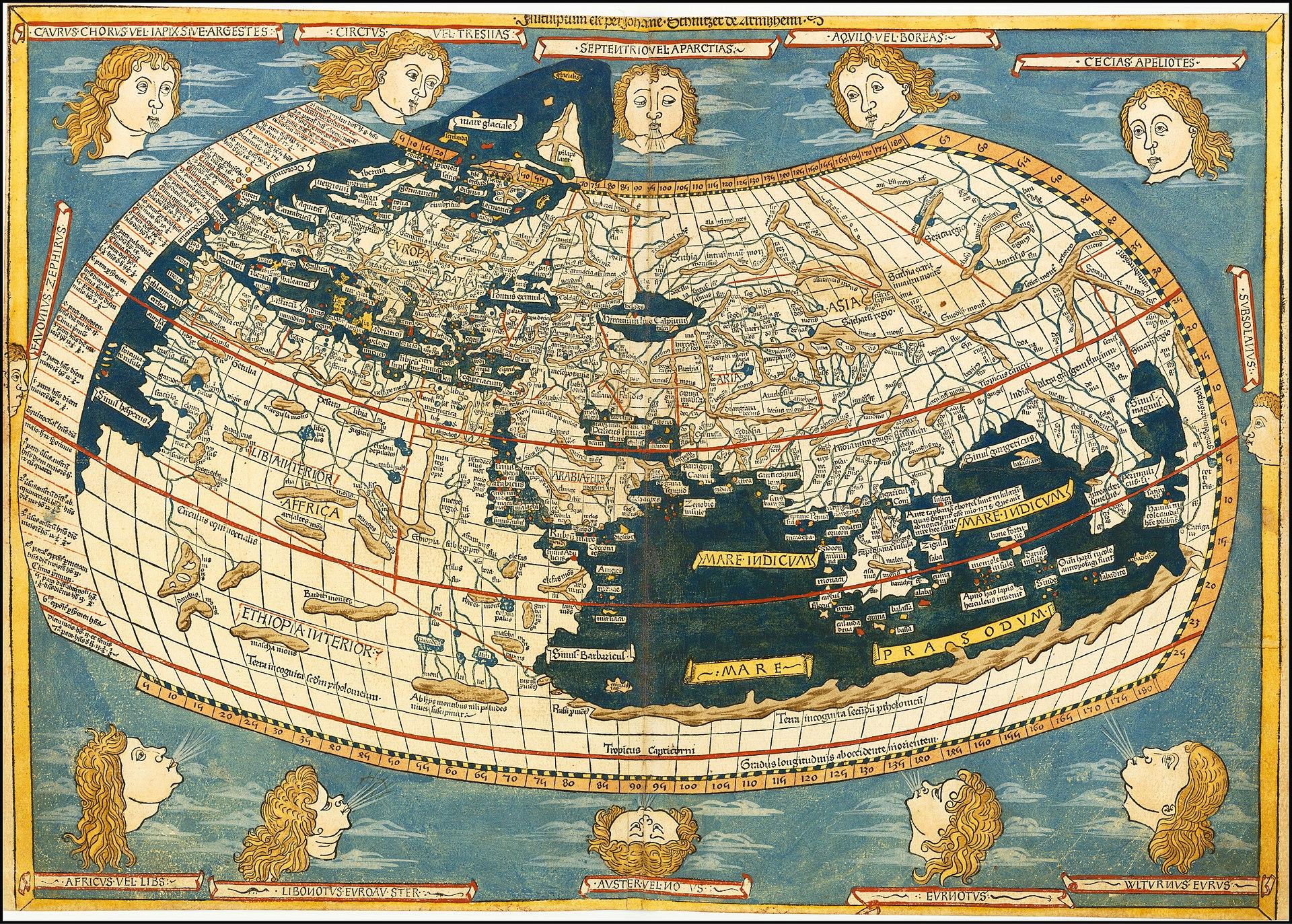
Ptolemy, Cosmographia (Ulm, 1482) · Wikimedia Commons · Public domain
Where this history
still stands.
Sites your clients can actually walk through — the physical remains of this chapter, still standing in the Maldives today.
Kuruhinna Tharaagandu
Kaashidhoo · Kaafu Atoll
The Maldives' largest excavated archaeological site, with ruins of a monastic complex believed to overlay even earlier settlement layers — the clearest window we have on the islands before Islam.
National Museum
Malé · Sultan Park
Houses the country's oldest surviving artefacts — coral-stone sculptures, cowrie shells and trade-era beads that hint at the archipelago's place in ancient Indian Ocean commerce.
Isdhoo Island
Laamu Atoll
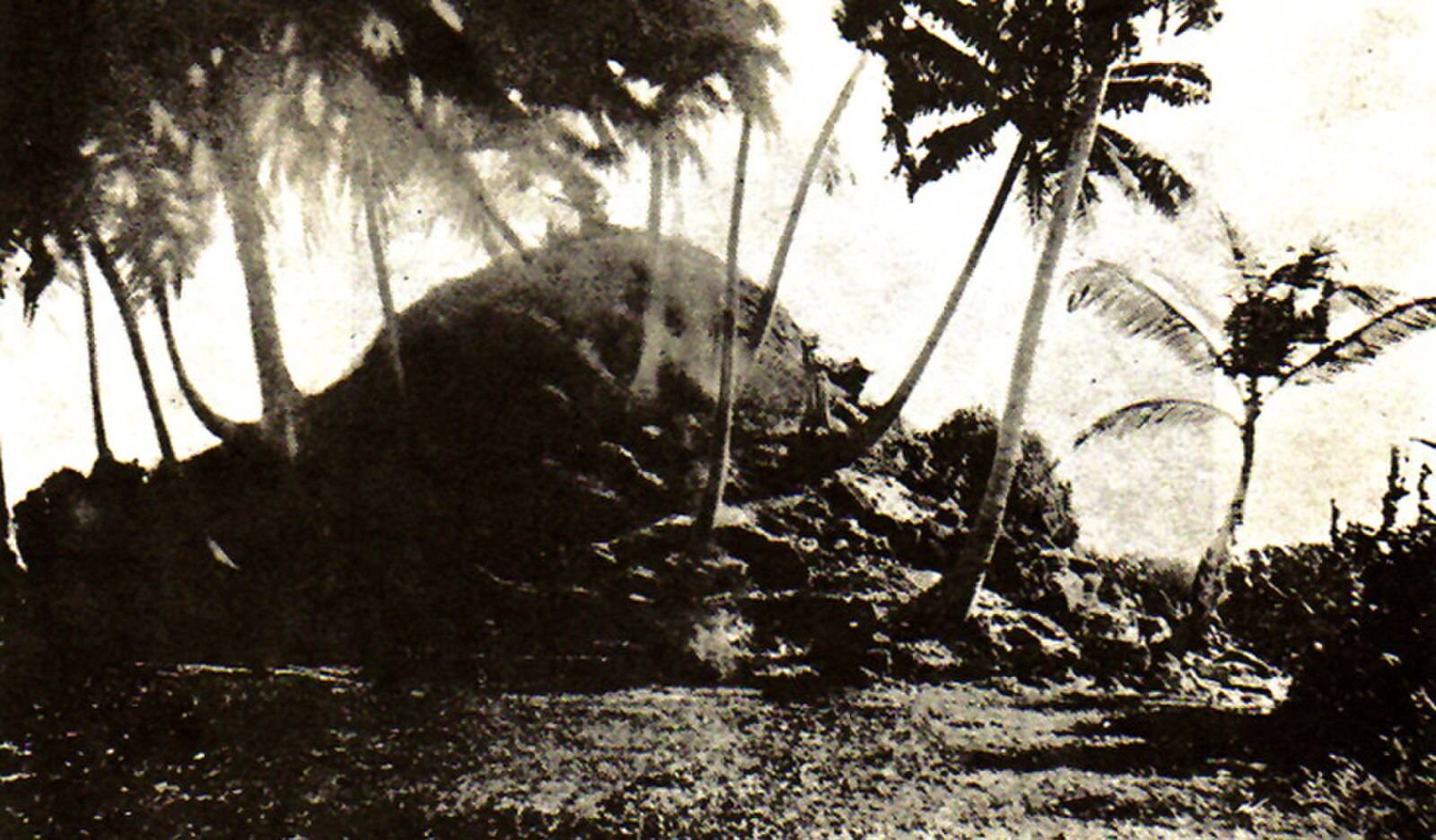
Home to the Isdhoo Loamaafaanu copper-plate grants and a large earthen mound ('havitta') believed to sit atop pre-Islamic foundations — one of the oldest continuously inhabited islands in the country.
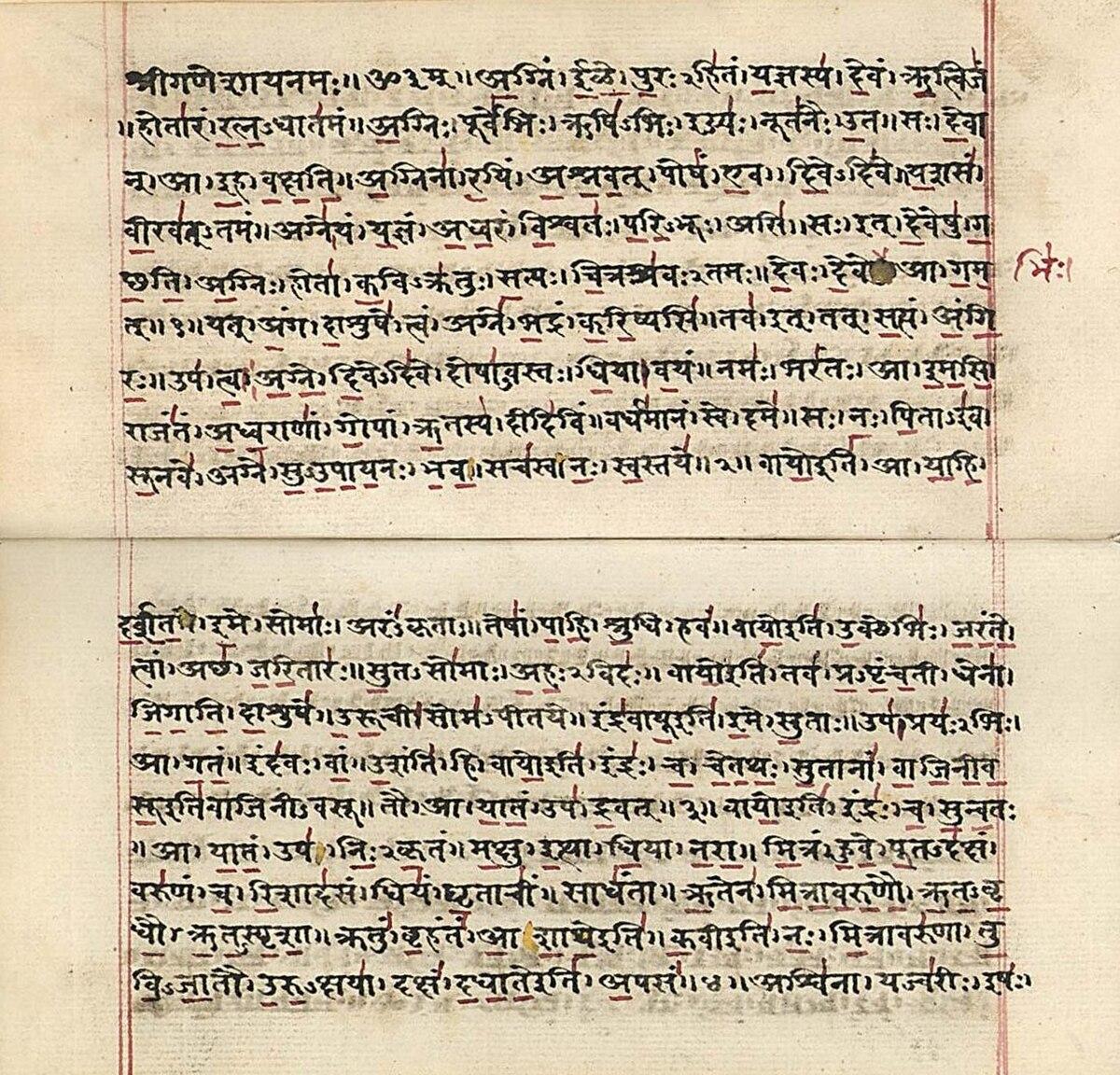
The Garland of Islands.
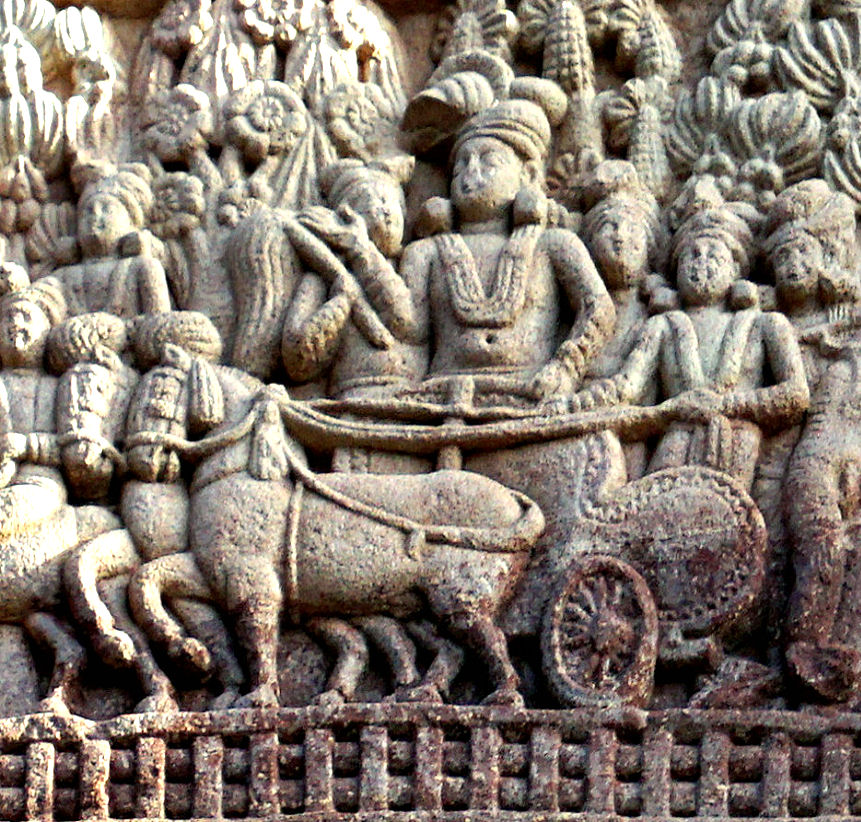
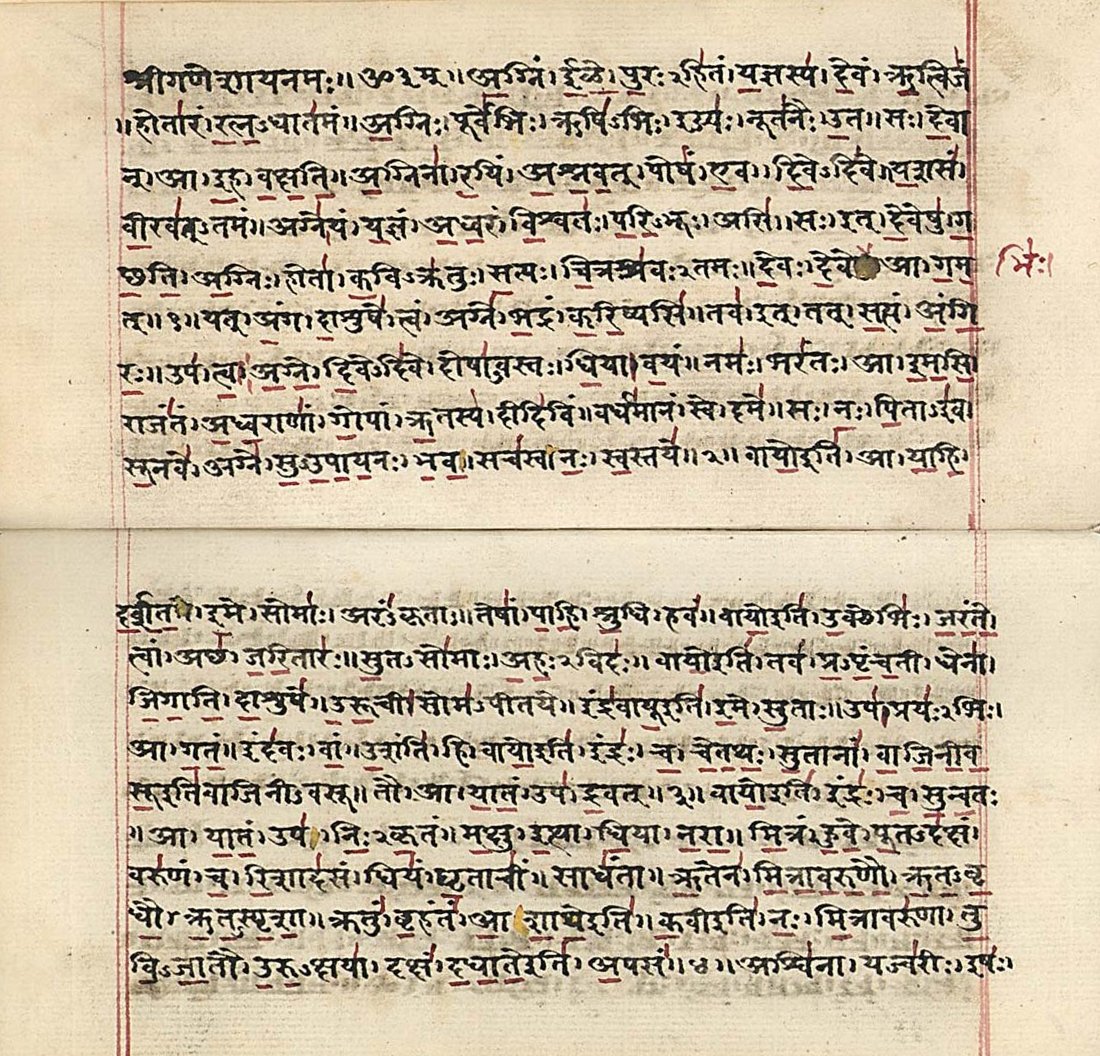
Sanskrit poets of the Vedic age name these scattered reefs Mālādvīpa — the 'garland of islands'. The Mahābhārata and later Purāṇas record the archipelago long before any foreign ship drops anchor, a sign that South Asia knows its southern maritime frontier intimately.
Read the full storyRigveda MS2097 · Schøyen Collection · Wikimedia Commons · Public Domain
- In EgyptQueen Hatshepsut's fleet has just returned from the Land of Punt with myrrh trees, ebony and live baboons.
- On the AegeanThera erupts — a Bronze-Age cataclysm that buries Akrotiri and shakes the Minoan world.
- In the Indus ValleyHarappa and Mohenjo-daro are already in deep decline; their writing still undeciphered.
The First Settlers.
Seafarers arrive in waves from southern India and Sri Lanka, carrying Dhivehi — an Indo-Aryan language closely related to Sinhala — across the Indian Ocean in outrigger canoes. They find a chain of low, green islands and make them home.
Read the full storyPhoto: Wikimedia Commons
- In AthensCleisthenes is drafting the reforms that will invent democracy.
- Near the GangesSiddhartha Gautama, newly the Buddha, is teaching his first sermon at the deer park in Sarnath.
- In Lu state, ChinaConfucius is wandering the courts of the Warring States, peddling a philosophy nobody yet wants.
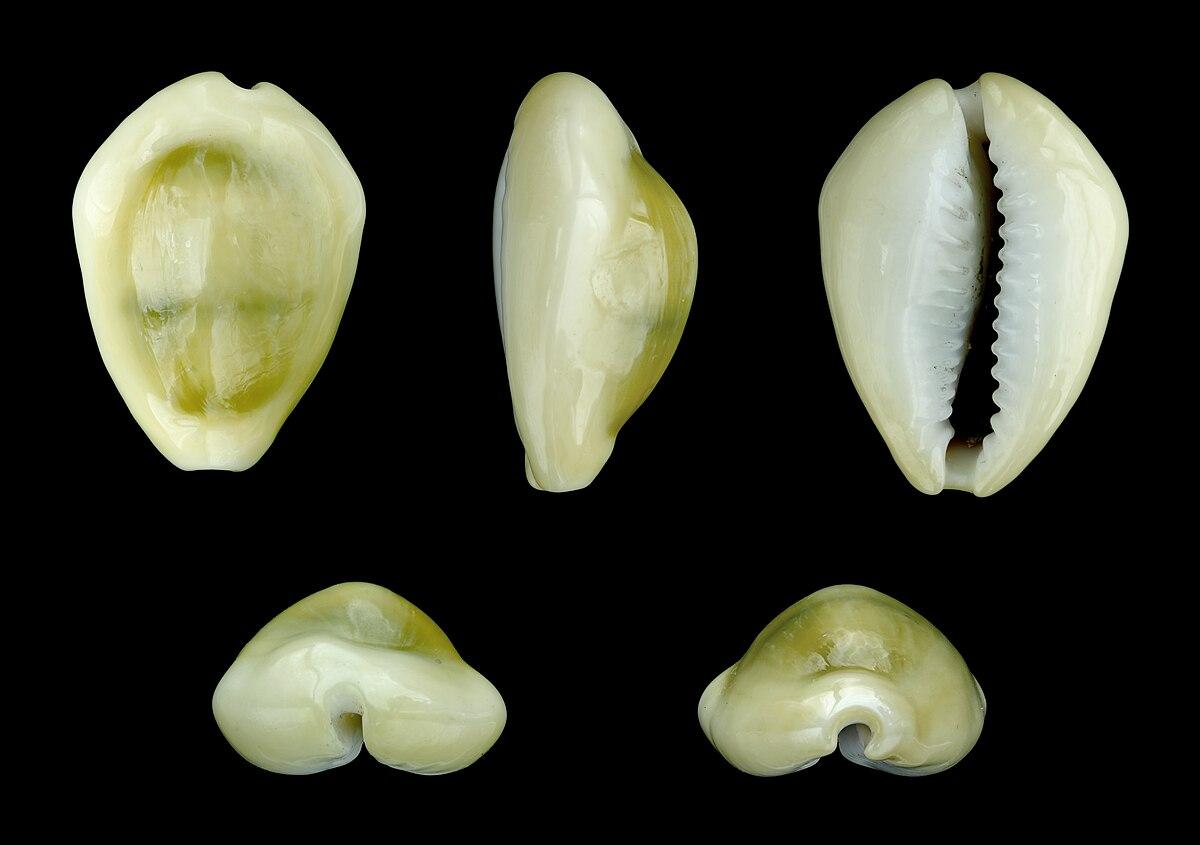
The World's First Global Currency.
Long before the islands have a name, they are the world's money factory. Fishermen rake Cypraea moneta from shallow lagoons with palm-frond traps. The shells travel in coconut-matting bundles to Bengal, the Swahili coast, and across the Sahara — the epicentre of history's first truly global currency.
Read the full storyPhoto: H. Zell · Wikimedia Commons · CC BY-SA 3.0
- In Han ChinaEmperor Wu's envoys open the Silk Road; cowries are already circulating as small change across the empire.
- In RomeAugustus becomes the first emperor; Pliny complains the imperial treasury is bleeding silver to India.
- At AlexandriaA Greek mariner compiles the Periplus of the Erythraean Sea — a merchant's guide to Indian Ocean ports.
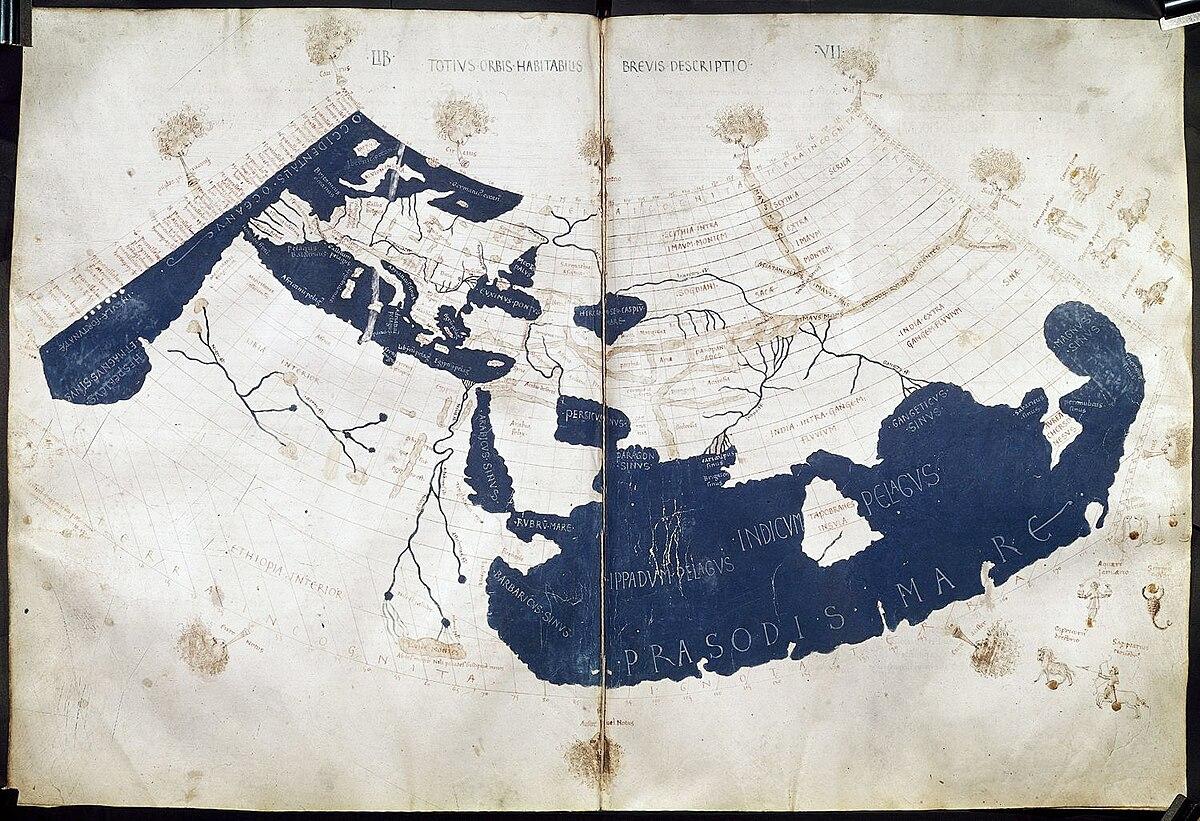
Known to Greece and Rome.
Greek geographer Claudius Ptolemy records the '1,378 little islands' off the coast of Taprobane. It is the first surviving Mediterranean account of the archipelago — a number startlingly close to the real total.
Read the full storyPublic Domain · Ptolemy's Geography (15th c. reconstruction)
- In RomeEmperor Antoninus Pius presides over the empire's quietest, most prosperous decade.
- In LuoyangThe Han court receives its first envoy from Rome — or so Chinese annals record.
- On the DanubeA young Marcus Aurelius is being tutored in Stoic philosophy, years before he takes the throne.
Chapter 02
Buddhist Kingdom.
300 — 1100 CE
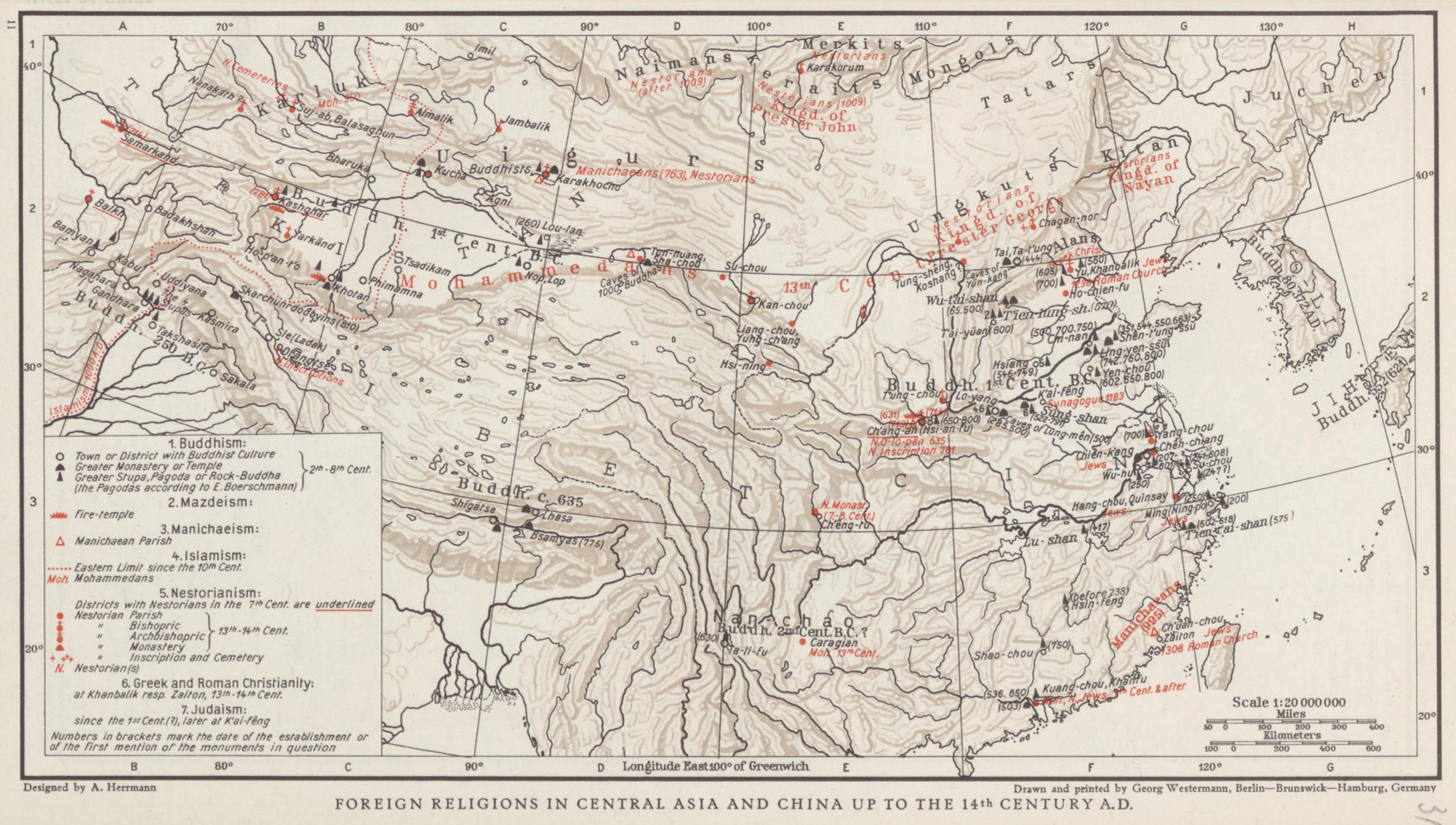
Fourteen centuries of Buddhism, monasteries carved from coral, and quiet embassies to Rome and Chang'an.
Background · H.C.P. Bell survey, 1922
Herrmann & Westermann, Historical Atlas of China · Wikimedia Commons · Public domain
Where this history
still stands.
Sites your clients can actually walk through — the physical remains of this chapter, still standing in the Maldives today.
National Museum — Buddhist Gallery
Malé · Sultan Park
Holds the surviving coral Buddha heads, bodhisattva torsos and Vajrayana carvings recovered by Thor Heyerdahl and later excavations — most of what was spared in 2012 is on display here.
Kuruhinna Tharaagandu Monastic Ruins
Kaashidhoo · Kaafu Atoll
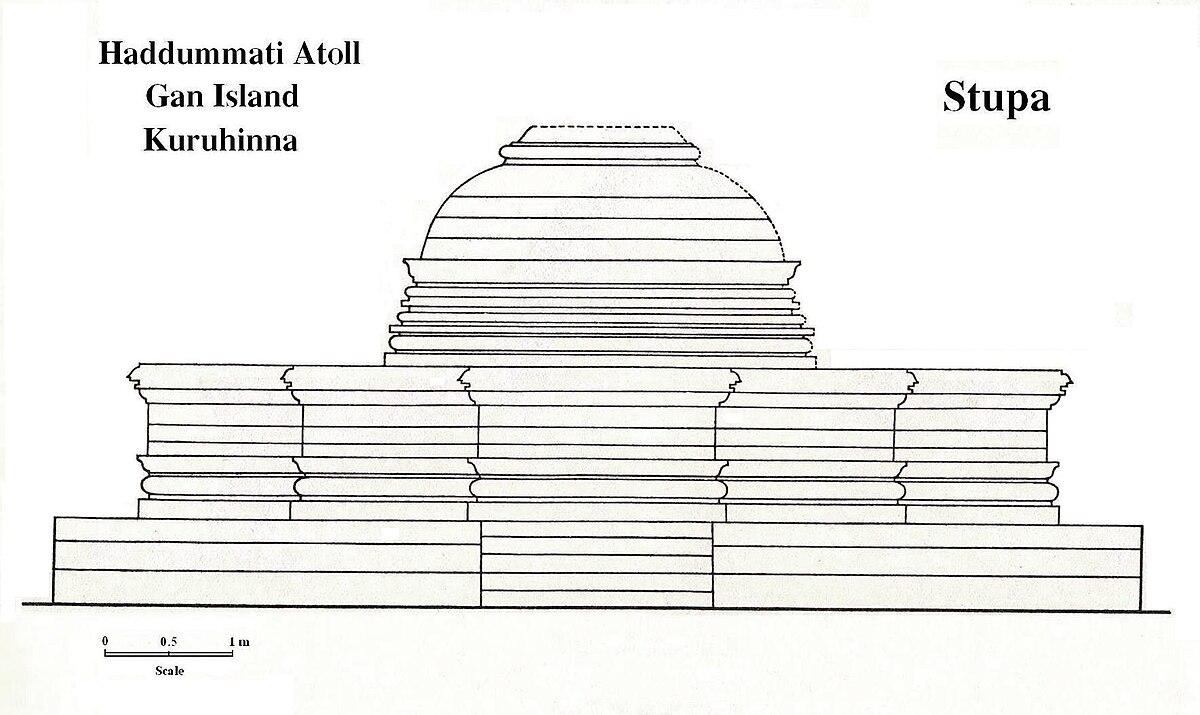
The footprint of an entire Buddhist monastery — stupa bases, a bathing tank and monks' cells — excavated in the 1990s. The most complete Buddhist site you can actually walk through today.
Fuvahmulah Havittas
Fuvahmulah · Gnaviyani Atoll
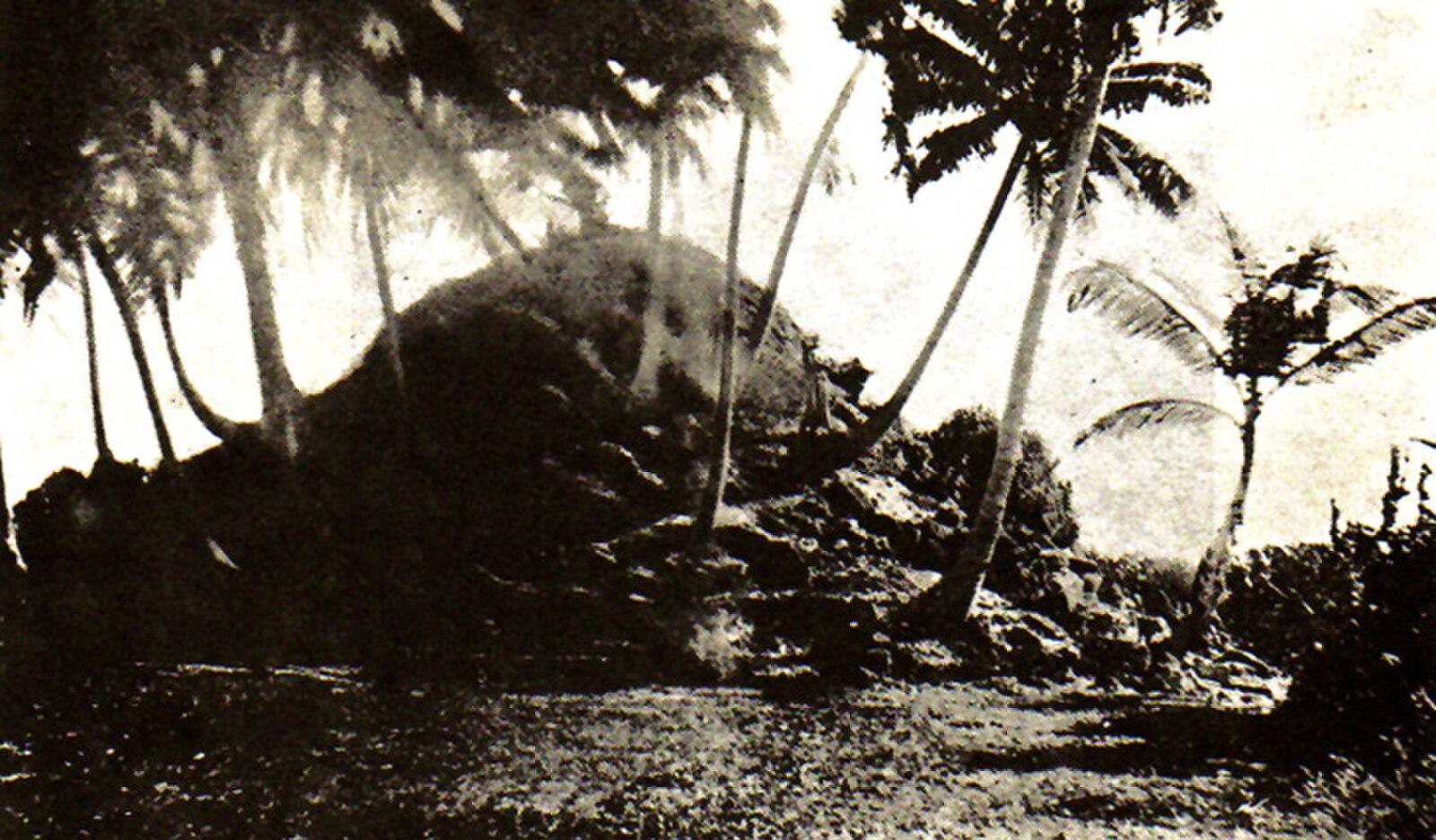
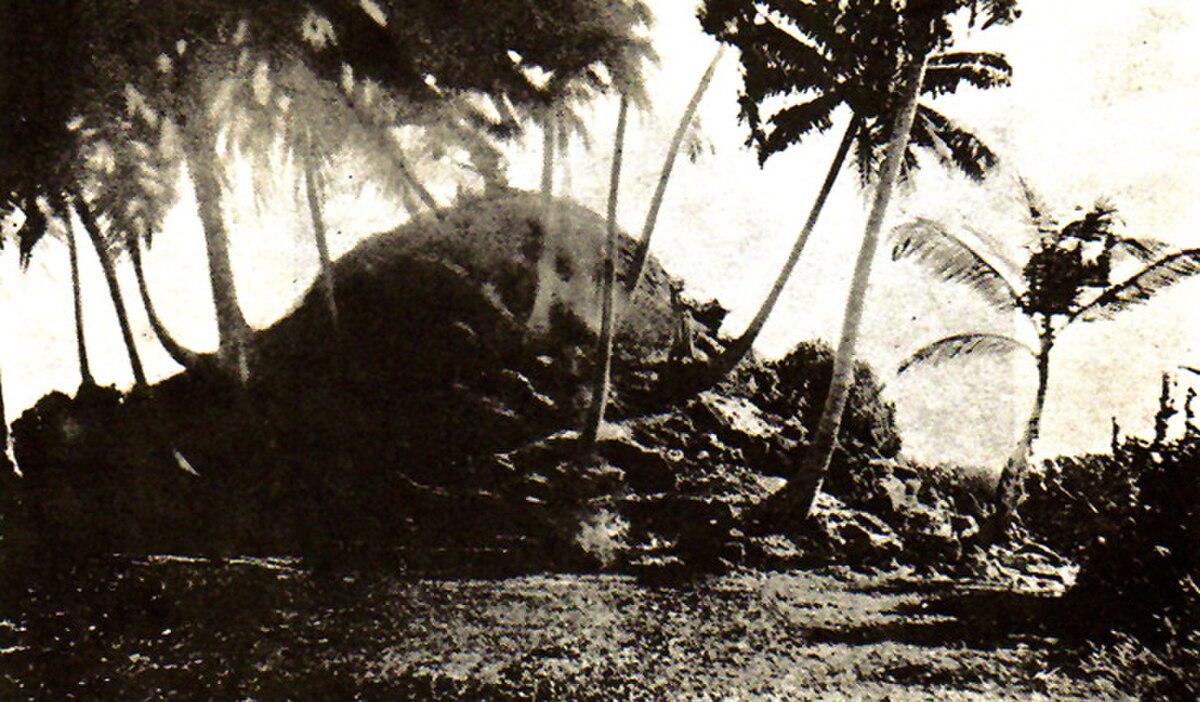
Two surviving earthen mounds, Havitta and Gemiskiy Havitta, are the eroded cores of Buddhist stupas photographed by H.C.P. Bell in 1922 — still visible beside the road on this single-island atoll.
Isdhoo Havitta
Isdhoo · Laamu Atoll
A large coral-rubble mound on the island's north end, long identified as a Buddhist stupa — paired with the later Isdhoo Old Mosque, it compresses a thousand years of religious history into one short walk.
Fourteen Centuries of Buddhism.
Theravada Buddhism flourishes across the atolls for more than 1,400 years. Coral-carved stupas, monasteries and Sanskrit-inscribed artefacts rise on dozens of islands — a quiet, connected kingdom stitched into the monsoon trade routes between India, Sri Lanka and South-East Asia.
Read the full storyPhoto: Mohonu · Wikimedia Commons · Public Domain
- In ConstantinopleJustinian consecrates the Hagia Sophia in 537, its dome the largest in the world.
- In MeccaIn 610 Muhammad receives his first revelation; within a century Arab dhows will be calling at Maldivian atolls.
- On the Kamo RiverMurasaki Shikibu is writing The Tale of Genji, the world's first novel, at the Heian court.
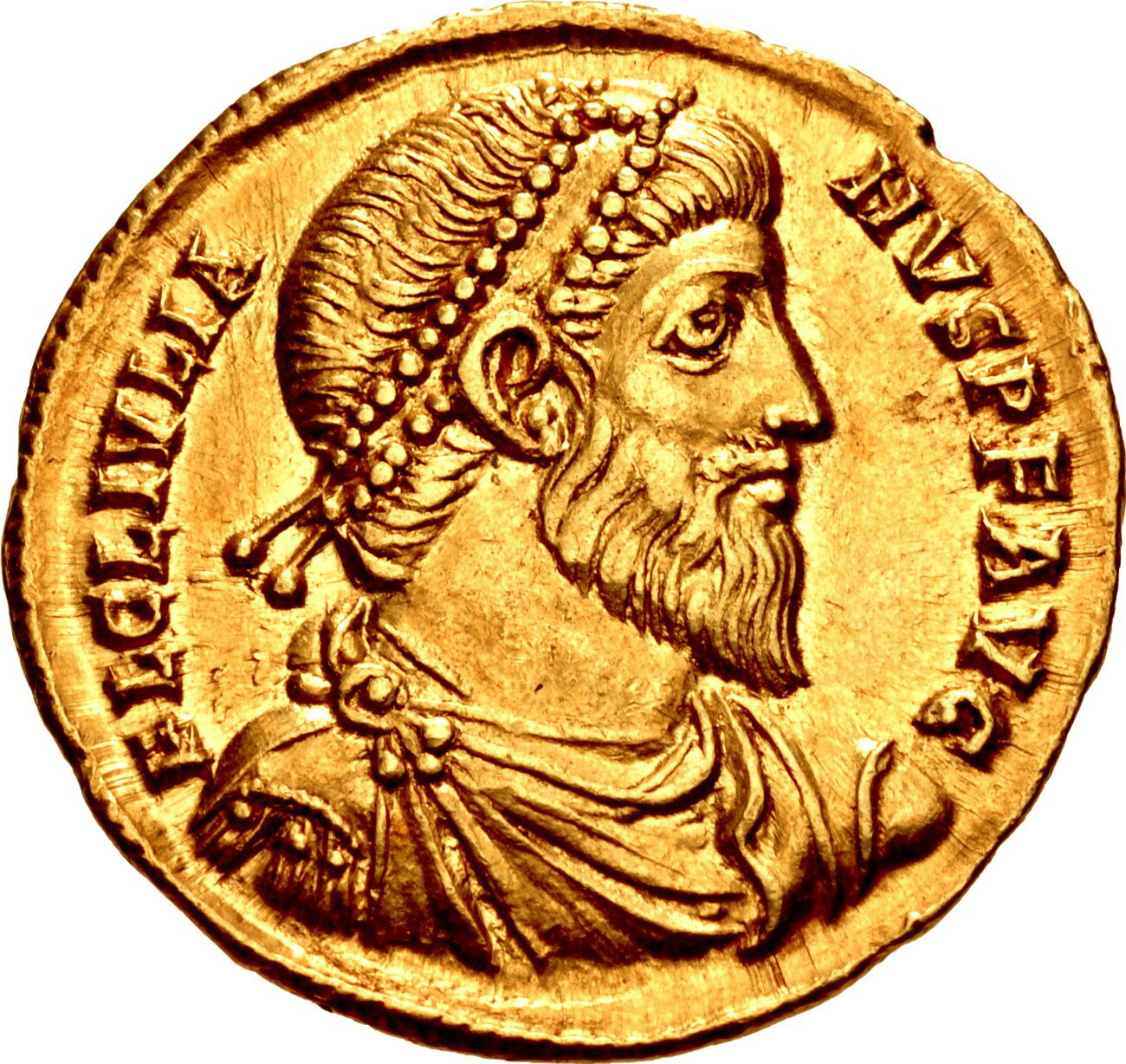
Envoys to Emperor Julian.
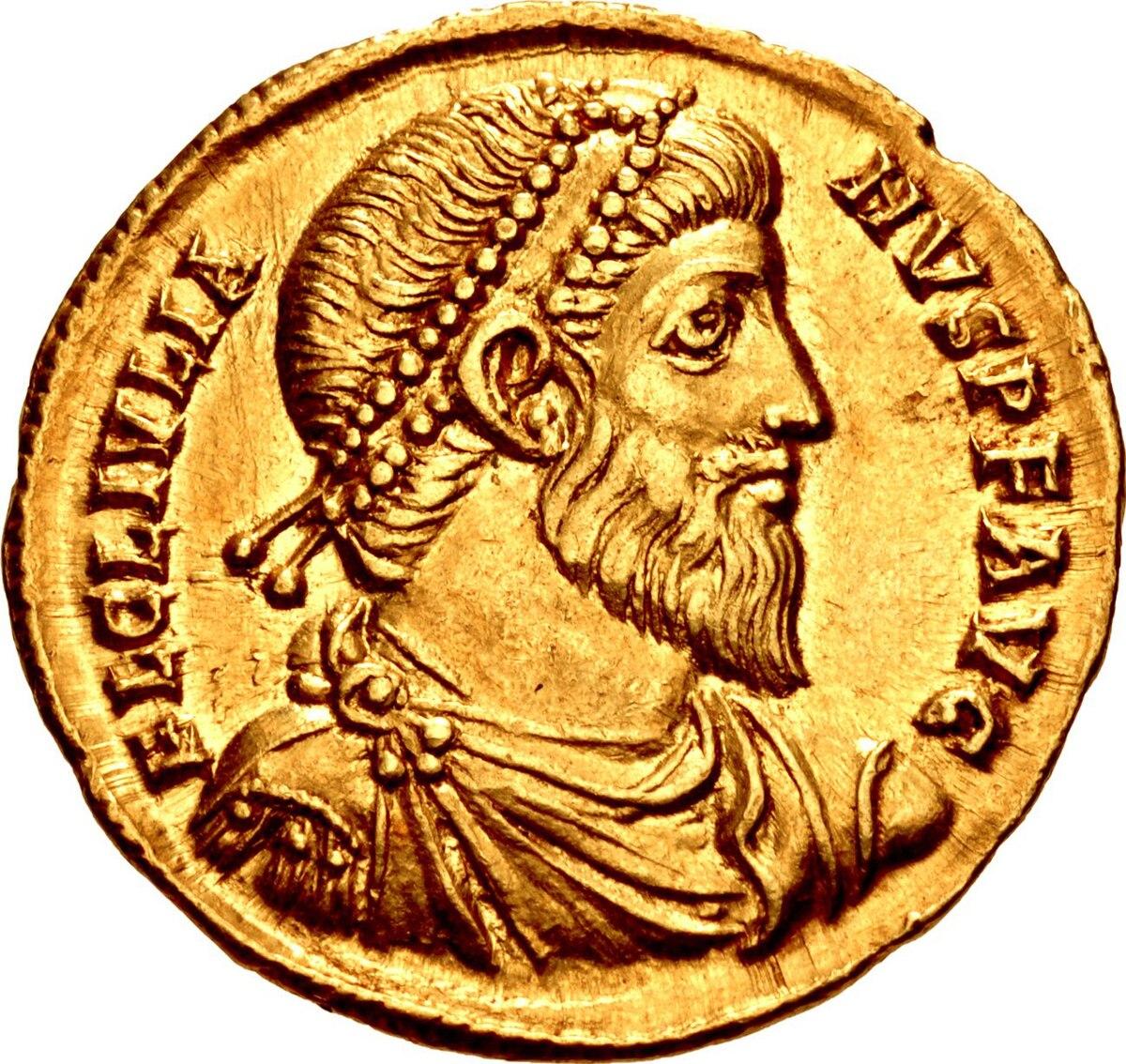
The Roman historian Ammianus Marcellinus records that delegates from the 'Divi' — the Maldivians — arrive at the court of Emperor Julian bearing gifts. Centuries later, archaeologists will dig a Roman denarius from a buried Buddhist temple on Thoddoo, confirming the Mediterranean touched these atolls long before any European ship.
Read the full storyGold solidus of Julian · CNG · Wikimedia Commons · CC BY-SA 2.5
- In AntiochEmperor Julian, the last pagan Caesar, is wintering with his army before a doomed Persian campaign.
- In the Judean desertAthanasius is in hiding again, dodging Julian's revival of the old gods.
A Monastery Unearthed.
On Kaashidhoo island, a 1996 dig led by Norwegian archaeologist Egil Mikkelsen uncovers a 1,880 m² Buddhist monastery — 64 coral-stone structures including a 16-sided stepped platform so geometrically precise that Thor Heyerdahl compared Maldivian stonemasonry to the Inca walls of Cuzco.
Read the full storyH.C.P. Bell, 1922 · Wikimedia Commons · Public Domain
- In DamascusThe Umayyad caliphs are raising the Great Mosque on the site of a Byzantine cathedral.
- In NaraJapan's first permanent capital is being laid out on a Tang Chinese grid.
- At LindisfarneMonks are illuminating the Gospels in Northumbria; the first Viking raid is only decades away.
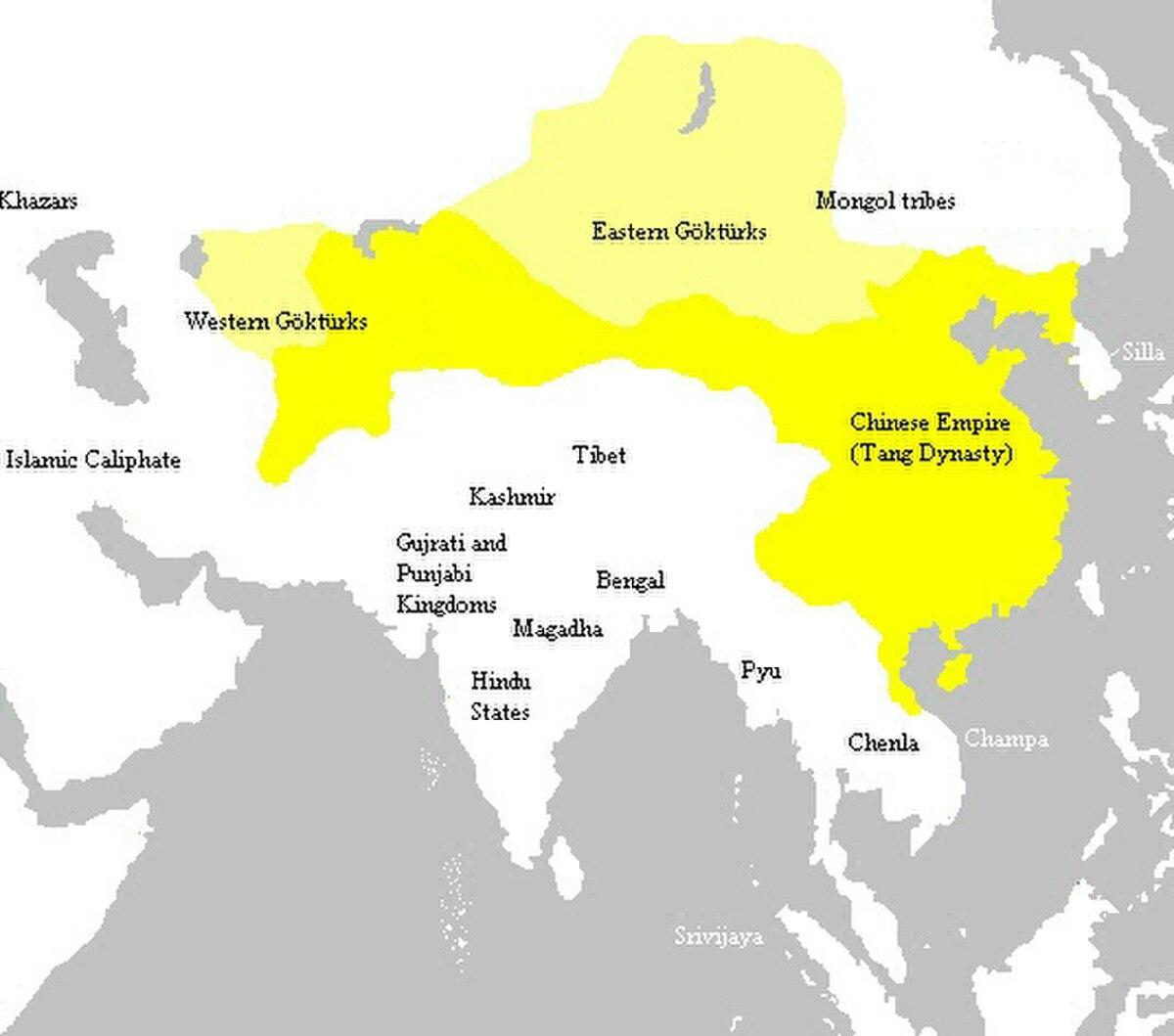
An Embassy to Chang'an.
Tang Dynasty records note a Maldivian embassy presenting tribute to Emperor Gaozong in the imperial capital of Chang'an. The atolls — barely a dot on any world map — are already stitching themselves into both ends of the Silk Road of the Sea, from Rome to the Chinese court.
Read the full storyIan Kiu, 2008 · Wikimedia Commons · CC BY-SA 3.0
- In Chang'anEmperor Gaozong's court is the most cosmopolitan on earth; Empress Wu is quietly taking the reins.
- In MedinaAli ibn Abi Talib is assassinated at prayer; the First Fitna splits the young Muslim community.
- In ConstantinopleConstans II moves the imperial court to Syracuse, briefly making Sicily the seat of Rome.
Chapter 03
Faith & Empire.
1153 — 1750s
Islam arrives, matriarchs rule, Ibn Battuta drops anchor, the Portuguese and the Malabars come and go, and the coral Friday Mosque rises.
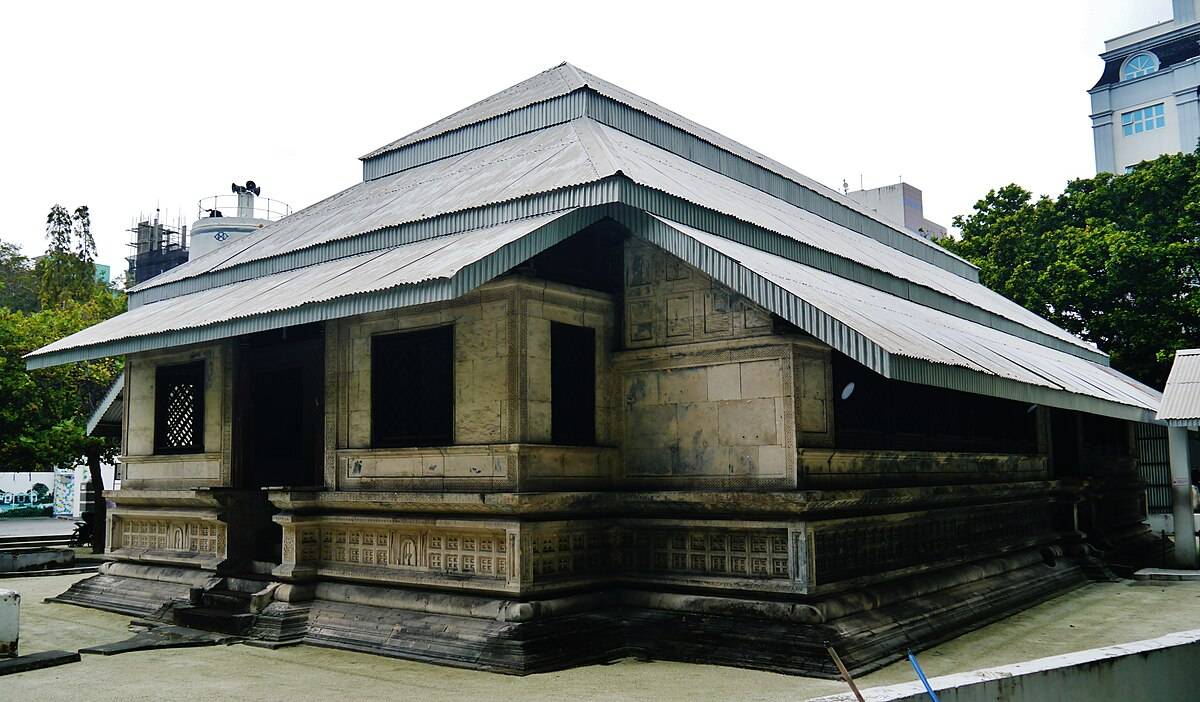
Background · Hukuru Miskiy, est. 1658
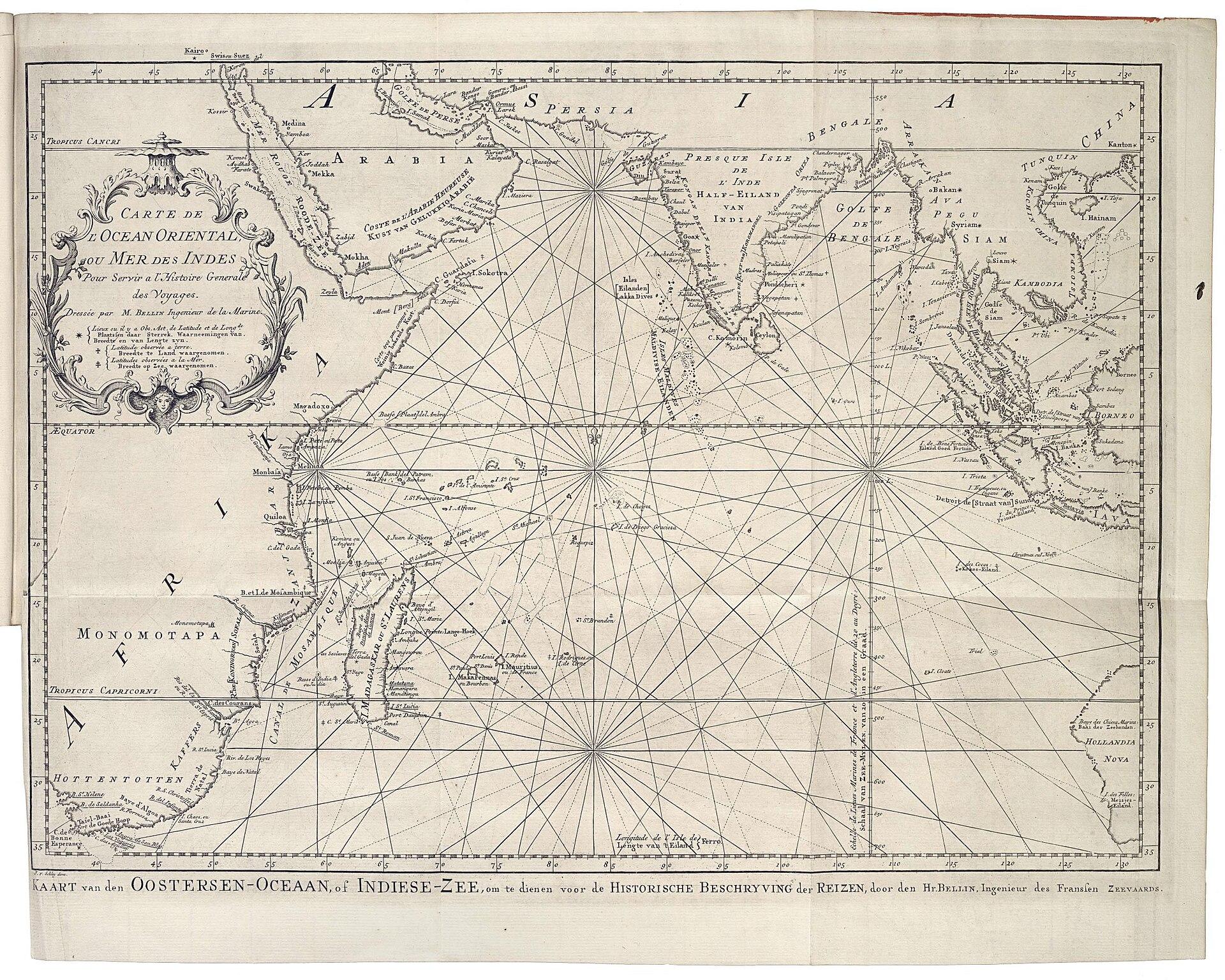
Jacques-Nicolas Bellin / Pieter de Hondt · Wikimedia Commons · Public domain
Where this history
still stands.
Sites your clients can actually walk through — the physical remains of this chapter, still standing in the Maldives today.
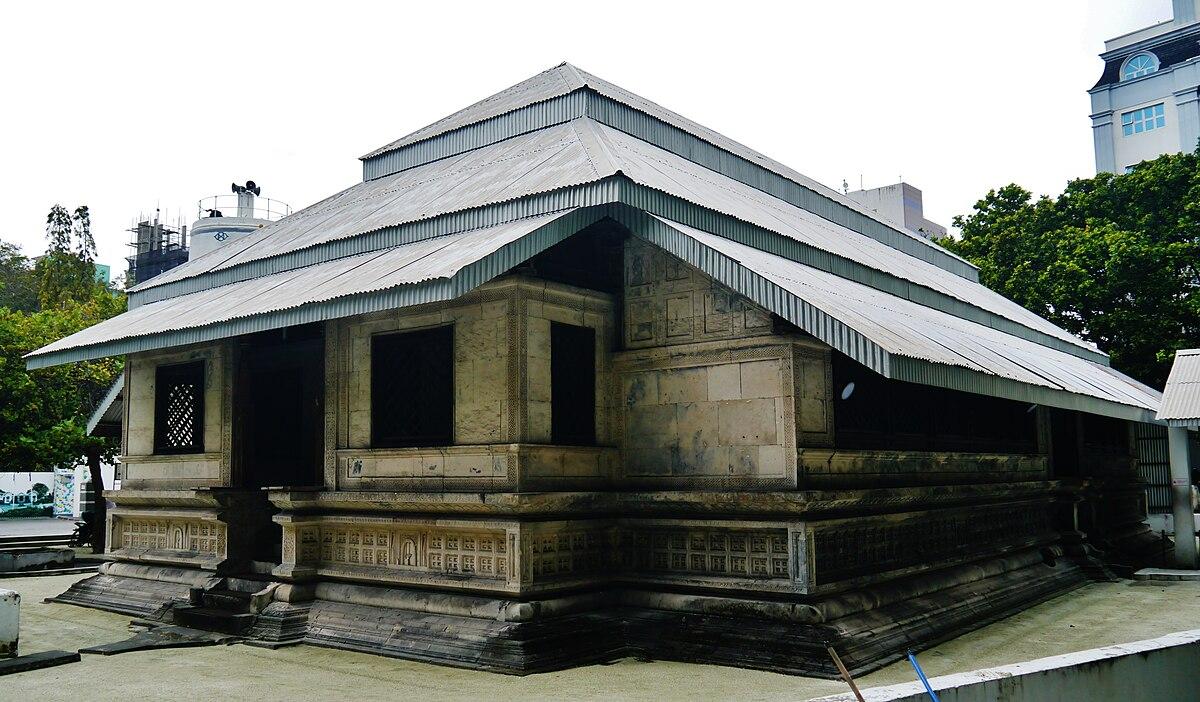
Hukuru Miskiy (Old Friday Mosque)
Malé · Medhuziyaaraiy Magu
Built in 1658 from interlocking coral blocks, inscribed inside with Qur'anic calligraphy — the finest surviving example of Maldivian coral-stone architecture and a UNESCO World Heritage tentative site.
Utheemu Ganduvaru
Utheemu · Haa Alifu Atoll
The ancestral wooden palace of Sultan Mohamed Thakurufaanu, who expelled the Portuguese in 1573. Lacquered thresholds, swing beds and a prayer room are preserved roughly as he left them.
Fandiyaaru Miskiy — Isdhoo Old Mosque
Isdhoo · Laamu Atoll
A 17th-century coral-stone mosque with a separate minaret, built on an island that was already a religious centre in the Buddhist era — layered history in one compound.
Meedhoo Ancient Cemetery & Mosque
Meedhoo · Addu Atoll
Said to be the oldest settlement in the southern atolls, with carved coral gravestones dating back to the early sultanate and a mosque tradition predating Malé's own.
Conversion to Islam.
King Dhovemi converts to Islam under the influence of a traveling Sunni scholar — tradition names him Abu al-Barakat Yusuf al-Barbari. He becomes Sultan Muhammad al-Adil, and his dynasty rules for the next 800 years. Islam becomes — and remains — the soul of Maldivian identity.
Read the full storyPhoto: Zairon · Wikimedia Commons · CC BY-SA 4.0
- In ParisAbbot Suger has just finished the choir of Saint-Denis — the first Gothic building in the world.
- In CairoThe Fatimid caliphate is tottering; Saladin's uncle Shirkuh is a young Kurdish officer in Syria.
- In KyotoThe Taira and Minamoto clans are circling each other in the prelude to the Genpei War.
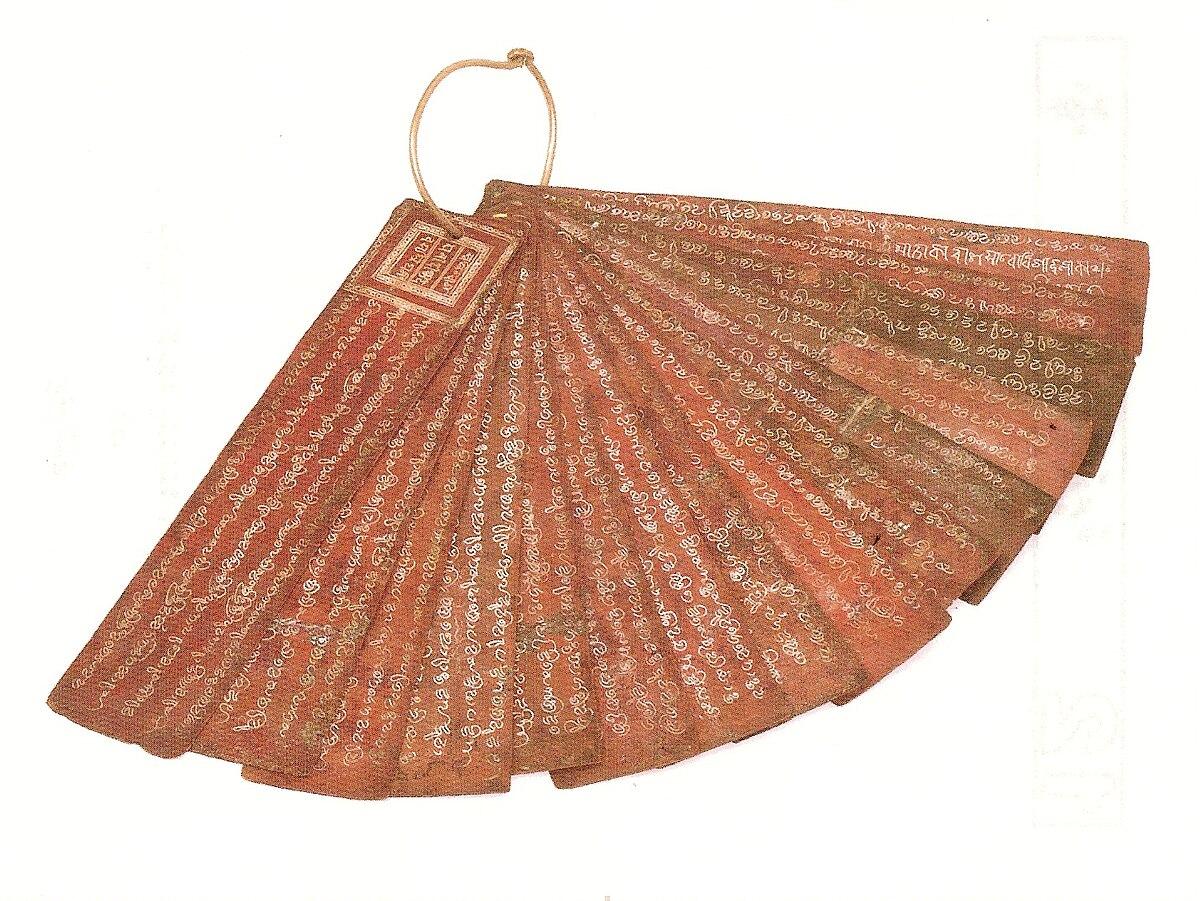
The Copperplate Decrees.
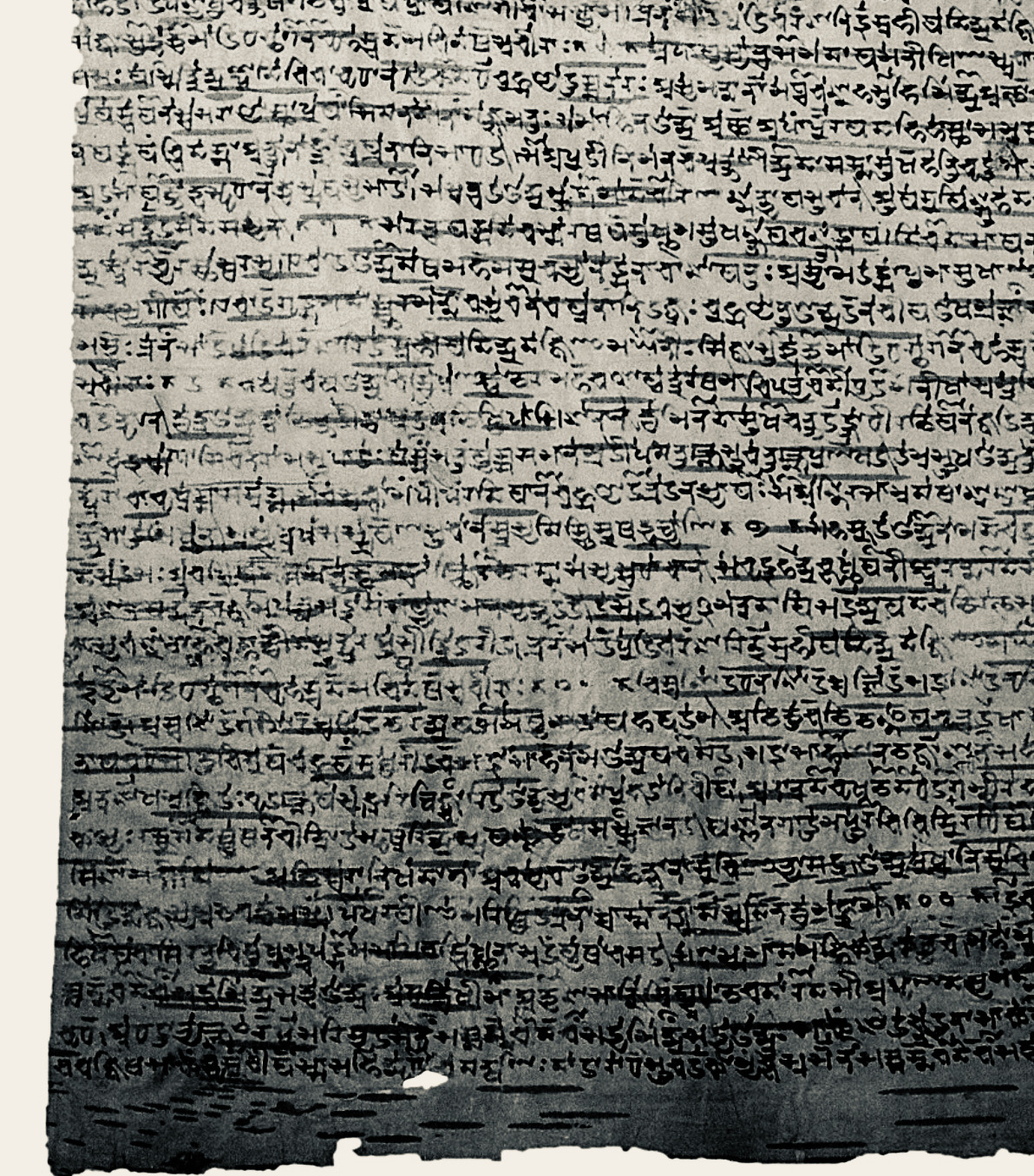
King Sri Gadana Aditya inscribes royal Islamic law onto copperplates — the Loamaafaanu. The rolls from Isdhoo and Dhanbidhoo record the systematic, often violent erasure of the Buddhist world that came before, ordering the destruction of stupas, the beheading of monks, and the installation of a new religious police.
Read the full storyNational Museum of Maldives · Wikimedia Commons · Public Domain
- In EnglandRichard the Lionheart has just been ransomed from a German dungeon and lands at Sandwich.
- In DelhiMuhammad of Ghor sacks Varanasi; Qutb al-Din Aibak is consolidating the new Delhi Sultanate.
- In ChartresFire destroys the old cathedral; within a generation the soaring new Gothic one will replace it.
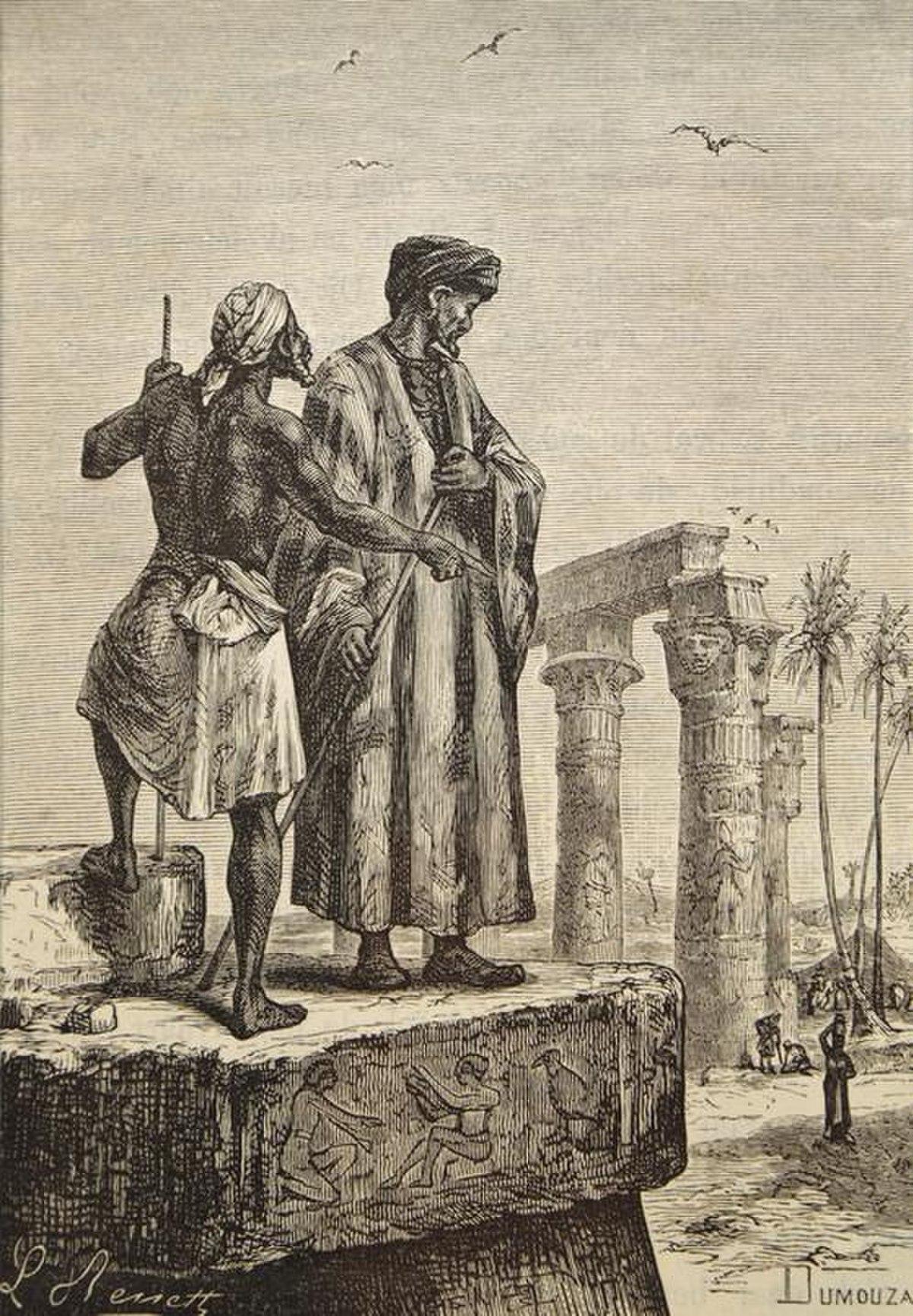
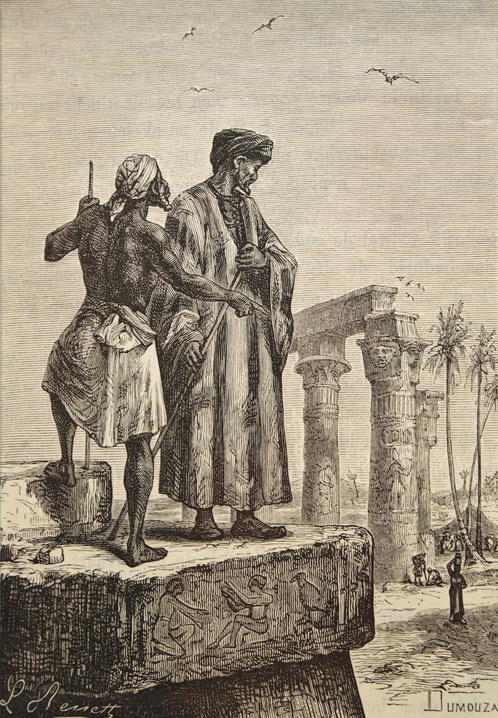
Ibn Battuta Drops Anchor.
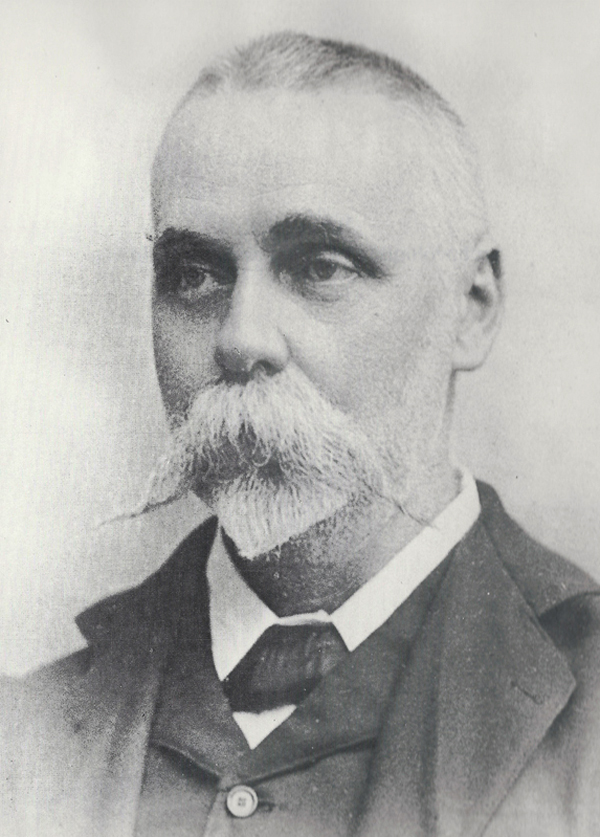
The legendary Moroccan explorer Ibn Battuta arrives around 1343 — some scholars place it as early as 1341 — and is appointed Chief Judge for roughly nine months. His writings remain one of the richest medieval accounts of Maldivian life — cowrie shells as currency, royal banquets, and the quiet rhythm of island existence.
Read the full storyPainting: Hippolyte Léon Benett (1878) · Public Domain
- In ConstantinopleThe Black Death reaches the Bosphorus on a Genoese ship; within five years it will empty half of Europe.
- In DelhiIbn Battuta's former patron Muhammad bin Tughluq is struggling to hold his vast, fraying sultanate together.
- In FlorenceThe Bardi and Peruzzi banking houses collapse after Edward III of England defaults on his war loans.
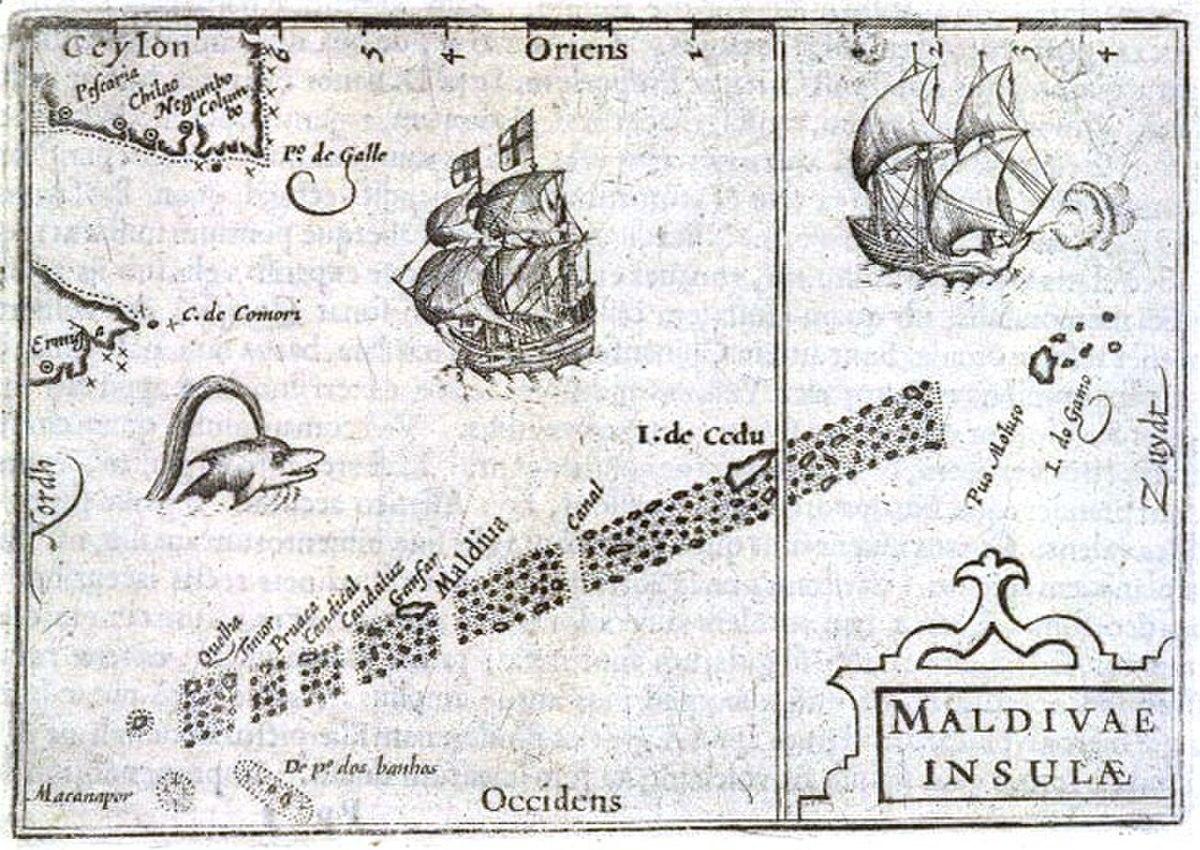
The Reign of Sultana Khadijah.
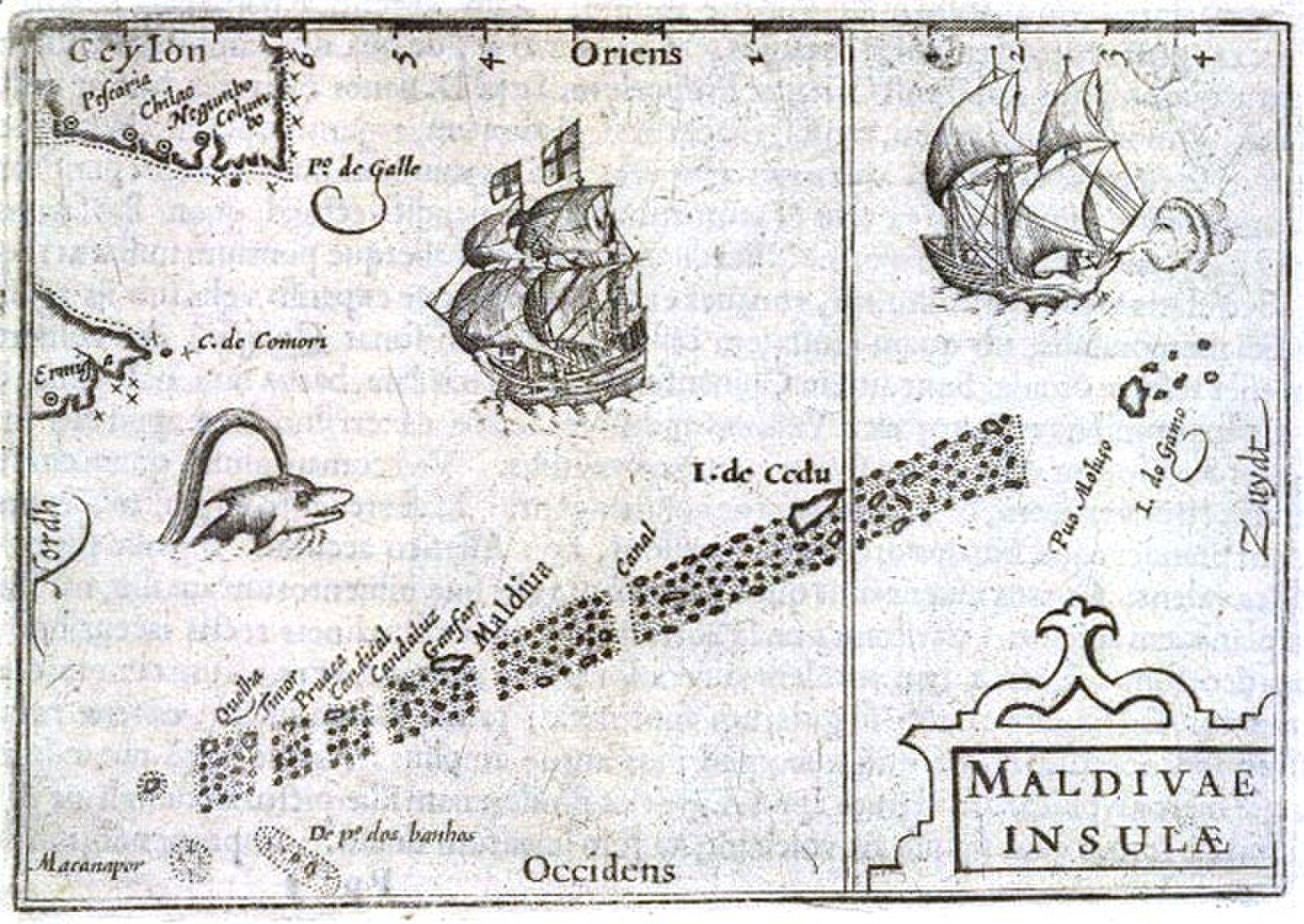
After her younger brother is assassinated, Rehendhi Khadijah takes the throne and rules for nearly thirty years across three separate reigns. When her first husband tries to usurp her, she has him deposed and killed. She repeats the manoeuvre with her second. Upon her death, her half-sisters inherit — an unbroken half-century of matriarchal rule in the medieval Islamic world.
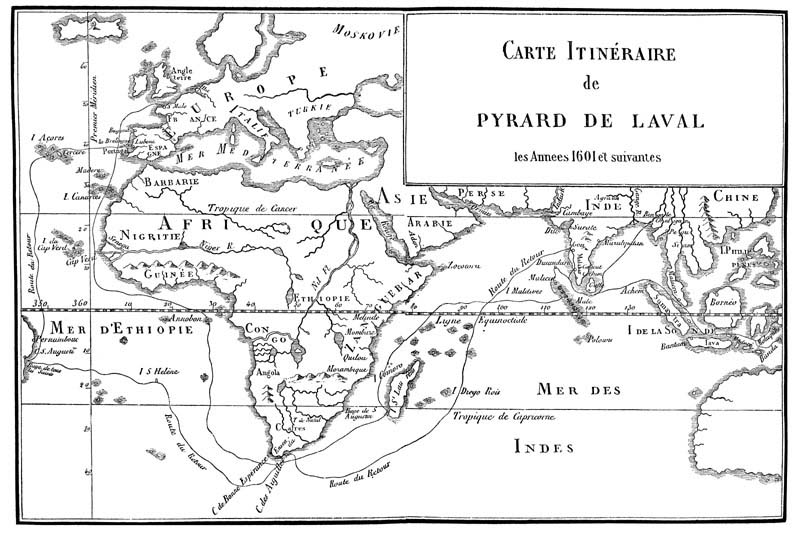
Read the full storyPetrus Bertius, 1598 · Wikimedia Commons · Public Domain
- Across EuropeThe Black Death is killing one person in three; Boccaccio sets The Decameron in a plague-emptied Florence.
- In NanjingZhu Yuanzhang, a former Buddhist novice, founds the Ming dynasty and expels the last Yuan Mongols.
- In AvignonCatherine of Siena talks Pope Gregory XI into returning the papacy to Rome, ending the Avignon exile.
The Sultan Who Changed Faiths.
Sultan Hassan IX flees to Portuguese Goa, converts to Catholicism as 'Dom Manoel', and hands Lisbon a pretext to rule the Maldives in his name — the spark that lit the 1558 occupation.
Read the full story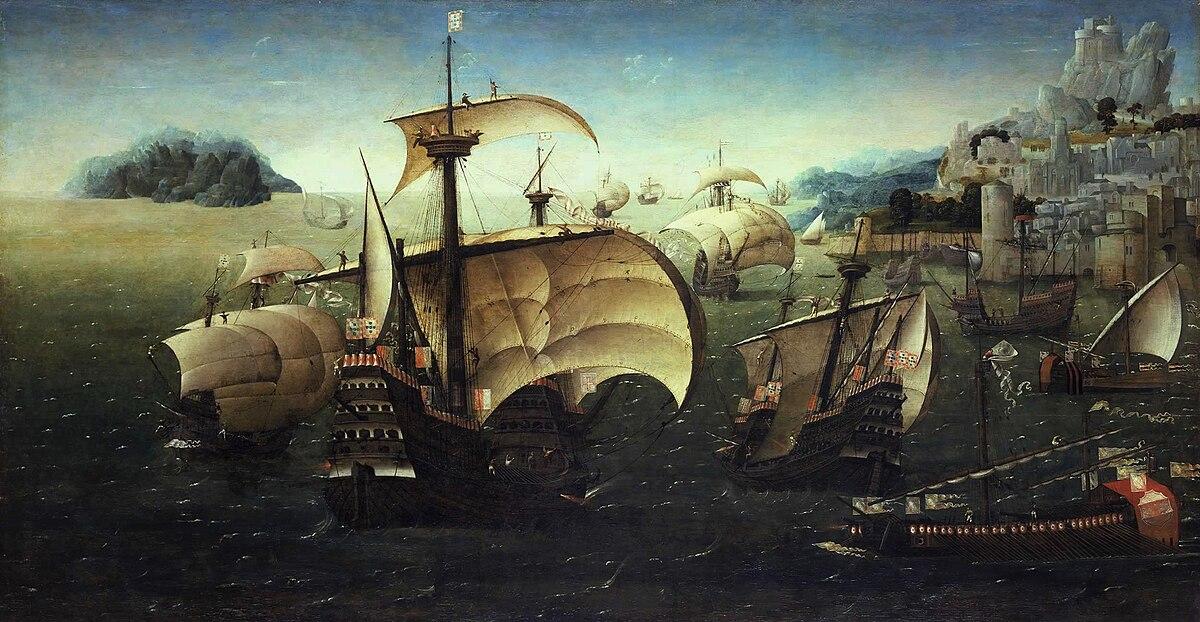
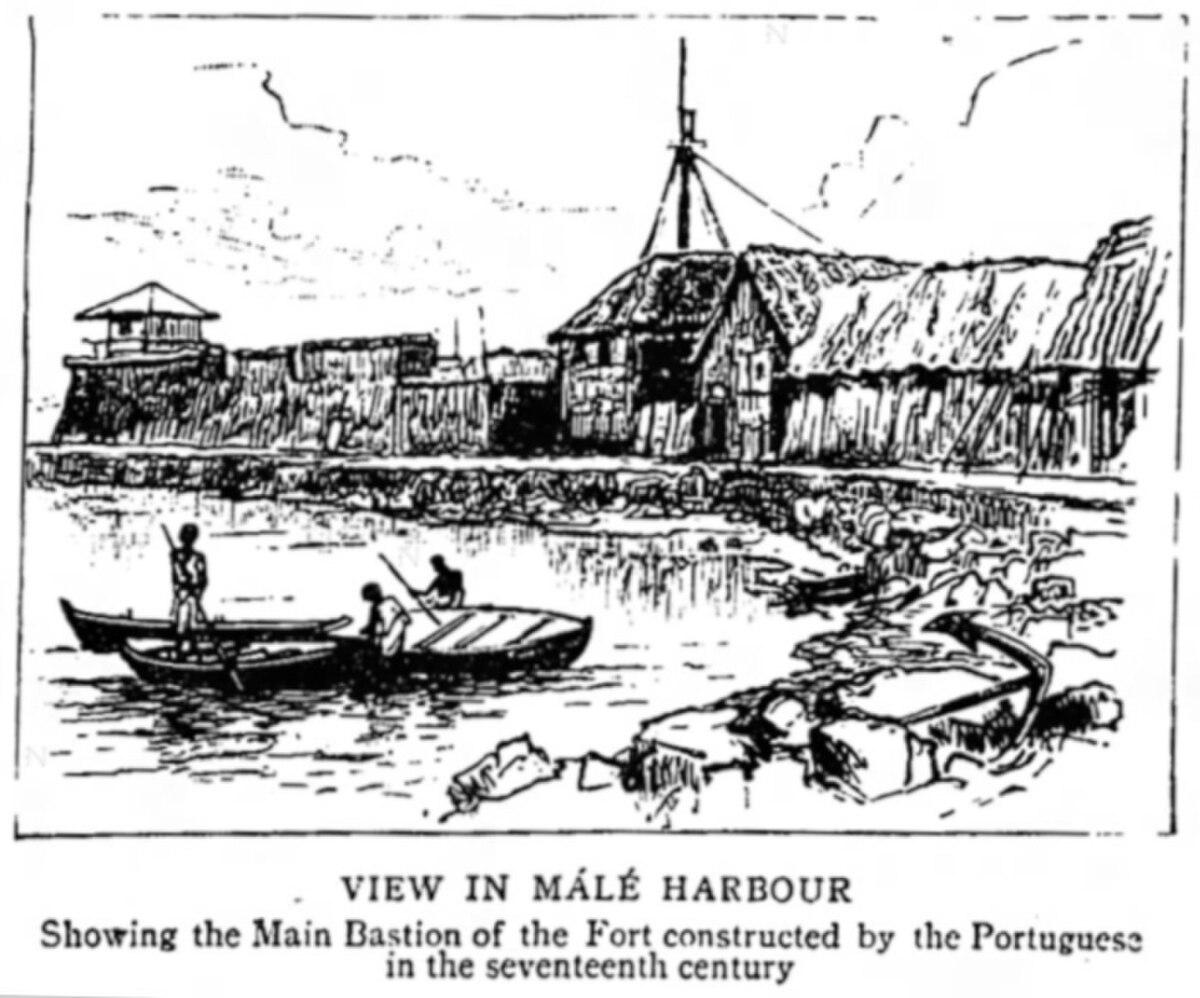
Fifteen Years Under the Portuguese.
Portuguese captain Andreas Andre — known in Dhivehi as Andiri Andirin — seizes Malé in 1558. Forced conversions, brutal taxation and pork imposed on mosque grounds follow. The fifteen-year occupation is remembered in oral tradition as the darkest chapter of Maldivian history.
Read the full storyCircle of Joachim Patinir, c. 1540 · Royal Museums Greenwich · Public Domain
- In LondonElizabeth I accedes to the English throne in 1558; the Spanish Armada is thirty years away.
- At LepantoIn 1571 a Holy League fleet destroys the Ottoman navy — the last great galley battle in history.
- In BeijingThe Ming court is closing the country; the Jiajing Emperor dies of mercury poisoning from elixirs of immortality.
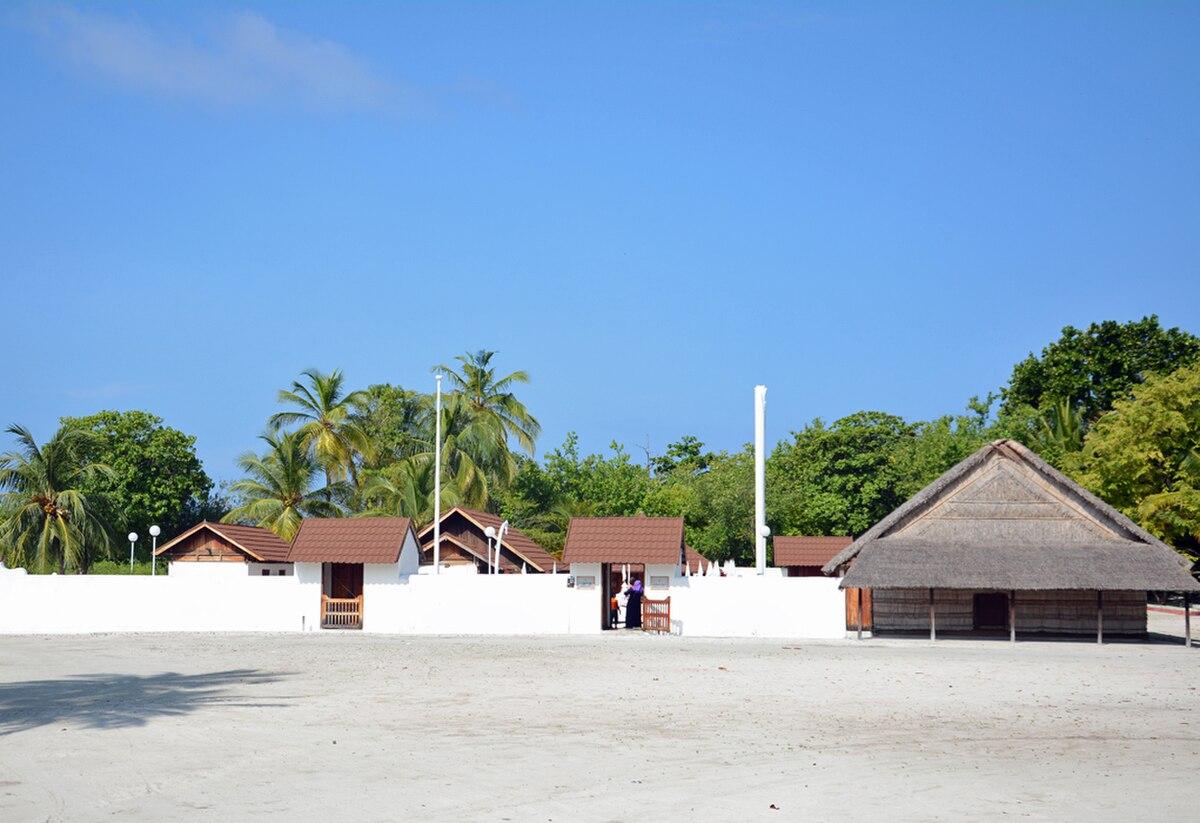
Thakurufaanu Liberates the Nation.
Muhammad Thakurufaanu, a fisherman's son from the northern island of Utheemu, lands with his brothers in a small boat and strikes at night. The Portuguese captain is killed in his sleep, and the occupation ends. The night of liberation is still celebrated as the Maldives' National Day.
Read the full storyPhoto: Andreas Faessler · Wikimedia Commons · CC BY-SA 4.0
- In ParisBells have just rung for the first anniversary of the St. Bartholomew's Day Massacre.
- In RomePope Gregory XIII has just commissioned the calendar reform that will bear his name nine years later.
- At Stratford-upon-AvonA nine-year-old William Shakespeare is trudging to grammar school.
The Coral Friday Mosque.
Sultan Ibrahim Iskandhar I rebuilds the Hukuru Miskiy in Malé entirely from carved, mortarless coral stone — the masterpiece of a Maldivian building tradition now on UNESCO's tentative World Heritage list.
Read the full story
A New Script Is Written.
Centuries of Islamic integration collide with an Indic writing system, and the result is Thaana: a brand-new alphabet written from right to left. Its first nine consonants are quietly ingenious — derived directly from Arabic and Persian numerals — a fusion of two worlds in a single script still used every day in the Maldives.
Read the full storyDhivehi script sample · Wikimedia Commons · Public Domain
- In LondonIsaac Newton is Master of the Mint and president of the Royal Society, hunting counterfeiters.
- In St PetersburgPeter the Great is dragging his new capital out of the Neva marshes, Westernising by decree.
- In EdoJapan is deep in sakoku — closed-country isolation — while its merchant class invents kabuki theatre.
The Malabar Raid and the Huraa Dynasty.
Raiders of the Ali Raja of Cannanore abduct the sultan and briefly seize Malé — until Muleege Hassan Maniku drives them out and founds the Huraa dynasty that would rule until 1968.
Read the full story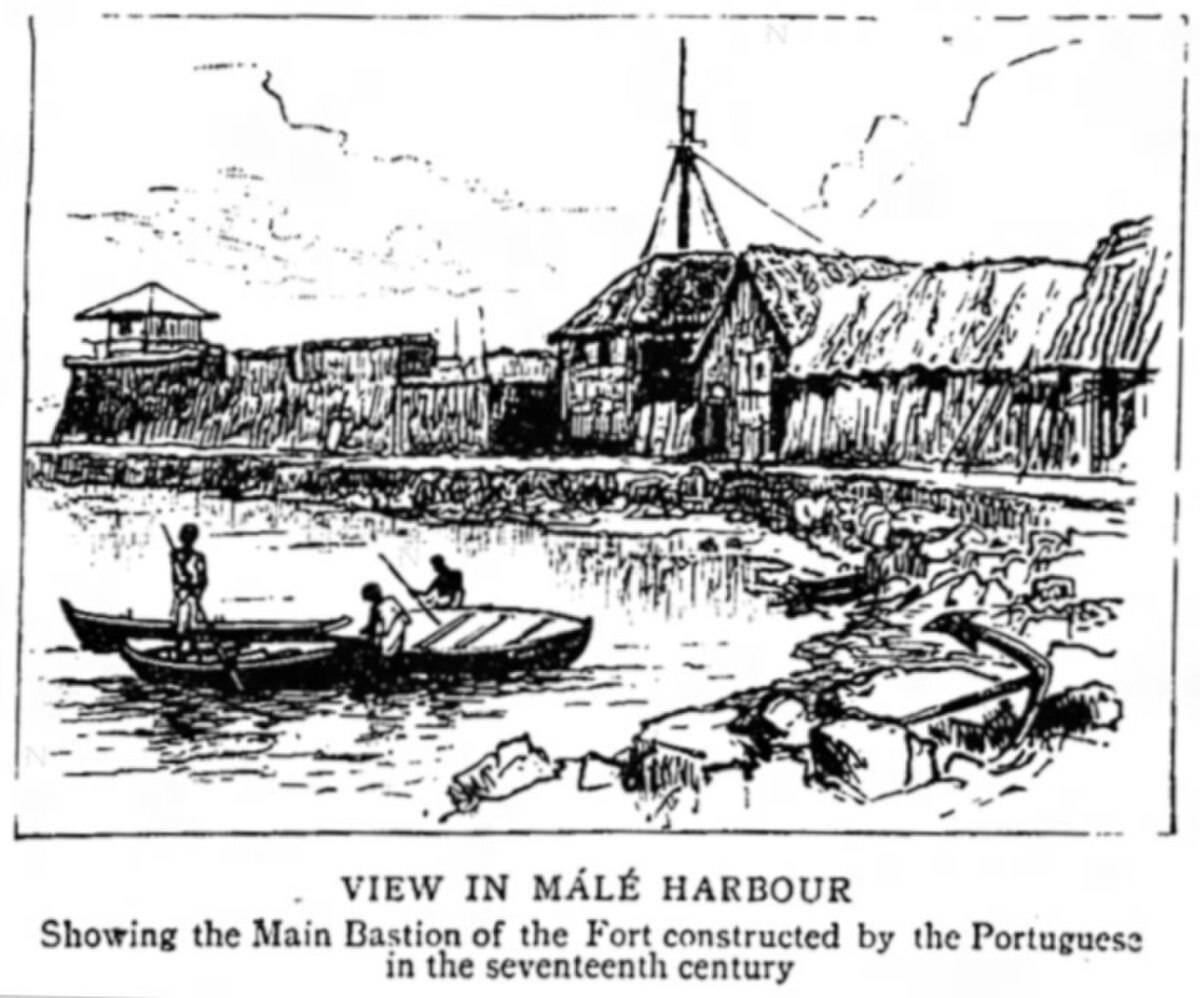
Chapter 04
Protection & Awakening.
1887 — 1968
British protectorate, the first written constitution, secret wartime bases, a short-lived first republic and its fall, a breakaway southern republic, and the dawn of the modern republic.
Background · The Graphic, 1886
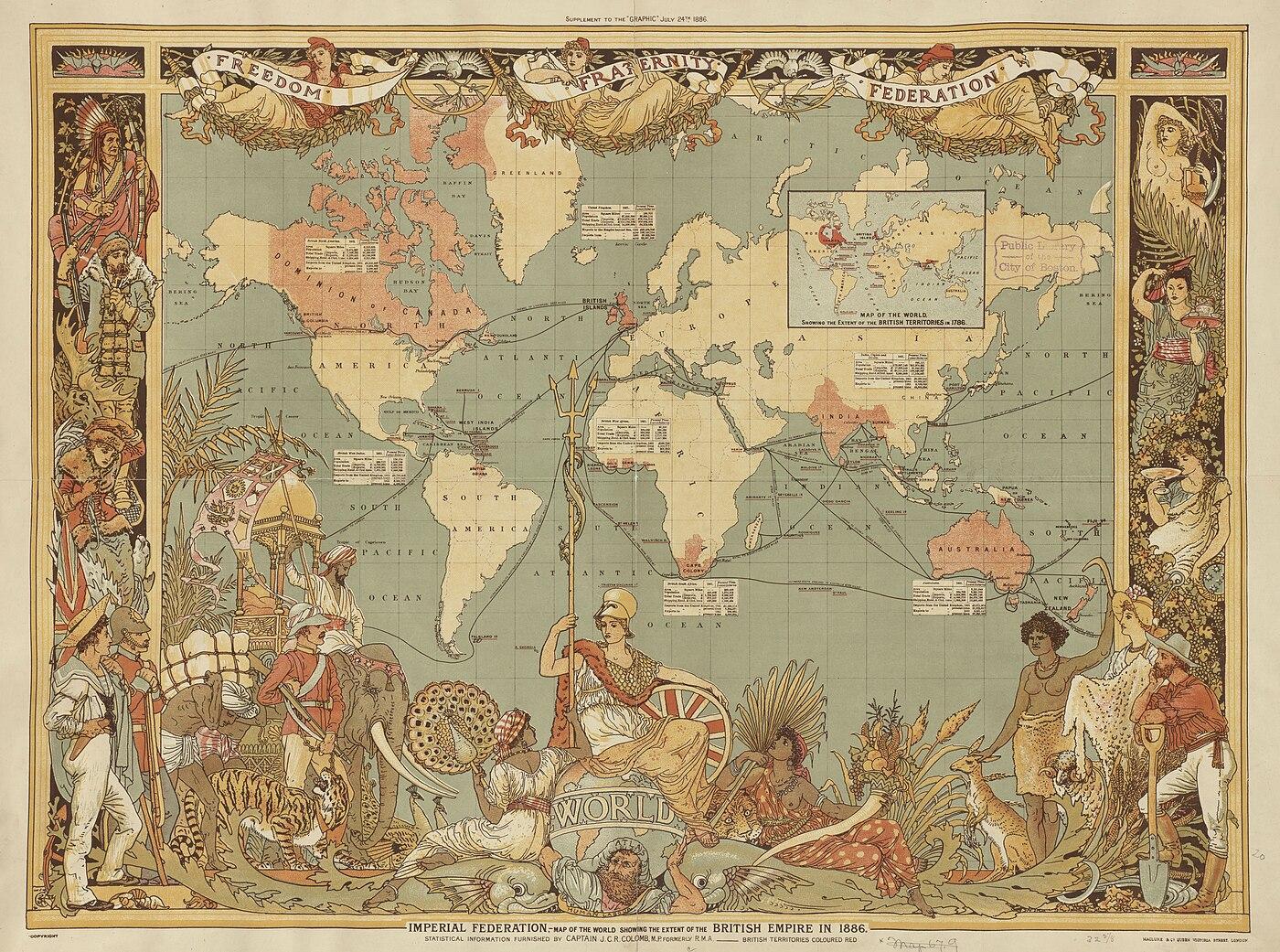
Walter Crane, Imperial Federation (1886) · Wikimedia Commons · Public domain
Where this history
still stands.
Sites your clients can actually walk through — the physical remains of this chapter, still standing in the Maldives today.
Mulee'aage
Malé · Medhuziyaaraiy Magu
Built in 1919 as a sultan's residence in colonial bungalow style, it later became the official presidential palace — a building that tracks the Maldives' slide from monarchy to republic.
Equator Village (former RAF Gan)
Gan · Addu Atoll
The barracks and runway of the RAF's South Indian Ocean airbase (1941–1976) converted into a resort. The original mess, chapel and sea-wall gun emplacements are still visible across the island.
Hulhumeedhoo WWII Relics
Hulhumeedhoo · Addu Atoll
Concrete bunkers, fuel-tank bases and scatter from the wartime Allied staging point — reachable on a short cycle or car loop around the atoll road from Gan.
National Museum — Sultanate Galleries
Malé · Sultan Park
Thrones, palanquins, royal parasols and the last sultan's regalia — objects from the final decades of the 800-year monarchy before the 1968 referendum ended it.
British Protectorate.
The Maldives becomes a British protectorate while keeping its sultanate and full internal self-governance. For 78 years, not a single British soldier is stationed on the islands — a quietly unique colonial arrangement that shields the country from direct colonial rule.
Read the full storyIllustration from The Graphic, 1886 · Public Domain
- In LondonQueen Victoria celebrates her Golden Jubilee; Conan Doyle publishes the first Sherlock Holmes story.
- In ParisConstruction begins on the Eiffel Tower, to open for the 1889 Exposition Universelle.
- In MannheimCarl Benz is driving the world's first automobile around the square; his wife will soon take it on a road trip.
The First Written Constitution.
On 22 December 1932 the Maldives adopts its first written constitution, binding the sultan's absolute power to written law and an assembly for the first time in eight centuries.
Read the full story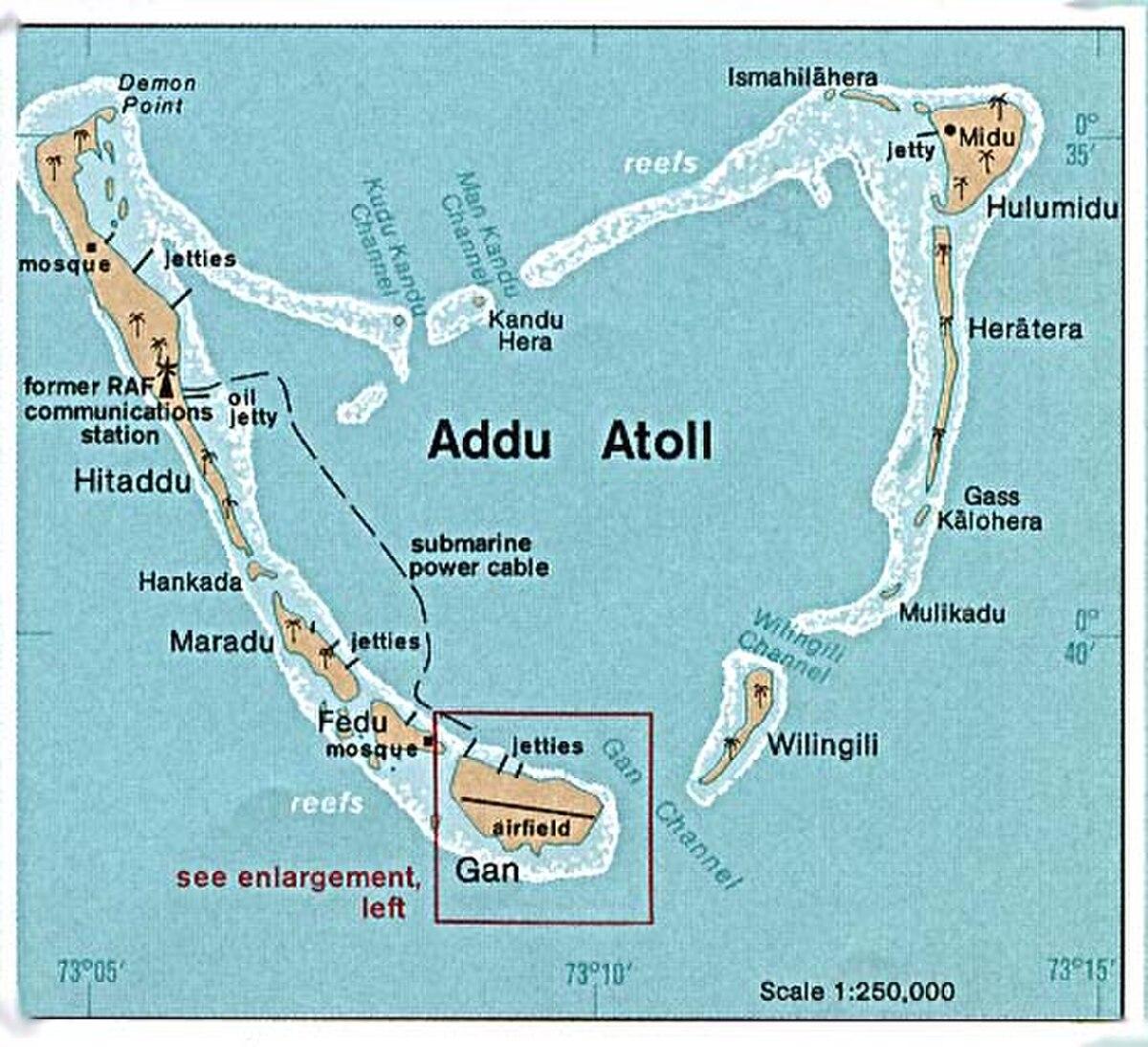
Port T — The Secret Fleet Anchorage.
After the fall of Singapore, the Royal Navy builds 'Port T' at Addu Atoll in complete secrecy — a fleet anchorage for the Eastern Fleet, coastal batteries on Gan, and Liberator bombers patrolling the Indian Ocean. In 1944, a German U-boat slips through the anti-submarine nets and torpedoes the tanker British Loyalty for the second time in its life.
Read the full storyCentral Intelligence Agency, 1976 · Public Domain
- At Pearl HarborJapanese carrier planes sink the American Pacific fleet on a Sunday morning in December 1941.
- In the New Mexico desertThe Trinity test detonates the first atomic bomb in 1945; Port T's role in the war quietly ends.
- At Bletchley ParkAlan Turing and a team of codebreakers are reading Hitler's Enigma traffic in near real time.
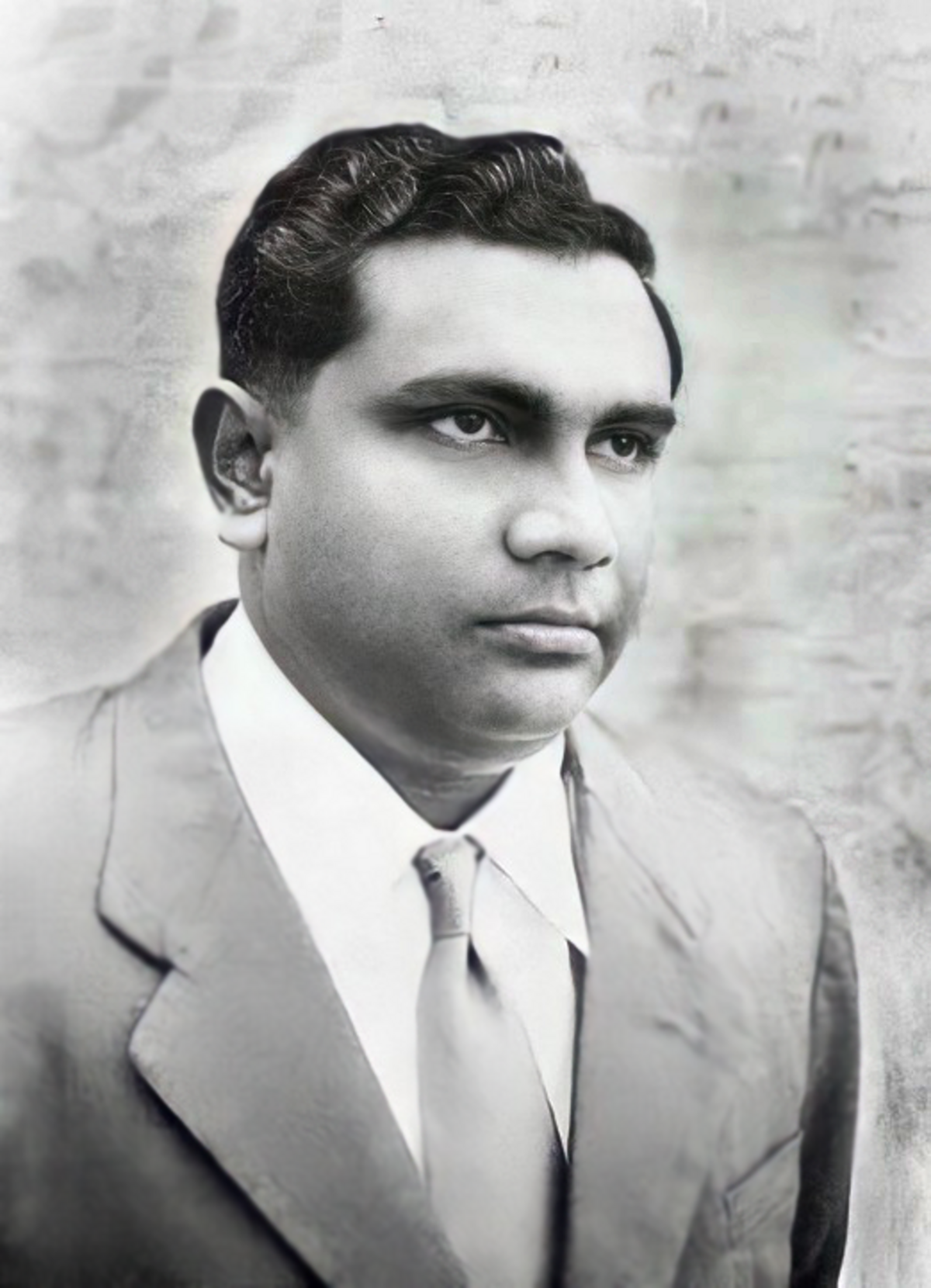
The First Republic and Amin Didi.
Mohamed Amin Didi abolishes the 812-year sultanate and becomes the Maldives' first president — a reforming republic that collapses within months, ending in his downfall and death.
Read the full story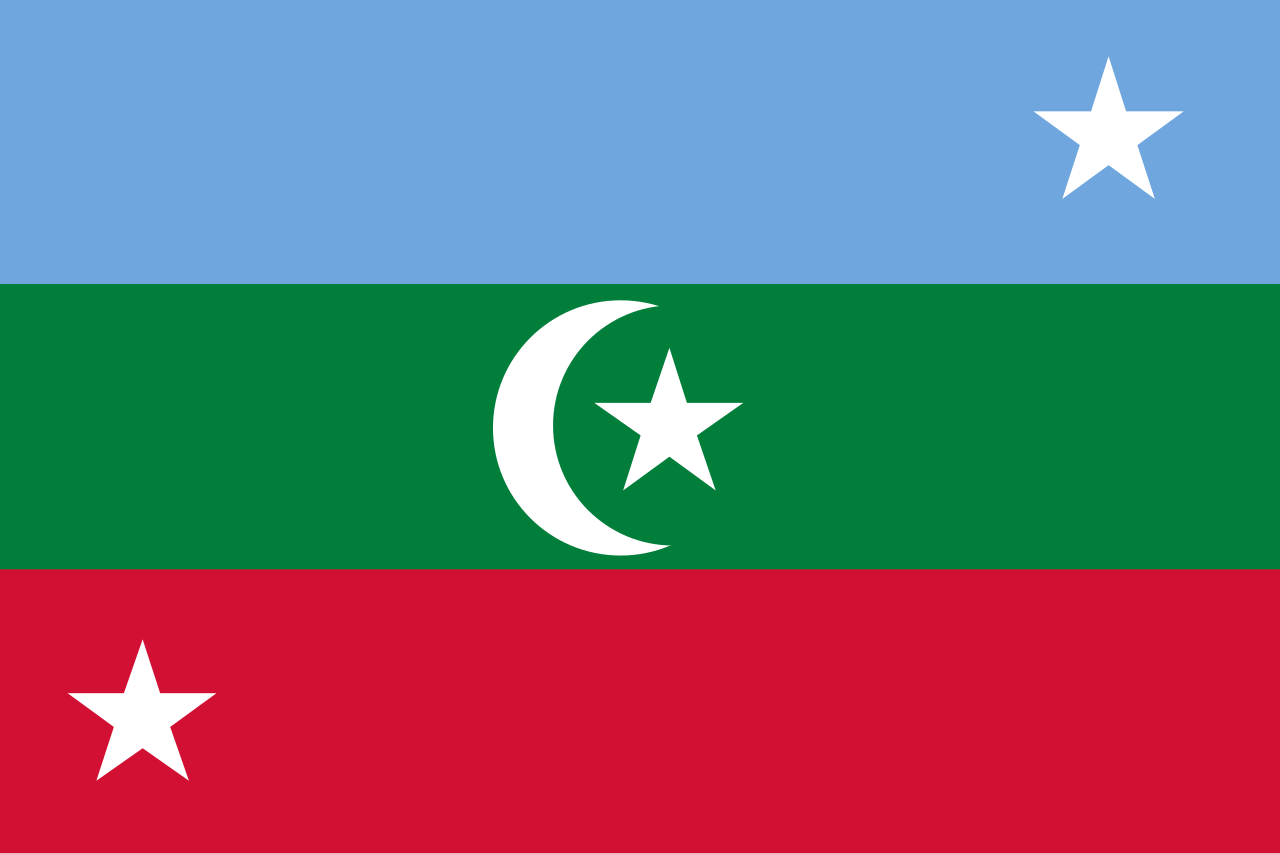
The United Suvadive Republic.
The three southernmost atolls — Addu, Huvadhu and Fuvahmulah — secede from Malé after Prime Minister Nasir cancels their work contracts at the British base. Abdullah Afif Didi is pressed into the presidency of a republic of 20,000 souls. When Britain withdraws its tacit support in 1963, the short-lived state collapses.
Read the full storyPublic Domain · Wikimedia Commons
- In HavanaFidel Castro marches into the capital in January 1959; the Cold War acquires a Caribbean front.
- In DallasPresident Kennedy is assassinated in November 1963, the same month Afeef Didi is forced into exile.
- In SaigonBuddhist monks are setting themselves on fire; American advisers number in the thousands.
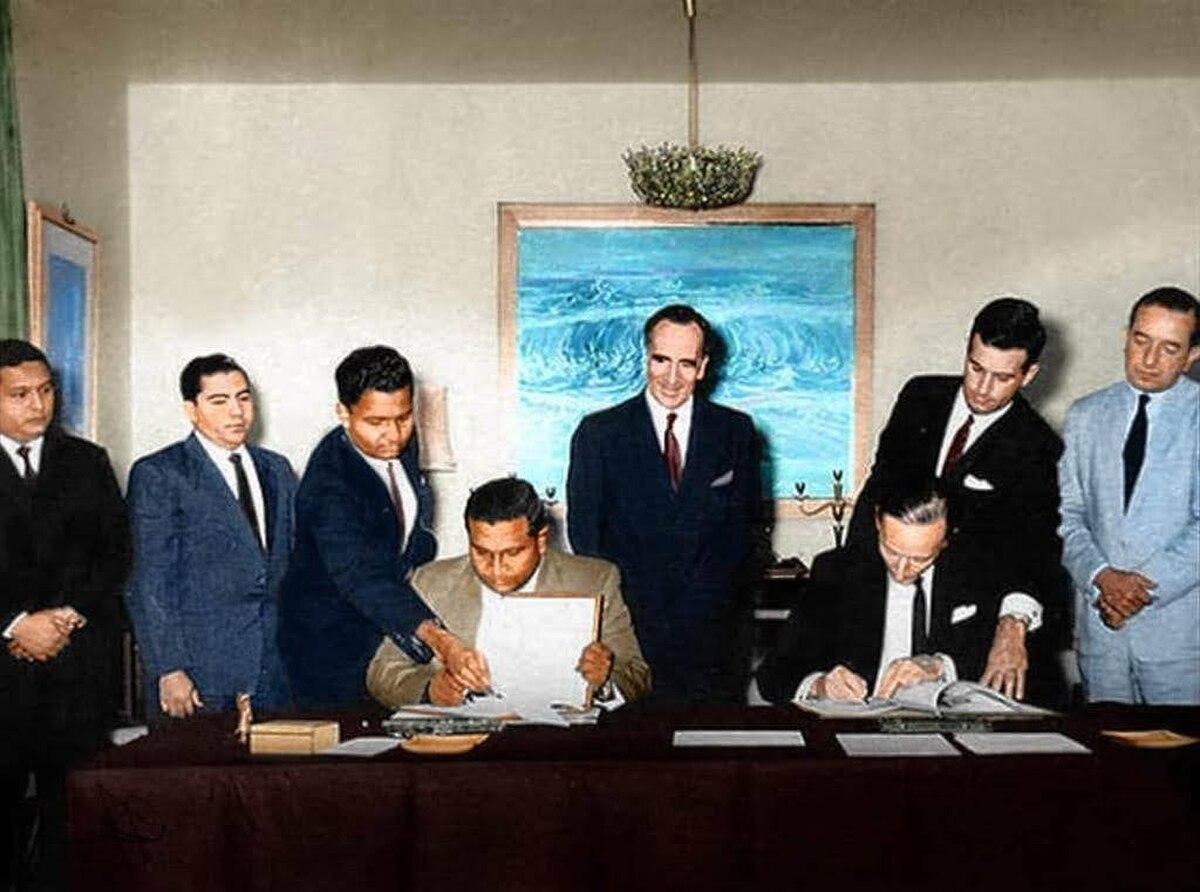
Full Independence.
Prime Minister Ibrahim Nasir signs the independence papers, formally ending 78 years of British protection. Later that same year, the Maldives becomes the 117th member state of the United Nations — a tiny nation taking its seat on the world stage.
Read the full storyPhoto: The President's Office of the Republic of Maldives · CC BY 4.0
- In WashingtonPresident Johnson signs the Voting Rights Act on 6 August, three weeks after Malé lowers the Union Jack.
- In SingaporeLee Kuan Yew is tearfully announcing secession from Malaysia, nine days after the Maldives gains independence.
- In the Gulf of TonkinAmerican Marines have just waded ashore at Da Nang; the Vietnam War is escalating by the week.
Sultanate to Republic.
A national referendum abolishes the centuries-old sultanate. The Second Republic of the Maldives is declared, and Ibrahim Nasir — already prime minister — becomes its first president.
Read the full storyPhoto: The President's Office of the Republic of Maldives · CC BY 4.0
- In ParisStudents and workers have nearly toppled De Gaulle in the May uprisings.
- In PragueSoviet tanks roll in to crush the reformist Prague Spring.
- In MemphisMartin Luther King Jr. is assassinated on the balcony of the Lorraine Motel.
Chapter 05
The Republic Era.
1972 — 2004
Kurumba opens, Gayoom rules, Heyerdahl digs, paratroopers land, and the tsunami strikes.
Background · Resort era begins
Where this history
still stands.
Sites your clients can actually walk through — the physical remains of this chapter, still standing in the Maldives today.
Kurumba Maldives
Vihamanaafushi · North Malé Atoll
The first resort in the Maldives, opened 3 October 1972. Still operating — the original jetty, restaurant and a handful of beach bungalows preserve the DNA of the entire industry.
Bandos Maldives
Bandos · North Malé Atoll
Opened in 1972 weeks after Kurumba and continuously operating since — the clearest living record of how a 1970s fishing-island resort evolved into modern Maldives hospitality.
Islamic Centre & Grand Friday Mosque
Malé · Ameer Ahmed Magu
Gayoom's signature 1984 project, crowned with a gold-anodised dome visible from the harbour — a defining monument of the early republican capital.
Tsunami Monument
Malé · Boduthakurufaanu Magu
Twisted steel rods spiralling around 20 columns — one for each atoll — commemorating the 82 Maldivians killed by the 2004 Boxing Day tsunami, the event that closes this chapter.
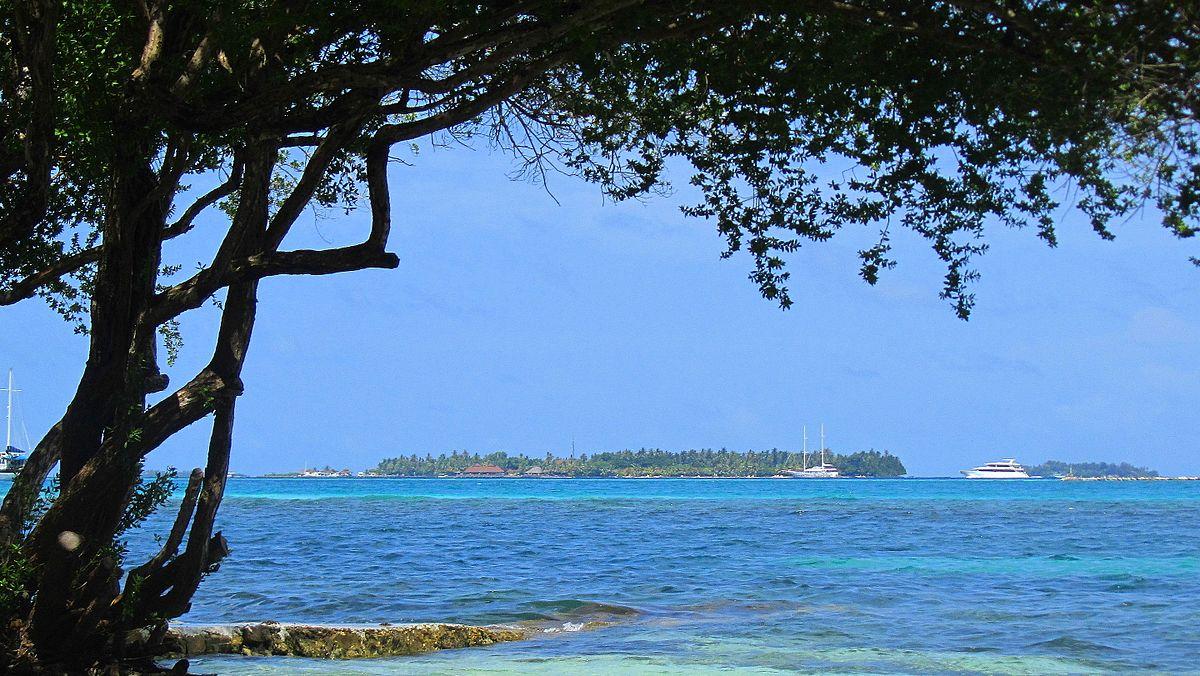
Kurumba — The First Resort.
Kurumba Village opens as the Maldives' very first tourist resort. Italian travel agent George Corbin and local entrepreneurs — Ahmed Naseem, M.U. Maniku and Hussain Afeef — hand-build thirty simple beach huts with coral, palm leaves and brackish water showers. It is the quiet beginning of a global luxury brand.
Read the full storyPhoto: Flickr · Wikimedia Commons · CC BY-SA 2.0
- In MunichThe Olympic Games have just closed, overshadowed by the massacre of Israeli athletes in September.
- In New YorkThe Godfather is in its fourth month as the world's highest-grossing film.
- Over the PacificThe last Apollo mission, Apollo 17, will launch in December — the final time humans walk on the Moon.
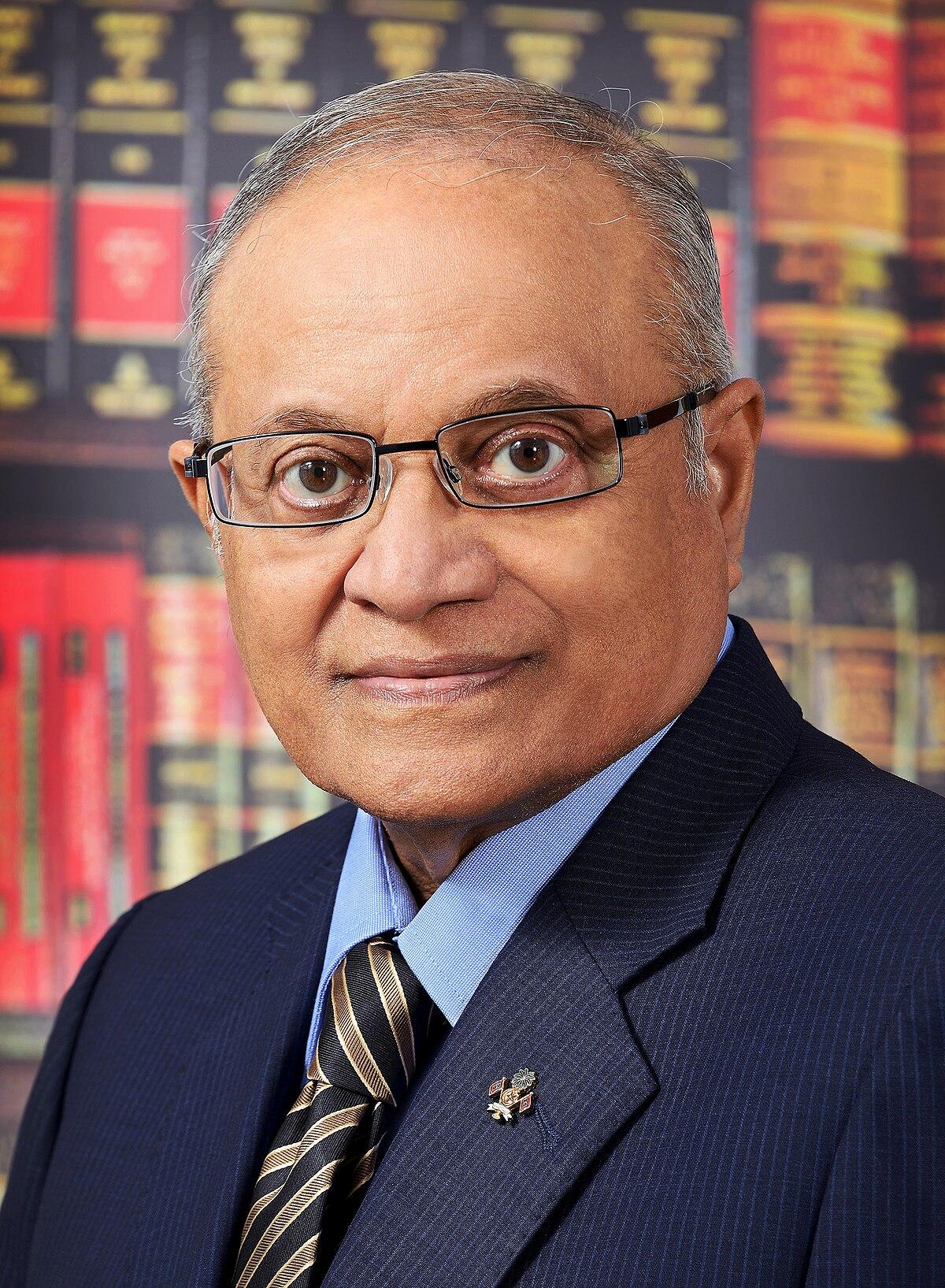
Thirty Years of Gayoom.
Maumoon Abdul Gayoom, a Cairo-educated Islamic scholar, is elected president with 92.96% of the vote. He will win six unopposed referendums, survive three coup attempts, and preside over the birth of modern resort tourism — turning a subsistence fishing economy into a global luxury brand.
Read the full storyPhoto: The President's Office of the Republic of Maldives · CC BY 4.0
- At Camp DavidSadat and Begin sign the accords that will end three decades of Egyptian–Israeli war.
- In RomeThe Catholic Church elects three popes in one year, ending with the Polish John Paul II.
- In OldhamLouise Brown, the world's first IVF baby, is born in July.
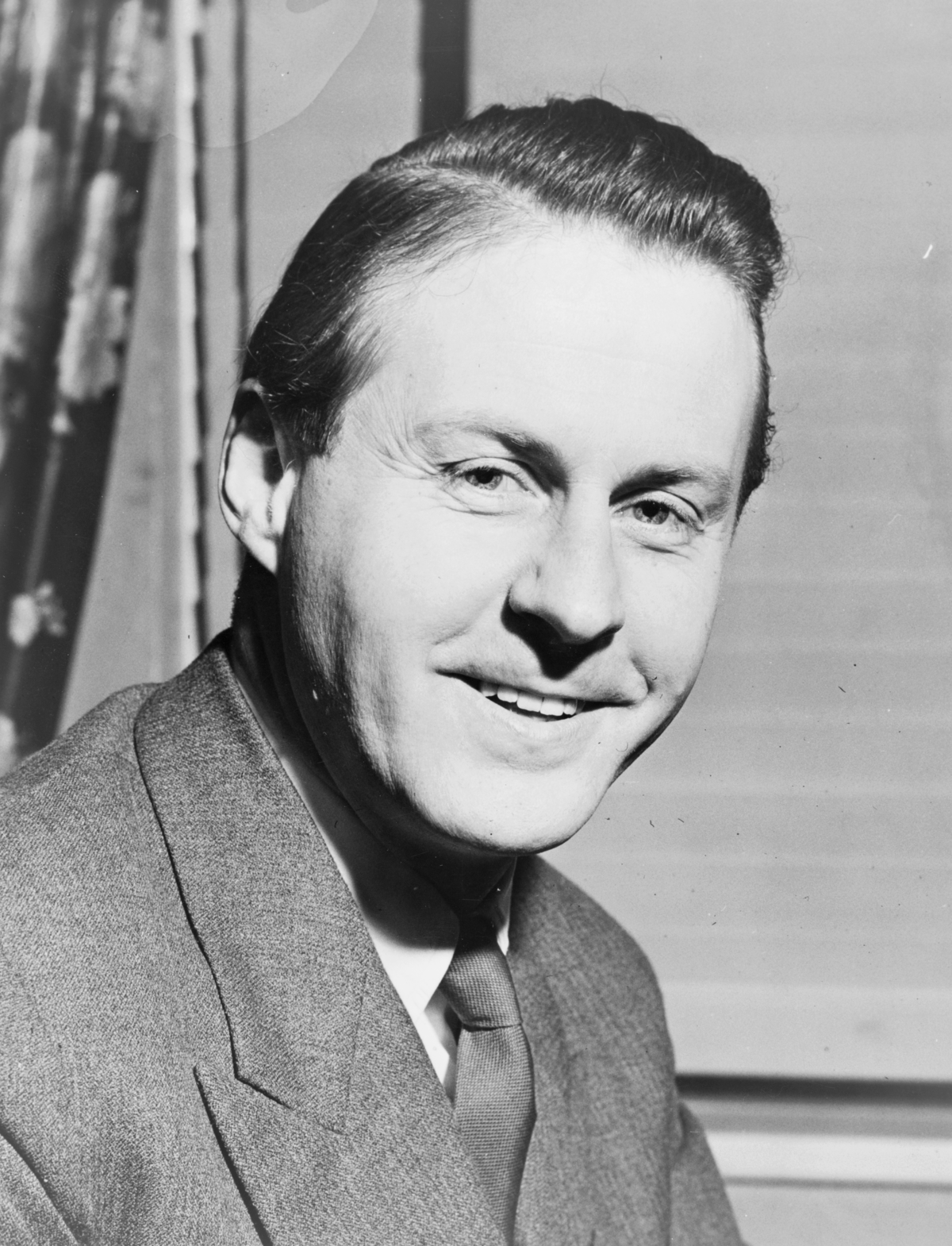
Heyerdahl and the Maldive Mystery.
A single airmail photograph of a stone Buddha draws the Norwegian explorer Thor Heyerdahl to the atolls. Across three expeditions he documents stepped stone platforms and sun-aligned 'hawittas', arguing that a sun-worshipping 'Redin' people preceded both Buddhism and Islam. His theory remains contested; the romance endures.
Read the full storyPhoto: New York World-Telegram & Sun Collection · Public Domain
- In the South AtlanticBritain and Argentina are fighting over the Falkland Islands; the Belgrano is torpedoed in May 1982.
- In CupertinoApple unveils the Macintosh during the 1984 Super Bowl; the personal-computer era begins in earnest.
- In BhopalA Union Carbide gas leak kills thousands in December 1984 — the worst industrial accident in history.
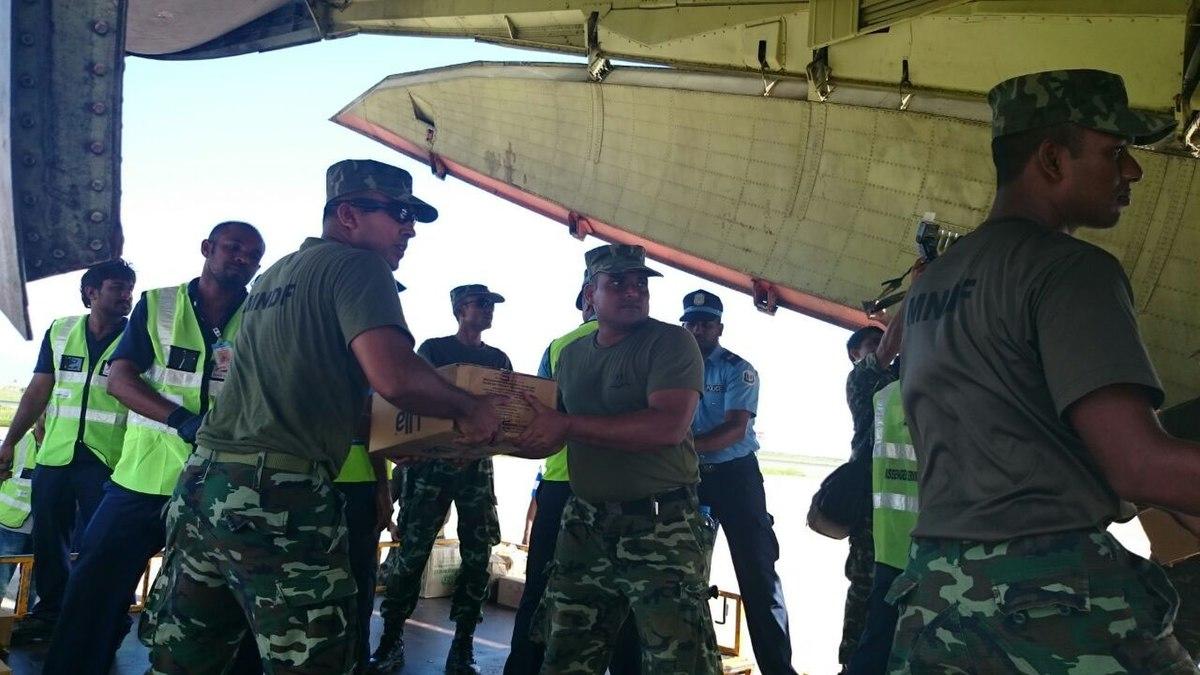
Operation Cactus.
Before dawn, eighty PLOTE Tamil mercenaries hired by a disgruntled Maldivian businessman land speedboats from a hijacked freighter and seize Malé. Within hours, Indian Air Force Il-76s airlift paratroopers to Hulhulé; the coup collapses before sunset. Margaret Thatcher calls it 'a very valuable service'.
Read the full storyPhoto: Ministry of Defence, Government of India · Wikimedia Commons · GODL-India
- In WashingtonGeorge H. W. Bush wins the presidential election the day after Indian paratroopers land in Malé.
- In IslamabadBenazir Bhutto is elected prime minister — the first woman to lead a modern Muslim-majority state.
- In YellowstoneThe great summer wildfires have just burned themselves out after scorching a third of the park.
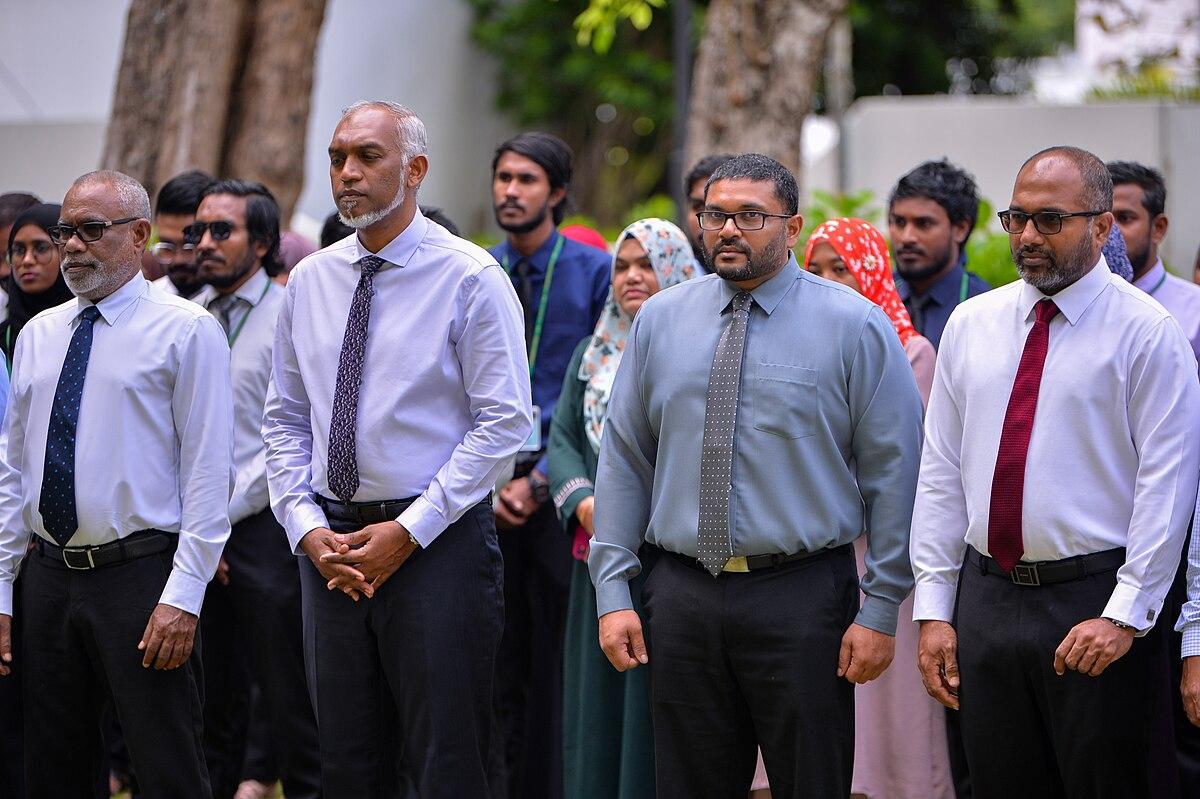
The Indian Ocean Tsunami.
On Boxing Day, the tsunami strikes with devastating force. Around 100 lives are lost, 12,000 people displaced, and economic losses reach nearly two-thirds of GDP. The nation rebuilds with extraordinary speed, helped by an outpouring of global support.
Read the full storyPhoto: The President's Office of the Republic of Maldives · CC BY 4.0
- In KyivThe Orange Revolution forces a rerun of the rigged presidential election; Yushchenko wins on the 26th.
- In BaghdadAmerican forces are fighting the second battle of Fallujah; the Iraq insurgency is at full pitch.
- On the webFacebook, launched in a Harvard dorm ten months earlier, crosses a million users.
Chapter 06
21st Century.
2008 — Today
Democracy, the underwater cabinet, the geopolitics of the Indian Ocean, and 180+ resorts welcoming the world.
Background · The present chapter
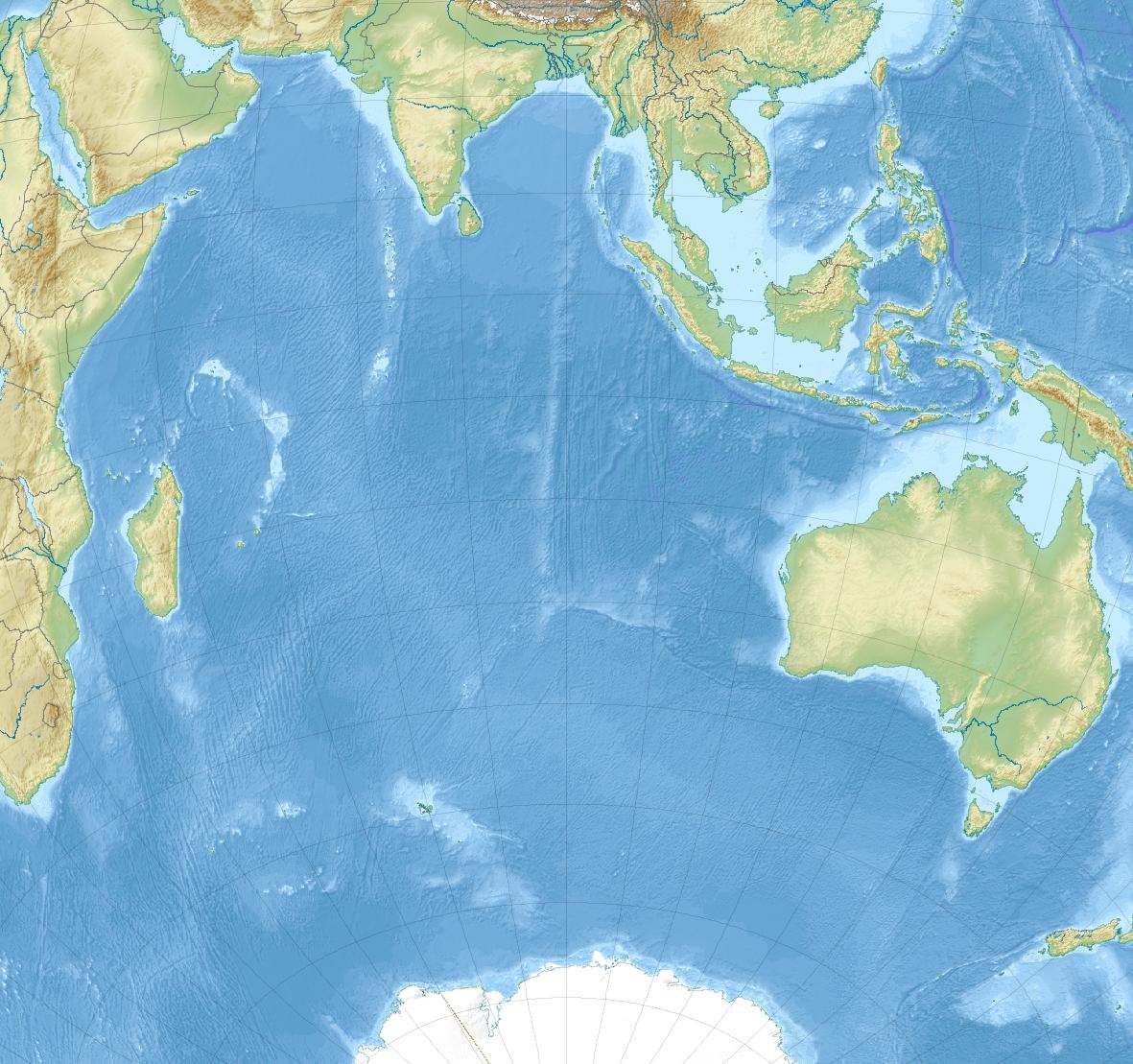
Uwe Dedering · Wikimedia Commons · CC BY-SA 3.0
Where this history
still stands.
Sites your clients can actually walk through — the physical remains of this chapter, still standing in the Maldives today.
Sinamalé Bridge (China–Maldives Friendship Bridge)
Malé – Hulhulé – Hulhumalé
The country's first fixed road link, opened 2018 — a 2.1 km, six-lane symbol of the modern Maldives' turn towards China and towards urban rather than purely island life.
Hulhumalé
North Malé Atoll
An entirely reclaimed island started in 1997 and still growing — home to a third of the capital's population and the government's long answer to both overcrowding and sea-level rise.
Velana International Airport
Hulhulé · North Malé Atoll
The Code F runway, new seaplane terminal and 2024 main terminal are the physical expression of the tourism boom this chapter describes — five million arrivals through one small island.
Republic Square & Jumhooree Maidhaan
Malé · Boduthakurufaanu Magu
The plaza where the 2008 democracy protests and the 2012 transfer of power played out, bounded by the Islamic Centre and the presidential offices — the theatre of 21st-century Maldivian politics.
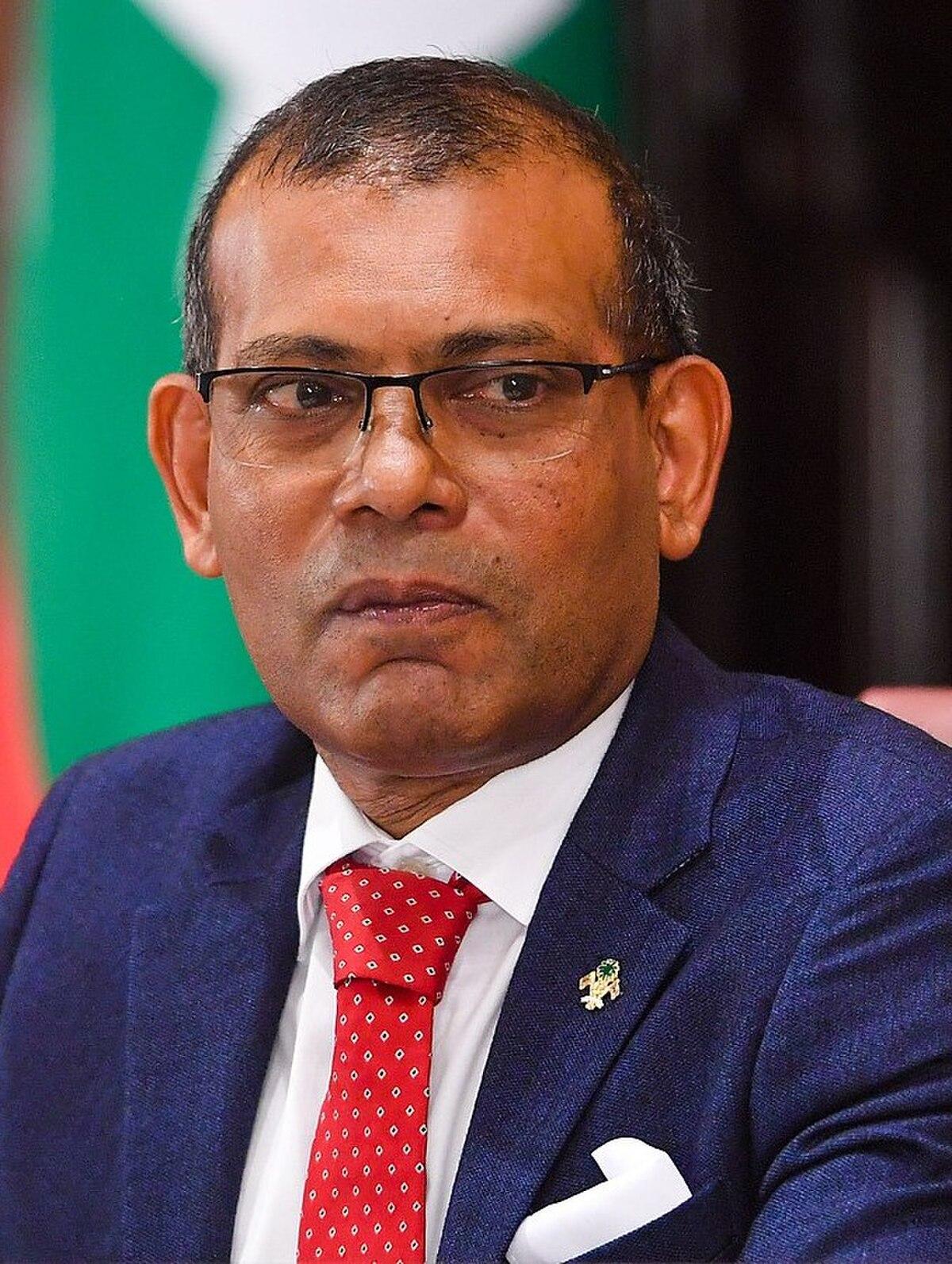
First Multi-Party Election.
Mohamed Nasheed wins the country's first multi-party presidential election, ending 30 years of Gayoom's rule and ushering in a new democratic era. It is a moment watched closely across South Asia.
Read the full storyPhoto: The President's Office of the Republic of Maldives · CC BY 4.0
- In ChicagoBarack Obama is elected the first Black president of the United States in November.
- On Wall StreetLehman Brothers collapses in September; the global financial crisis is beginning.
- In BeijingChina hosts the Summer Olympics on 8/8/08; Usain Bolt runs 9.69 in the 100 metres.
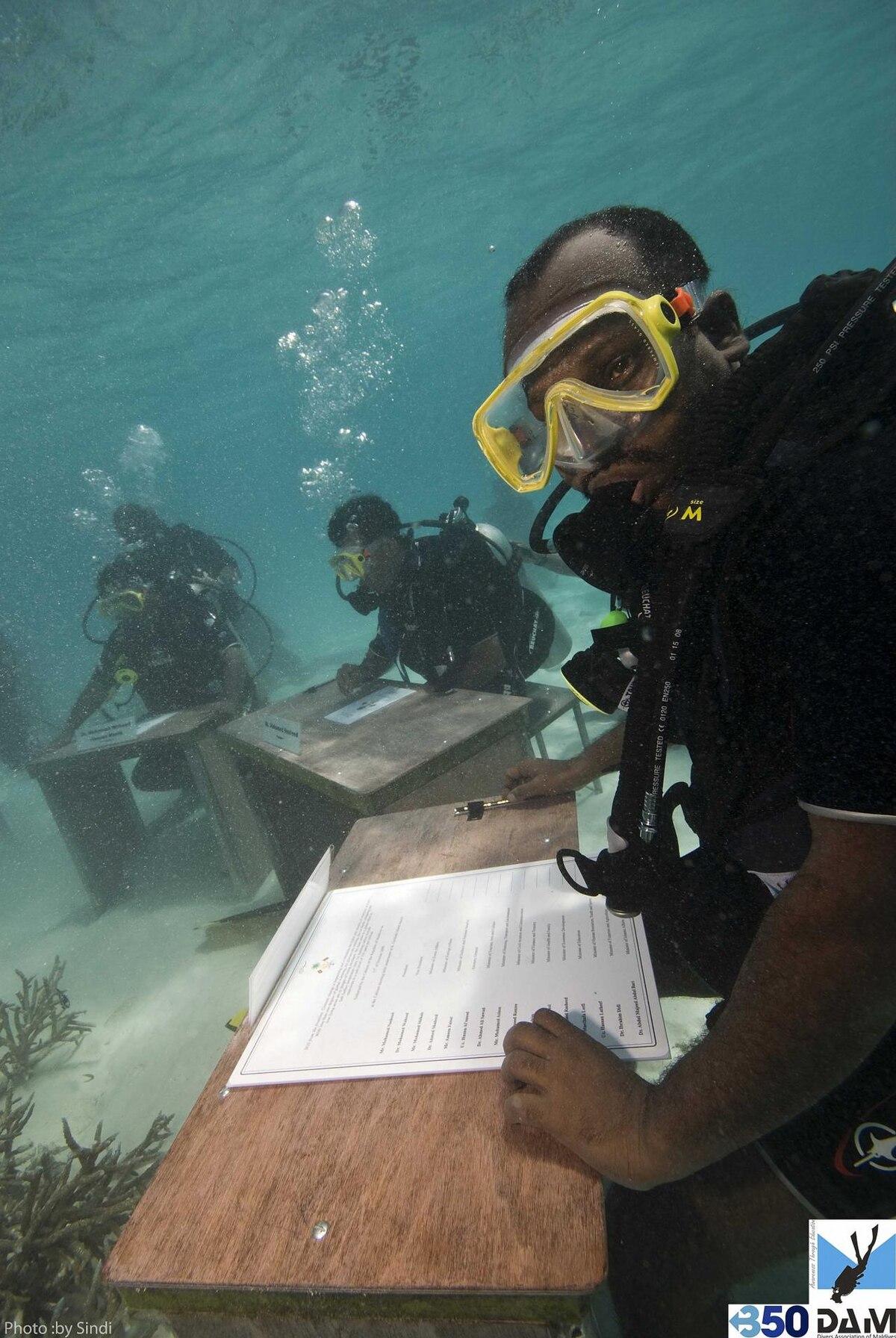
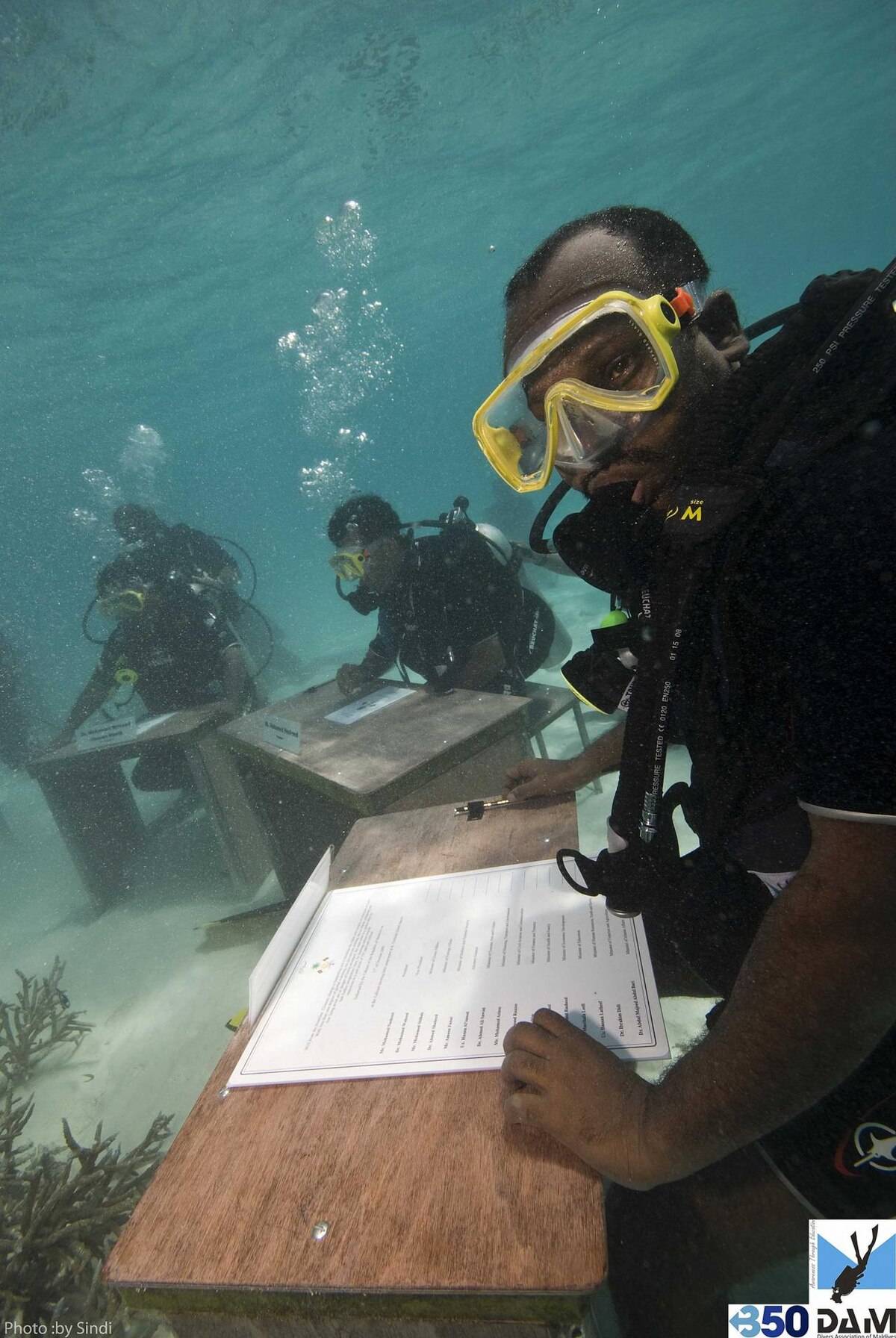
The Underwater Cabinet Meeting.
To highlight the existential threat rising seas pose to the Maldives, President Nasheed convenes the world's first underwater cabinet meeting off Girifushi. Ministers in scuba gear sign an SOS declaration to the world's climate negotiators. The images circle the globe.
Read the full storyPhoto: Max Milas · Wikimedia Commons · CC BY-SA 4.0
- In OsloTwo weeks earlier, Barack Obama was awarded the Nobel Peace Prize after only nine months in office.
- In CopenhagenDelegates are preparing for the COP15 climate summit in December — which will end in acrimonious failure.
- Over the AtlanticH1N1 swine flu has just been declared a pandemic by the WHO; airports are taking temperatures.
Resignation at Gunpoint?.
President Mohamed Nasheed resigns amid a police and military mutiny — an event he calls a coup and his successors call lawful. The young democracy's first constitutional crisis remains bitterly contested.
Read the full story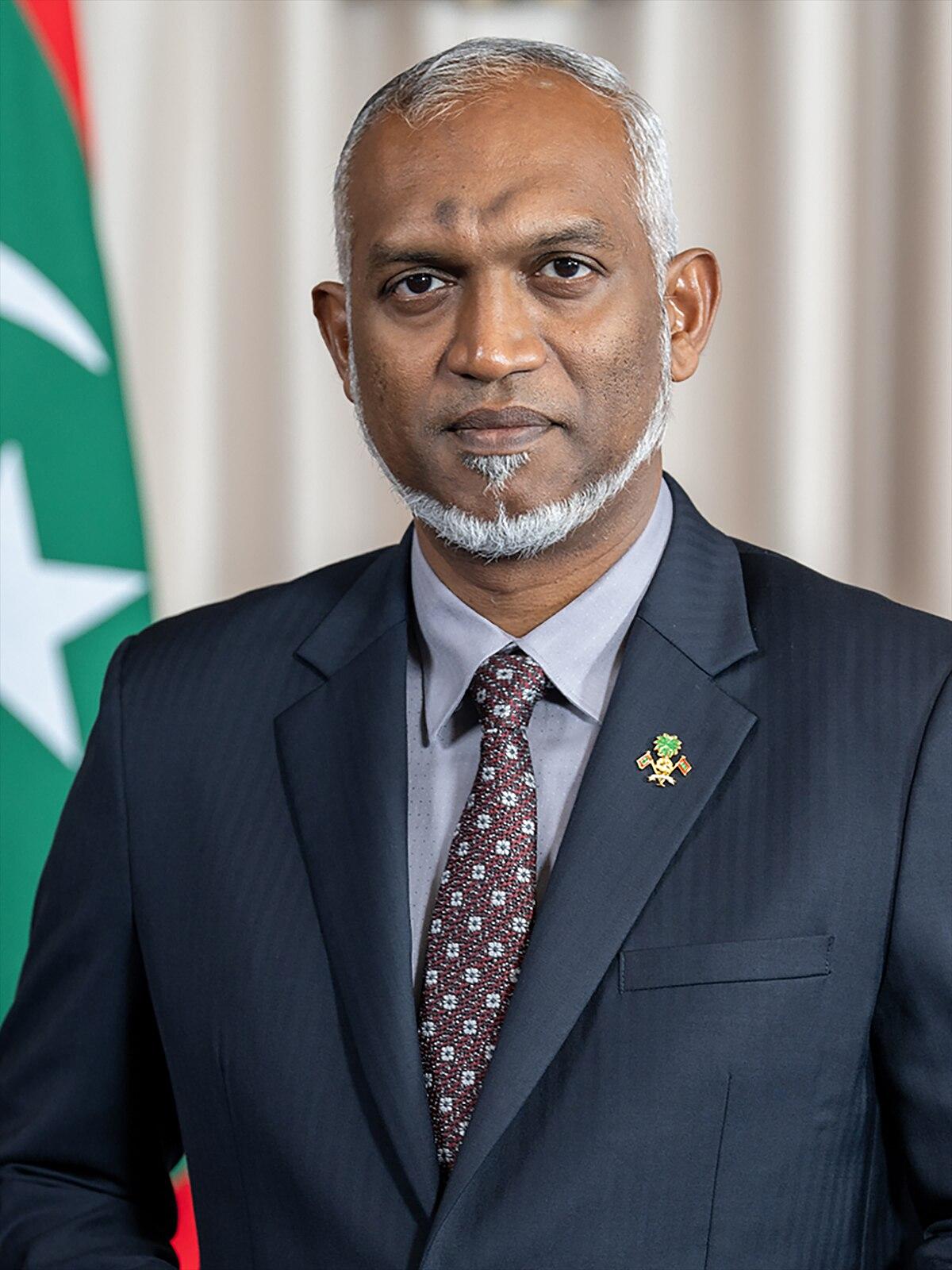
The India–China Pendulum.
The archipelago becomes a proxy in the Indian Ocean's great-power contest. Yameen pivots to Beijing, Solih swings back toward Delhi, and Muizzu campaigns on 'India Out' in 2023 — only to quietly reverse course a year later, accepting Indian climate aid and inaugurating an Indian-funded Ministry of Defence building. Sovereignty, the Maldives learns again, is a balancing act.
Read the full storyOffice of the President of Maldives, 2023 · Wikimedia Commons · CC BY 4.0
- In BeijingXi Jinping unveils the Belt and Road Initiative in 2013; Chinese loans begin reshaping Indian Ocean politics.
- In the Galwan ValleyIndian and Chinese troops fight hand-to-hand on a Himalayan ridge in June 2020; twenty soldiers die.
- In ColomboSri Lanka defaults on its debt in 2022 and hands Hambantota port to China on a 99-year lease.
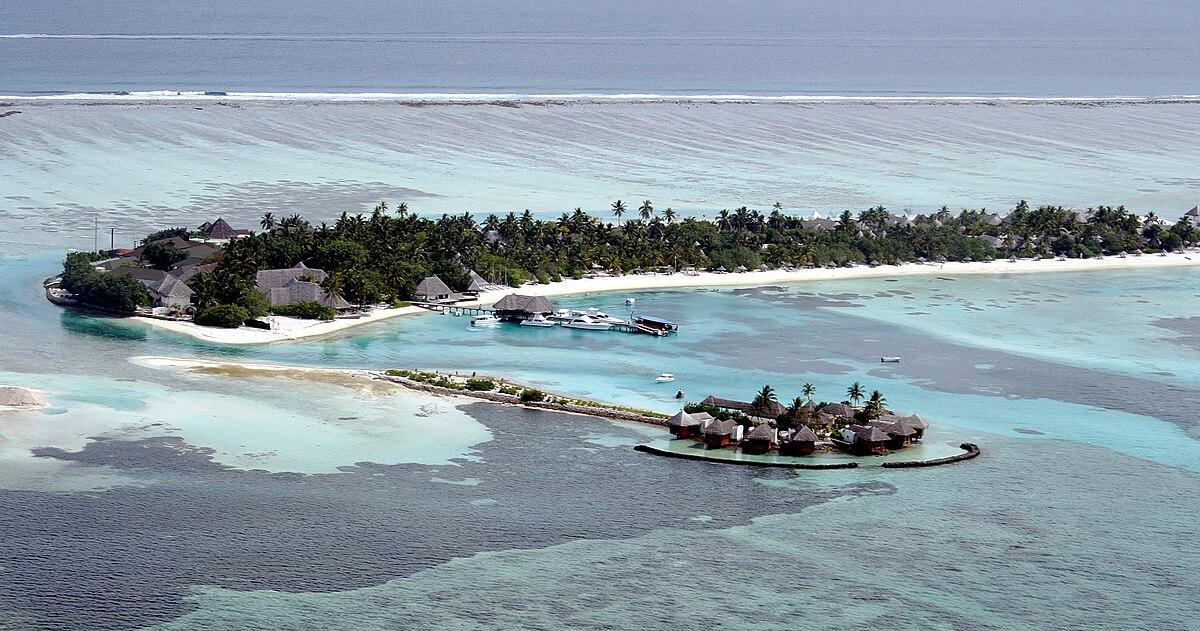
180+ Resorts. One Dream..
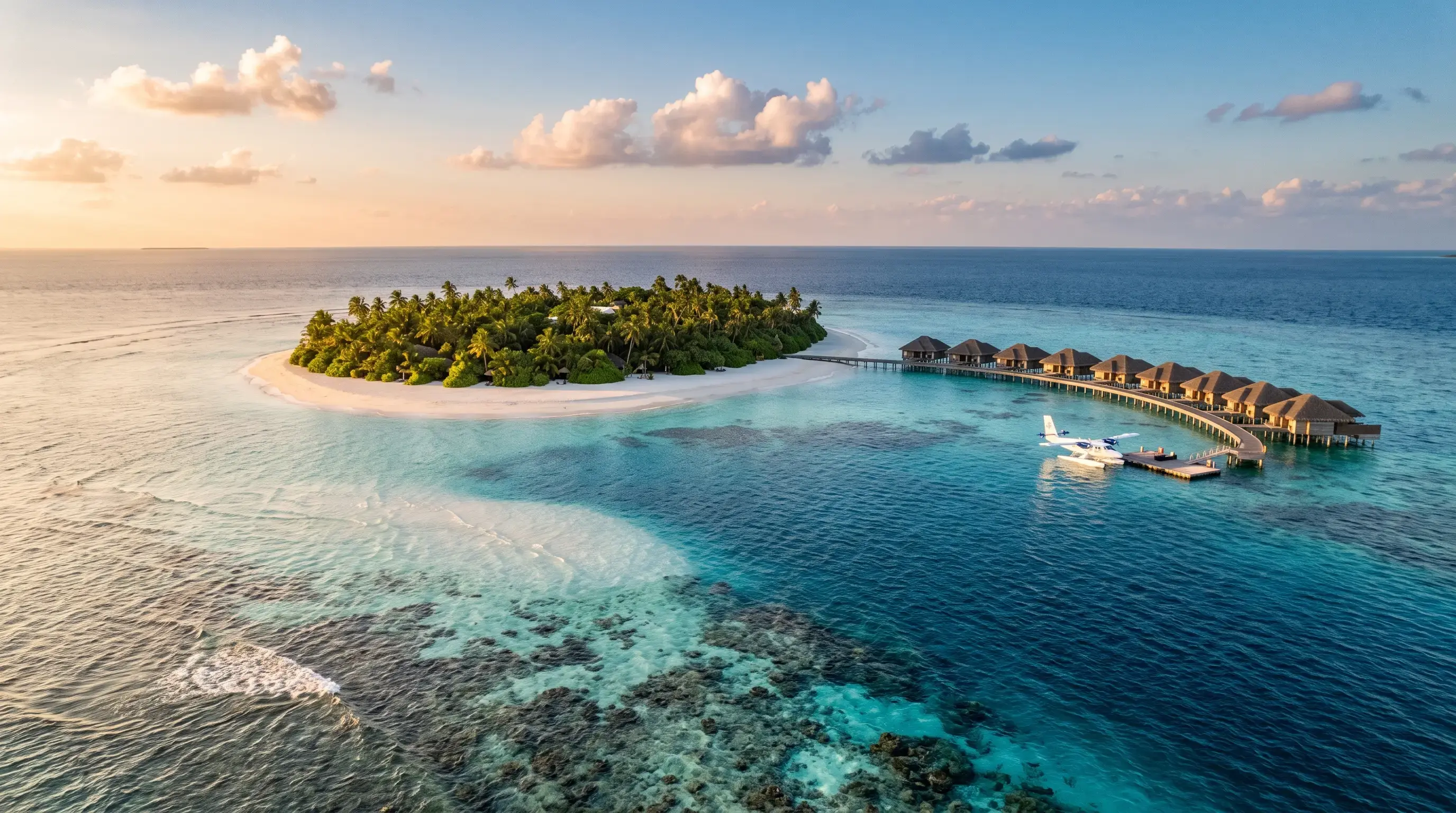
The Maldives now welcomes more than 1.8 million visitors a year across over 180 world-class resorts. For two decades, Resort Life has been a trusted partner to travel agents discovering what makes these islands unlike anywhere else on earth.
Photo: Dr. Ondřej Havelka · Wikimedia Commons · CC BY-SA 4.0
- Across the worldInternational tourism has rebounded past its pre-pandemic peak; 1.5 billion people cross borders each year.
Chapter 07
Climate.
2012 — 2100
The reefs, the rising sea, and the unfinished chapter that every Maldivian alive today is helping to write.
Background · Underwater cabinet, Girifushi · 2009

AlainV / Ushau97 · Wikimedia Commons · CC BY-SA 3.0
Where this history
still stands.
Sites your clients can actually walk through — the physical remains of this chapter, still standing in the Maldives today.
Six Senses Laamu — Maldives Underwater Initiative
Olhuveli · Laamu Atoll
Home to a resident marine-biology team running one of the country's longest coral-restoration and manta-ID programmes — guests join reef surveys and nursery work directly.
Four Seasons Landaa Giraavaru — Marine Discovery Centre
Landaa Giraavaru · Baa Atoll
The headquarters of the Maldives' first coral-propagation and manta-research hub inside a UNESCO Biosphere Reserve, with daily public-access lab tours and dive-based restoration.
Anantara Kihavah — Holistic Marine Programme
Kihavah Huravalhi · Baa Atoll
Runs a permanent on-island marine biologist, an astronomer's observatory and a reef-regeneration plot — the clearest luxury example of how resorts are positioning themselves as climate stewards.
Hulhumalé Phase II
North Malé Atoll
The 'City of Hope' — raised 2 m above sea level and designed to house 240,000 people by 2040. The Maldives' literal answer to the question this chapter asks.
Hanifaru Bay Marine Protected Area
Baa Atoll
The UNESCO-protected feeding bay where climate-driven currents still produce the world's largest reef-manta aggregations each June–November — a living benchmark for reef health.
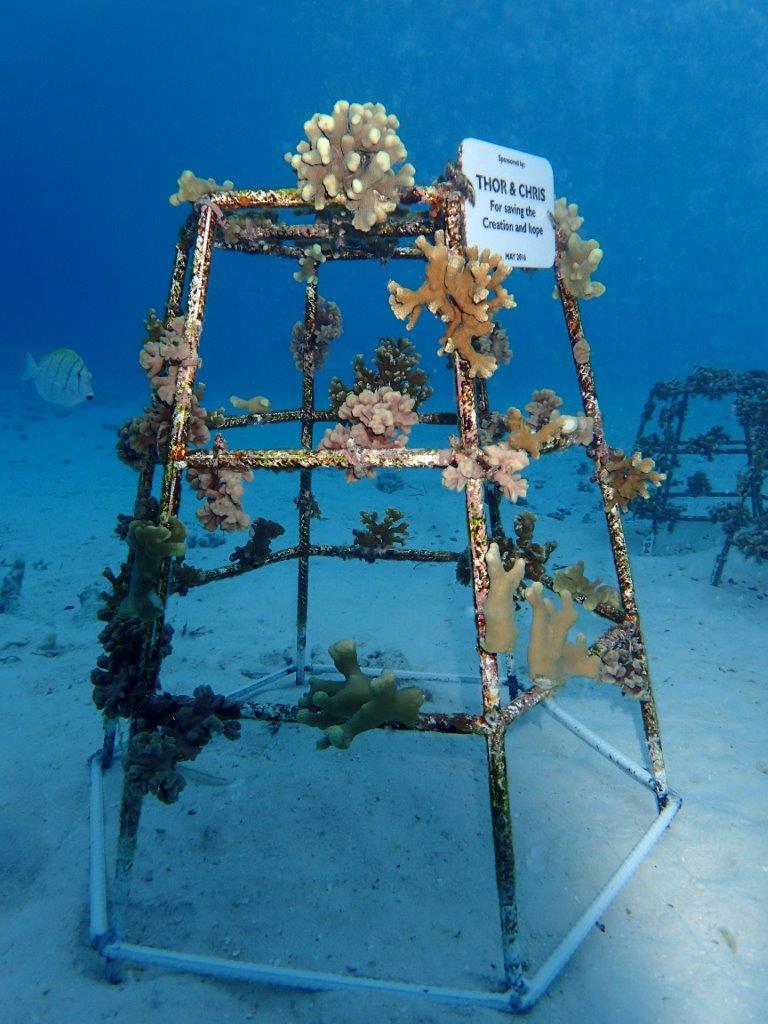
Gardening the Reefs.
Storm-broken coral fragments are lashed to steel frames, lowered into lagoons, and grown out like nursery plants. By 2024, more than 600,000 coral fragments have been replanted across the archipelago. It is slow, patient work — and the only hope the reefs have of outpacing a warming ocean.
Read the full storyPhoto: Pittigrilli · Wikimedia Commons · CC BY-SA 4.0
- On the Great Barrier ReefThree successive mass-bleaching events between 2016 and 2022 kill more than half of the shallow corals.
- In Paris196 nations sign the Paris Agreement in December 2015 — the first global climate accord with teeth.
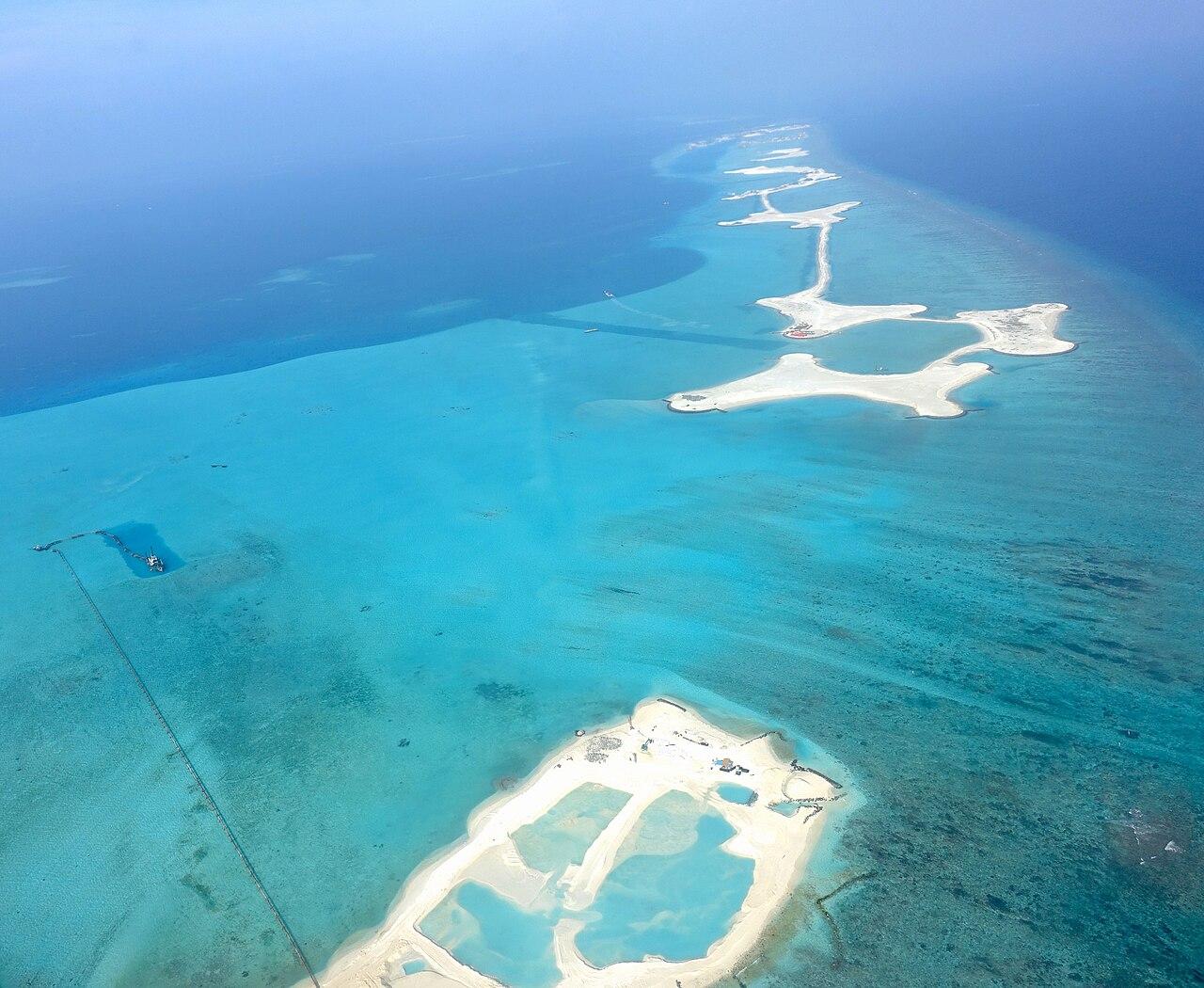
The Island That Was Built.
Two metres above sea level — double the national average — Hulhumalé is an entirely artificial island, reclaimed from a reef flat by dredging coral sand. By 2030 it will house a third of the country's population. It is the Maldives' most visible answer to the rising sea.
Read the full storyPhoto: Luka Peternel · Wikimedia Commons · CC BY-SA 4.0
- On the Gulf coastHurricane Katrina breaks the levees of New Orleans in 2005; a whole city is evacuated.
- In DubaiThe Palm Jumeirah and the World Islands rise from the Gulf — land reclamation as spectacle.
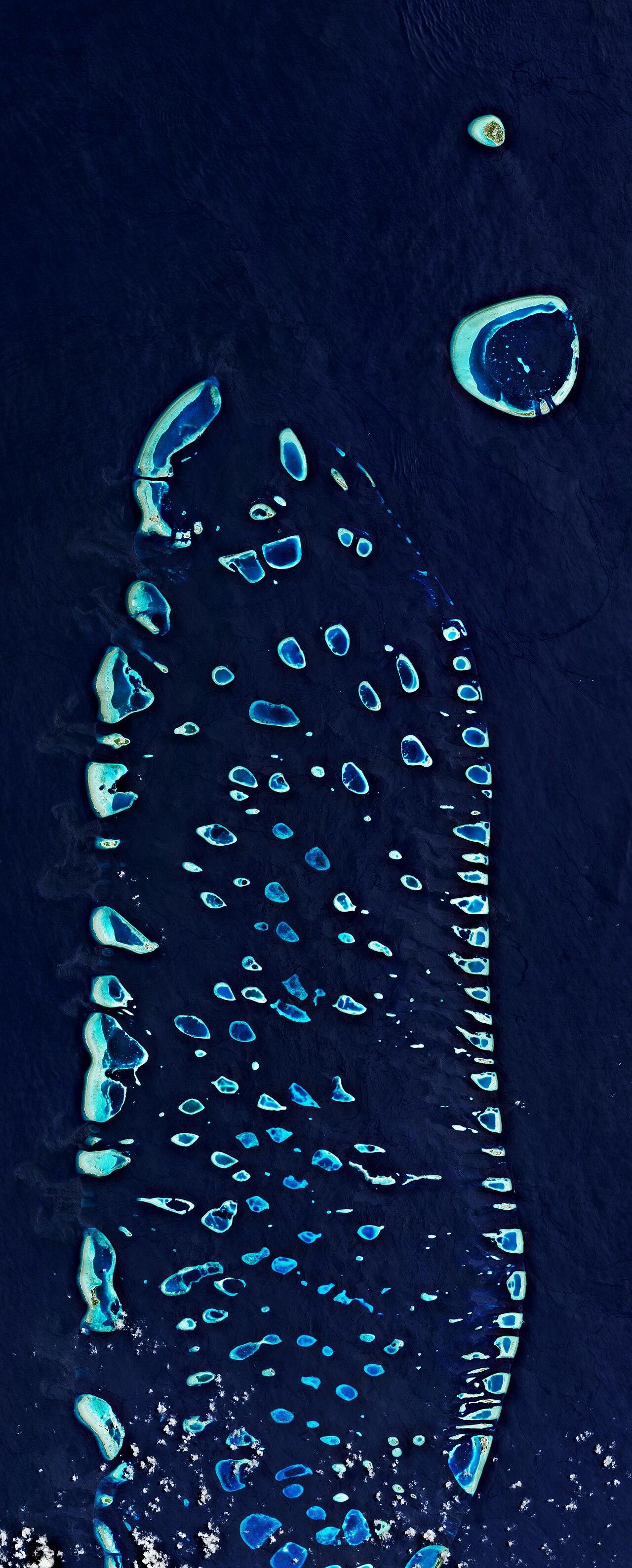
One-and-a-Half Metres.
The Maldives' average elevation above sea level is one and a half metres. IPCC high-emissions projections for 2100 put sea-level rise at up to one metre. The country now plans on two time horizons: protect what is here, and prepare, quietly, for everything else.
Read the full storyImage: European Space Agency · Wikimedia Commons · Attribution
- At the polesArctic summer sea ice is forecast to vanish in the 2030s; Antarctic glaciers are already past the tipping point.
- In JakartaIndonesia is building an entirely new capital, Nusantara, because the old one is sinking into the Java Sea.
- On a thousand coastlinesMiami, Venice, Dhaka, Shanghai — every low-lying city is writing the same adaptation plan the Maldives is writing now.
Sources & further reading
This timeline draws from scholarly work, government archives, and primary sources. Where contemporary photographs do not exist, we have used period-appropriate imagery from Wikimedia Commons, all under open licences.
Scholarly works
- Clarence Maloney — People of the Maldive Islands (Orient Longman, 1980)
- Xavier Romero-Frias — The Maldive Islanders — Study of popular culture
- Thor Heyerdahl — The Maldive Mystery (1986)
- Egil Mikkelsen — Archaeological Excavations of a Monastery at Kaashidhoo (2000)
- Hogendorn & Johnson — The Shell Money of the Slave Trade (Cambridge, 1986)
- Peter Doling — From Port T to RAF Gan (Woodfield, 2003)
Articles & archives
- Britannica — History of the Maldives
- Britannica — Ibn Battuta
- ORIAS Berkeley — Ibn Battuta in the Maldives
- Wikipedia — Portuguese Maldives
- Wikipedia — RAF Gan
- Wikipedia — 1988 Maldives coup attempt (Operation Cactus)
- Wikipedia — Kuruhinna Tharaagandu (Kaashidhoo dig)
- UN OCHA — Maldives Tsunami Needs Assessment
- BBC News — Maldives cabinet makes a splash (2009)
- Kurumba Maldives — Our Story
Historical imagery courtesy of Wikimedia Commons contributors — see each image credit above. Dates for events tied to the Hijri calendar (e.g. the 1573 liberation) shift slightly in the Gregorian calendar and are observed on their lunar anniversary.
The next chapter begins
with you.
2006 — present · Still being written
Twenty years in the islands. Four offices worldwide. Contracts with more than one hundred and eighty resorts. We do not sell the Maldives — we introduce you to it, the way a friend would, the way the people who live here do.
The next page is blank · You write it with us