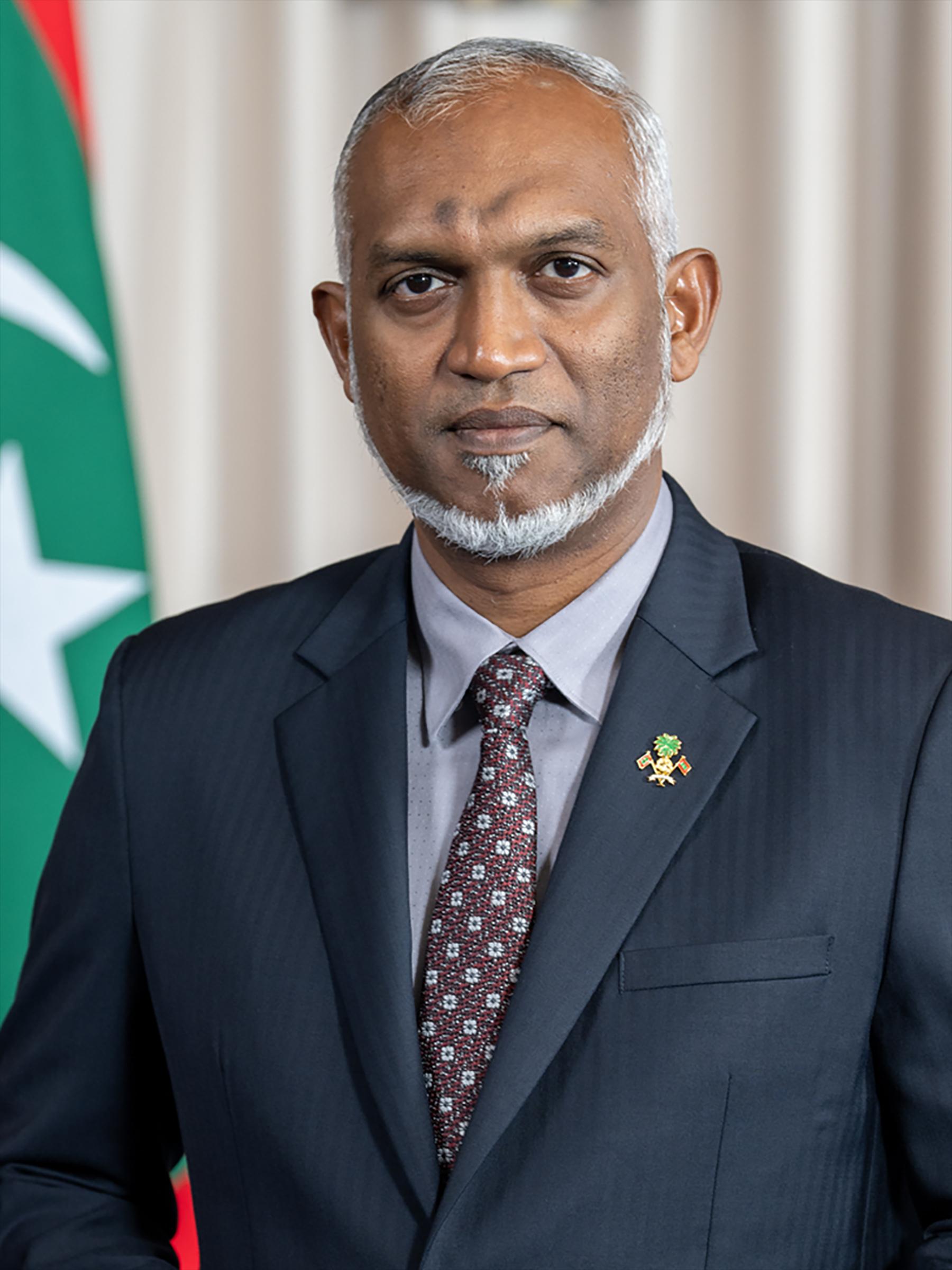
Resort Life Maldives
All ResortsBrowse every Maldives propertyFamily ResortsKids clubs, lagoons & family villasAdults-OnlySerene escapes for couples & friendsHoneymoonRomantic villas & private diningWellness & SpaSpa retreats & holistic wellbeingSurfingWorld-class breaks & surf cultureLuxuryUltra-premium private islandsValue StaysQuality without the luxury priceAll-InclusiveMeals, drinks & activities includedDiving ResortsReef access, dive centres & PADIWater VillasOverwater bungalows with direct ocean accessBudget StaysAffordable resorts under 400 USD per nightGuesthousesLocal island stays & authentic experiences
AtollsMapEventsContact
View All Insights →

Expert guides, resort stories & Maldives inspiration.

GuidesDestination tips, island guides & travel planningResortsIn-depth resort reviews, features & comparisonsAgent HubResources for travel agents booking the MaldivesNewsNew openings, offers & Maldives travel updatesEditorialInspiring stories from the Indian Ocean
Agent Login
Back to the timeline
The cast

A who’s who of
the Maldives.

18 figures · 12 portraits · 2,500 years

A Moroccan judge who stayed a year and left us the best medieval description of the islands. A Breton merchant who was shipwrecked and taught the world what the Maldives looked like. Three sultans in succession who happened to be sisters. A president who held a cabinet meeting six metres underwater. Scroll through the cast that shaped these atolls — each name linked back to the moments they lived through.

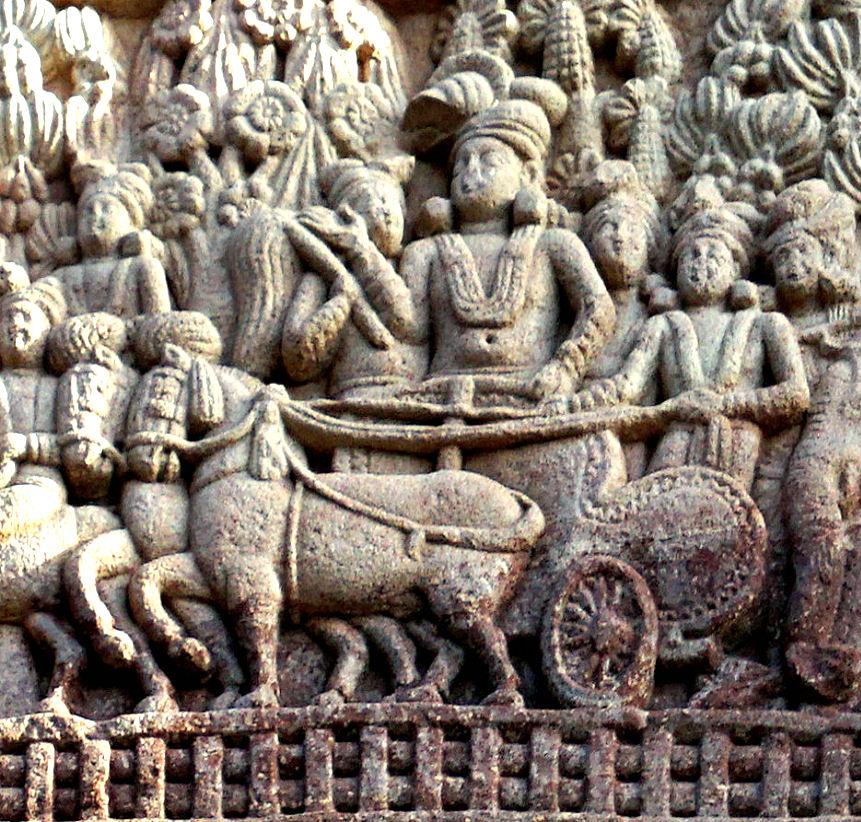
Bas-relief of Ashoka visiting the Ramagrama stupa, Sanchi Stupa 1, southern gateway
Sanchi Stupa 1 southern gateway · Wikimedia Commons · Public Domain
r. 268 – 232 BCEMauryan emperor, patron of the Buddhist mission

Emperor Ashoka.

No authentic portrait of Ashoka survives, and yet his shadow falls across the whole of pre-Islamic Maldivian life. The third emperor of the Mauryan dynasty, he ruled an empire that stretched from Afghanistan to the Bay of Bengal, and after the carnage of the Kalinga war he converted to Buddhism and dispatched missions across the Indian Ocean. Those missions reached the islands. For more than a thousand years afterwards, Maldivians built stupas of coral stone, carved Sanskrit inscriptions, and evolved the Eveyla Akuru script from the Brahmi alphabets that had travelled south with Ashoka's monks. The religion the Buddhist monks brought only dissolved in 1153, when the last Buddhist king accepted Islam — but the archaeological fingerprints of Ashoka's mission remained visible on Fua Mulaku and Kaashidhoo well into the twentieth century.
Appears in
  • 300 – 1100 CEFourteen Centuries of Buddhism
  • 7th – 8th c. CEA Monastery Unearthed
  • 1194 CEThe Copperplate Decrees
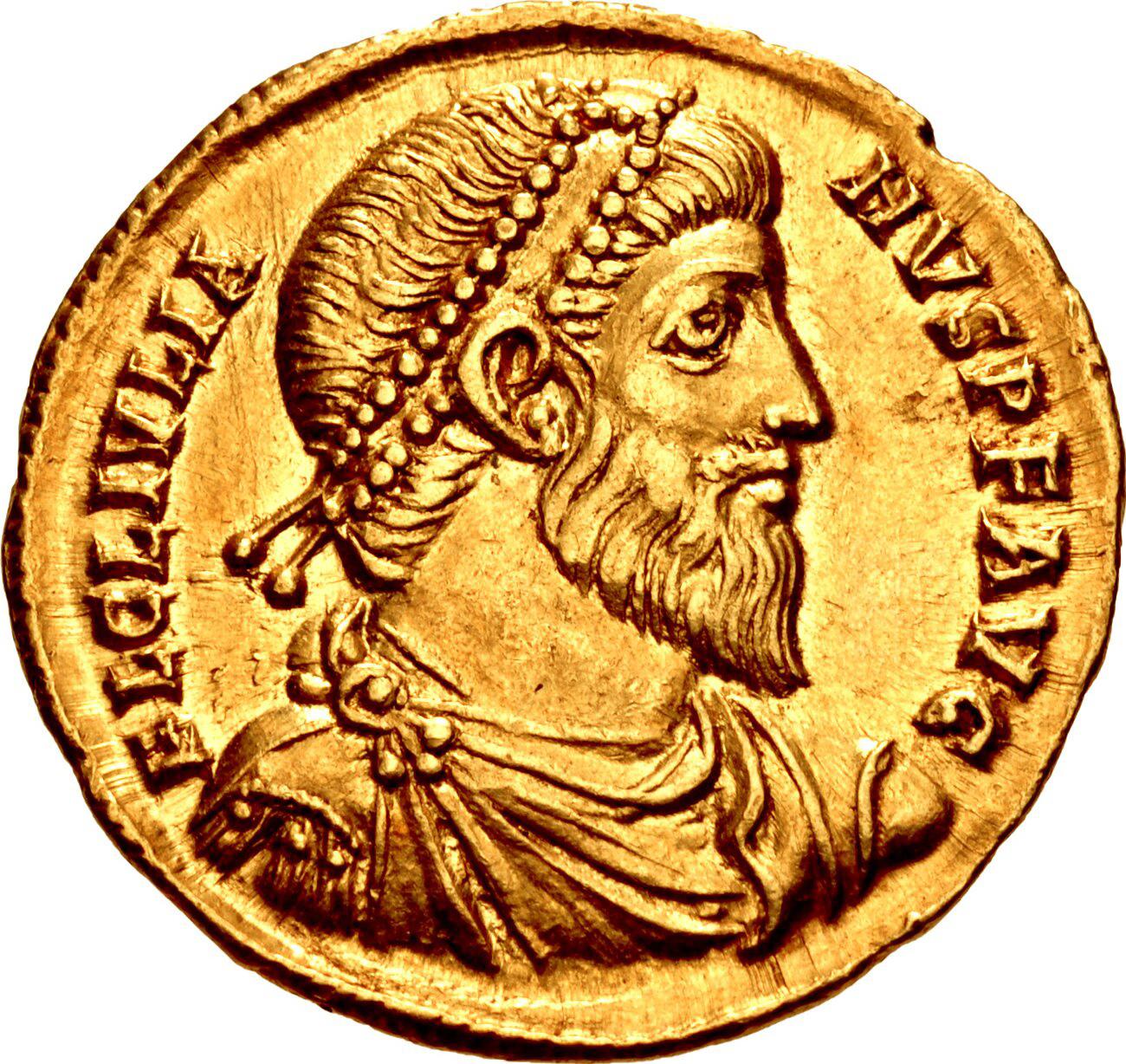
Gold solidus of Emperor Julian, minted at Antioch in 362 CE
CNG coin photograph · Wikimedia Commons · Public Domain
331 – 363 CELast pagan emperor of Rome

Emperor Julian.

Flavius Claudius Julianus — known to later Christian writers as 'the Apostate' for his attempt to revive Roman paganism — spent the brief year of his full reign campaigning and receiving embassies from the edge of the known world. Among the delegations that reached his court in 362 CE, the historian Ammianus Marcellinus lists envoys from the 'Divi' and the 'Serendivi' — the Maldivians and the Sri Lankans. They brought gifts. Twelve centuries later, archaeologists digging at a ruined stupa on Thoddoo pulled a silver Roman denarius from the coral rubble, confirming that the Mediterranean really had touched these atolls. Julian himself never saw the islands; he died of a spear-wound in Persia within a year. But his court became the improbable point at which Rome and the Maldives first touched one another on the page.

Appears in
  • 362 CEEnvoys to Emperor Julian
  • c. 150 CEKnown to Greece and Rome
No portrait
in the archive
c. 330 – c. 400 CERoman soldier-historian, eyewitness to Julian's court

Ammianus Marcellinus.

Ammianus was a Greek-speaking officer in the late Roman army who, after retirement, wrote the 'Res Gestae' — thirty-one books of contemporary history of which the surviving eighteen remain the single most reliable narrative of the fourth-century empire. He served under Julian on the Persian campaign, watched the emperor die, and in Book 22 of the Res Gestae recorded, almost in passing, that envoys had arrived from nations 'as far away as the Divi and the Serendivi'. That single line is the earliest European notice of the Maldives by name — a throwaway detail in a vast chronicle that accidentally pinned the archipelago onto the Mediterranean's map of the world. Without Ammianus, we would know the Maldivian embassy to Julian only from an obscure numismatic accident in the 1980s.

“Nations as far away as the Divi and the Serendivi sent envoys bearing gifts, in competition with one another.”

— Ammianus Marcellinus, Res Gestae 22.7
Appears in
  • 362 CEEnvoys to Emperor Julian
No portrait
in the archive
12th centuryThe travelling scholar who converted the king

Abu al-Barakat Yusuf al-Barbari.

Almost nothing is known of Abu al-Barakat beyond the legend that has calcified around him for nine hundred years. The oldest Maldivian chronicles — reiterated by Ibn Battuta two centuries later — record that a North African scholar arrived in Malé in the twelfth century, rescued the island from a terrifying sea-demon by reciting the Qur'an through the night, and in gratitude persuaded King Dhovemi Kalaminja to accept Islam. Whether he was Moroccan (as 'al-Barbari' would suggest) or a Tabrizi Persian (as other sources insist) remains an open question in Maldivian historiography. What is certain is that in 1153 the king of the Maldives converted, the temples were abandoned, and a new religion began rewriting every institution of island life — a turn which, on the surface at least, is credited to a single stranger who arrived on a monsoon wind.

Appears in
  • 1153 CEConversion to Islam
  • 1194 CEThe Copperplate Decrees
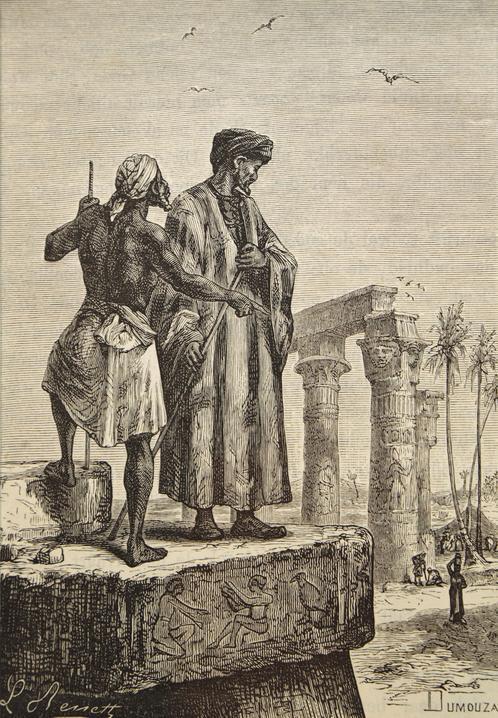
Oil painting reproduction of Ibn Battuta in Egypt, after Hippolyte Leon Benett
Painting after Hippolyte Leon Benett · Wikimedia Commons · Public Domain
1304 – 1369Moroccan jurist and traveller

Ibn Battuta.

The Tangier-born scholar Abu Abdullah Muhammad ibn Battuta left home at twenty-one to perform the Hajj and did not return for twenty-nine years, eventually covering roughly 75,000 miles across the Islamic world. He arrived in the Maldives in 1343, intending a brief stopover on his way to China; Sultana Khadijah's court, short of trained qadis, simply would not let him leave. He served as chief judge for the better part of a year, married into four prominent families, feuded with the vizier over what he saw as the lax Islamic observance of Maldivian women, and was eventually hustled onto a boat for Ma'bar. The account he dictated on his return — the 'Riḥla' — is the single most detailed description of the medieval Maldives that exists in any language.

“The people of these islands are pious, honourable, and upright. Their diet is fish and coconut; their currency is cowries, which they gather in lovely numbers on the beaches after the full moon.”

— Ibn Battuta, Riḥla · c. 1355
Appears in
  • 1343 – 1344Ibn Battuta Drops Anchor
  • 1347 – 1380The Reign of Sultana Khadijah
  • 2nd c. BCE – 2nd c. CEThe World's First Global Currency
  • 1153 CEConversion to Islam
No portrait
in the archive
r. 1347 – 1380Reigning sultana of the Maldives

Sultana Rehendhi Khadijah.

Khadijah bint Jalal al-Din — 'Rehendhi', the queen — is the first Maldivian monarch in whose reign a foreign eyewitness sat at court. She came to the throne after her father's death and her husband's assassination, and she held it, with two interruptions, for thirty-three years. Ibn Battuta, who served as her chief qadi from 1343 to 1344, left a detailed picture of her government: a woman ruling in her own name, her orders proclaimed through a herald, her viziers and soldiers all men, the population unremarkably loyal. She was succeeded by her two half-sisters, Raadhafathi and Dhaain, who also reigned in their own right — three consecutive female sultans in an Indian-Ocean Muslim polity at a time when that was, globally, extraordinarily rare.

Appears in
  • 1347 – 1380The Reign of Sultana Khadijah
  • 1343 – 1344Ibn Battuta Drops Anchor
No portrait
in the archive
r. 1573 – 1585Guerrilla leader, later sultan

Muhammad Thakurufaanu.

For fifteen years after the Portuguese killed Sultan Ali VI and occupied Malé, the Maldives were ruled from a fortified factory on the royal island. From the northern atoll of Haa Alifu, a minor chieftain from Utheemu named Muhammad Thakurufaanu waged a patient guerrilla campaign against the occupation with his two brothers, Hassan and Ali. They sailed a small dhoni called the 'Kalhuoffummi' between islands at night, raiding Portuguese outposts and rallying the population. On the night of 1 Rabi al-Awwal 981 AH — a date still observed annually as National Day — Muhammad and his brothers stormed the Portuguese garrison in Malé and put the entire occupation to the sword. He was proclaimed sultan, ruled for twelve years, consolidated Maldivian sovereignty, and remains the single most revered figure in the national imagination.

Appears in
  • 1573Thakurufaanu Liberates the Nation
  • 1558 – 1573Fifteen Years Under the Portuguese
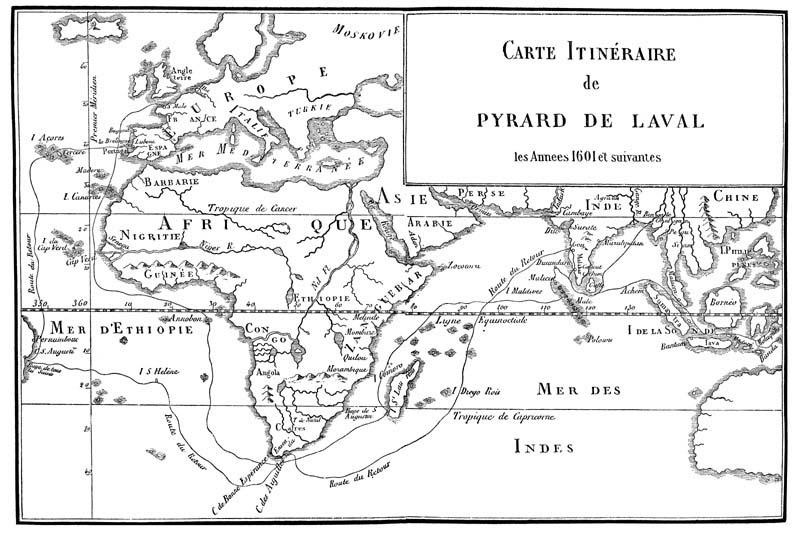
Title-page illustration from Pyrard de Laval's Voyage
Voyage de François Pyrard de Laval, 1611 edition · Wikimedia Commons · Public Domain
c. 1578 – 1623Shipwrecked Breton merchant, accidental ethnographer

François Pyrard de Laval.

In July 1602 the French merchant ship 'Corbin' struck a reef in Baa Atoll at night and sank. François Pyrard de Laval, a young Breton on his first voyage, was one of a handful of survivors who waded ashore. He spent the next five years as a detainee of the Sultan, learned fluent Dhivehi, and on his eventual return to France dictated the first and still one of the most detailed European ethnographies of the Maldives — covering cowrie harvesting, the cadjan-thatch houses of Malé, navigation by stars, the etiquette of the royal court, the organisation of the fisheries. His 'Voyage' was published in 1611 and remains, alongside Ibn Battuta's Riḥla and Bell's Monograph, one of the three foundational primary sources on the pre-modern Maldives.

Appears in
  • 1558 – 1573Fifteen Years Under the Portuguese
  • 1573Thakurufaanu Liberates the Nation
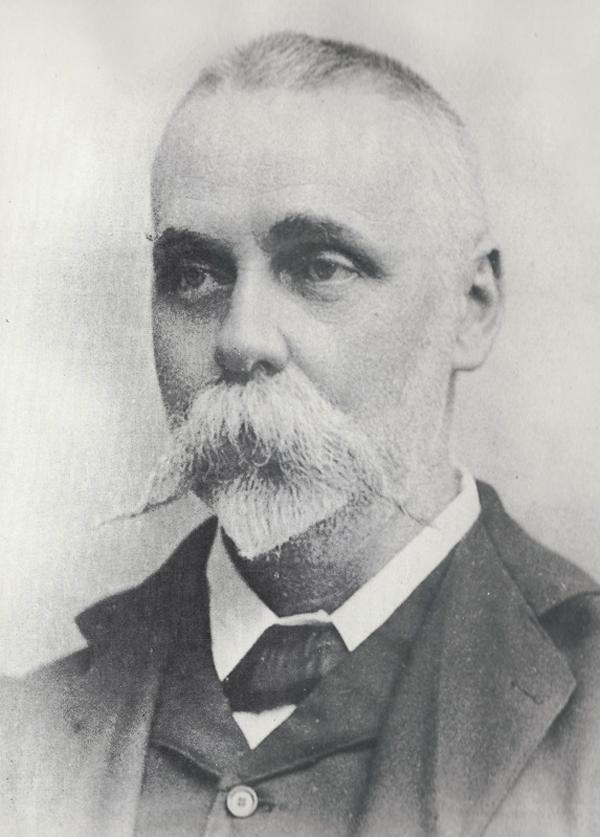
Harry Charles Purvis Bell, photographed c. 1890
Portrait c. 1890 · Wikimedia Commons · Public Domain
1851 – 1937Ceylon Civil Service archaeologist

H.C.P. Bell.

Harry Charles Purvis Bell was a British colonial civil servant in Ceylon who became — almost by accident, after being shipwrecked on a Maldivian atoll in 1879 — the first systematic archaeologist of the islands. Over three expeditions between 1879 and 1922 he photographed ruined stupas on Fua Mulaku and Ariadhoo, catalogued coral-stone sanctuaries, and read the Dives Akuru script on lacquer copper plates nobody else could decipher. His posthumous 'Monograph on the History, Archaeology and Epigraphy of the Maldive Islands' (1940) remains the single most cited work on pre-Islamic Maldivian culture. Without Bell's glass-plate photographs, almost no visual record of the Buddhist-era monuments would have survived into the age of cameras.

Appears in
  • 300 – 1100 CEFourteen Centuries of Buddhism
  • 7th – 8th c. CEA Monastery Unearthed
  • 1194 CEThe Copperplate Decrees
No portrait
in the archive
1916 – 1993First and only president of the Suvadive Republic

Abdullah Afif Didi.

Abdullah Afif Didi was a British-educated civil servant from the southern atoll of Addu who, in January 1959, led the three southernmost atolls in a declaration of independence from Malé as the United Suvadive Republic. The immediate trigger was a new tax regime imposed by Prime Minister Ibrahim Nasir, but the underlying grievances ran deeper: the southern atolls, enriched by the British airbase on Gan, resented government by a distant capital that taxed their wages and dictated their trade. Afif served as president of the breakaway state for four years, issuing its own stamps, flag and postage, before Nasir's forces dismantled the republic in 1963. He spent the rest of his life in exile in the Seychelles. The episode is a foundational memory for southern Maldivian identity.

Appears in
  • 1959 – 1963The United Suvadive Republic
  • 1941 – 1946Port T — The Secret Fleet Anchorage
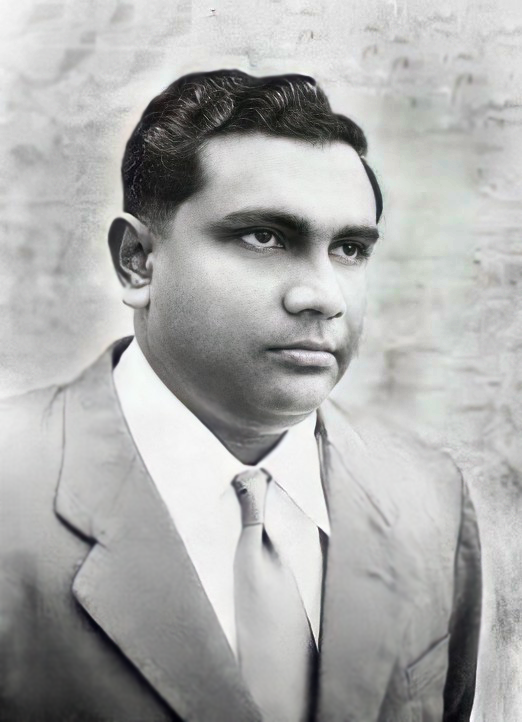
Official portrait of President Ibrahim Nasir
President's Office, Republic of Maldives · Wikimedia Commons · Public Domain
1926 – 2008Second president of the Republic of the Maldives

Ibrahim Nasir.

Ibrahim Nasir is the most consequential, and most contested, figure in modern Maldivian history. As Prime Minister from 1957 he negotiated the end of the British protectorate and the independence of the Maldives in 1965; as President from 1968 he dismantled the sultanate, brought Malé into the age of international aviation, abolished feudal land tenure, and authorised the first resort at Kurumba in 1972. He also brutally suppressed the Suvadive secession, imposed wage controls that deepened southern resentment, and left the country under the shadow of allegations of corruption when he fled into exile in Singapore in 1978. Posthumously he was rehabilitated as the father of Maldivian independence, and in 2008 the nation observed three days of mourning at his death.

Appears in
  • 26 July 1965Full Independence
  • 1968Sultanate to Republic
  • 3 October 1972Kurumba — The First Resort
  • 1959 – 1963The United Suvadive Republic
  • 1978Thirty Years of Gayoom
No portrait
in the archive
fl. 1970sItalian travel agent, co-founder of Maldives tourism

George Corbin.

In 1971 the Milan-based travel agent George Corbin, sent by Mario Arduini's agency to scout exotic beach destinations, stepped off a boat onto the uninhabited Baros-adjacent island of Vihamanaafushi. With two young Maldivians — Mohamed Umar Maniku and Hussain Afeef — he drew up plans for a thirty-bungalow resort. Kurumba Village opened on 3 October 1972 and received its first paying guests four days later: a hastily-convened party of Italians flown down from Colombo. Corbin's vision was simple: one island, one resort, barefoot luxury, nothing borrowed from Bali or the Caribbean. Fifty years later that model has been reproduced, with variations, on more than one hundred and eighty Maldivian islands and remains the defining template of Indian Ocean tourism.

Appears in
  • 3 October 1972Kurumba — The First Resort
  • Today180+ Resorts. One Dream.
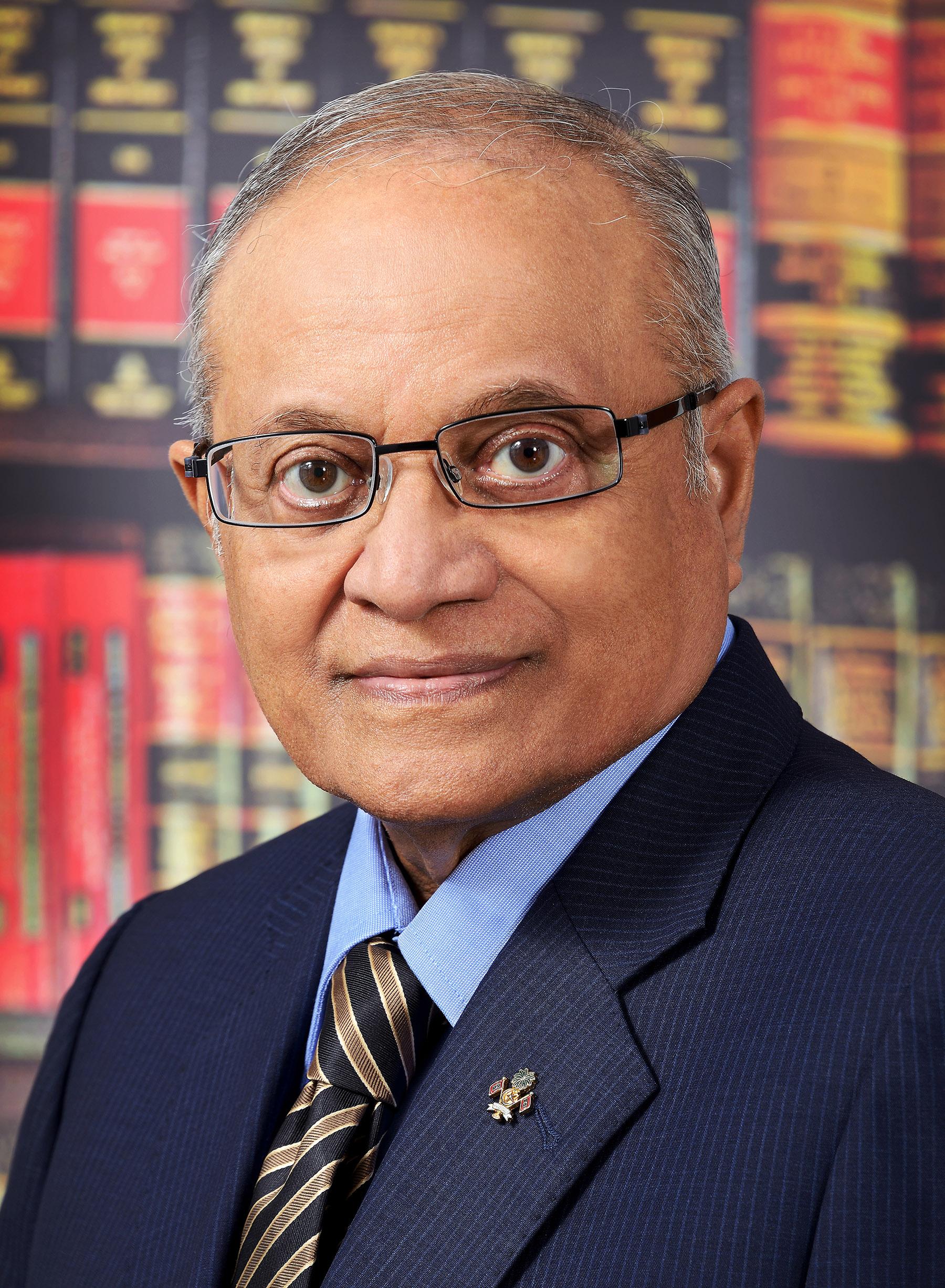
Portrait of President Maumoon Abdul Gayoom, 2013
President's Office, Republic of Maldives · CC BY 4.0 · Wikimedia Commons
b. 1937President of the Maldives 1978 – 2008

Maumoon Abdul Gayoom.

Maumoon Abdul Gayoom ruled the Maldives for thirty years, the longest tenure of any leader in modern South Asia. An Al-Azhar-trained Islamic scholar, he won six successive single-candidate referenda and oversaw the transformation of the islands from a fishing-and-copra economy into a middle-income tourism state. Under his presidency the country survived the 1988 mercenary coup — thwarted by Indian paratroopers in Operation Cactus — absorbed the shock of the 2004 tsunami, and joined the WTO. Critics charged him with presiding over political prisoners, torture and press censorship; supporters credited him with the schools, hospitals and seawalls that changed ordinary life on the outer atolls. Gayoom accepted defeat in the country's first multi-party election in 2008, handing power to Mohamed Nasheed and setting the precedent, however fraught, of peaceful transfer in the young democracy.

Appears in
  • 1978Thirty Years of Gayoom
  • 3 November 1988Operation Cactus
  • 26 December 2004The Indian Ocean Tsunami
  • 2008First Multi-Party Election
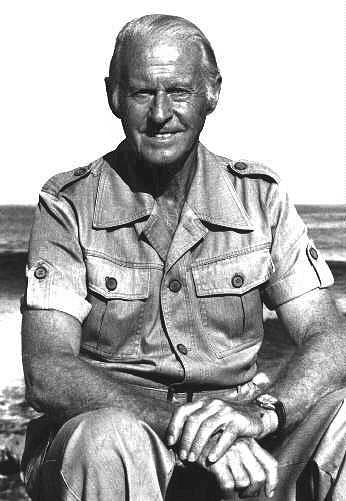
Thor Heyerdahl, photographed in the 1980s
Wikimedia Commons · Public Domain
1914 – 2002Norwegian explorer and experimental archaeologist

Thor Heyerdahl.

The 'Kon-Tiki' voyager Thor Heyerdahl — famous for crossing the Pacific on a balsa raft in 1947 to prove that South Americans could have reached Polynesia — came to the Maldives in 1982 after seeing a photograph of a coral-stone statue head that reminded him of pre-Columbian Mesoamerica. He stayed three years, excavated hawitta mounds on Nilandhoo and Gan, and developed his 'Redin' hypothesis: that a pale-skinned, sun-worshipping maritime people had reached the atolls long before the Indo-Aryan settlers. Most modern scholars now read the 'Redin' of Maldivian folklore as a cultural memory of the pre-Islamic Buddhists. But Heyerdahl's 1986 book 'The Maldive Mystery' remains one of the most-read English-language introductions to Maldivian archaeology, and it put the country's pre-Islamic past back onto the popular stage.

Appears in
  • c. 500 BCEThe First Settlers
  • 1982 – 1984Heyerdahl and the Maldive Mystery
  • 7th – 8th c. CEA Monastery Unearthed
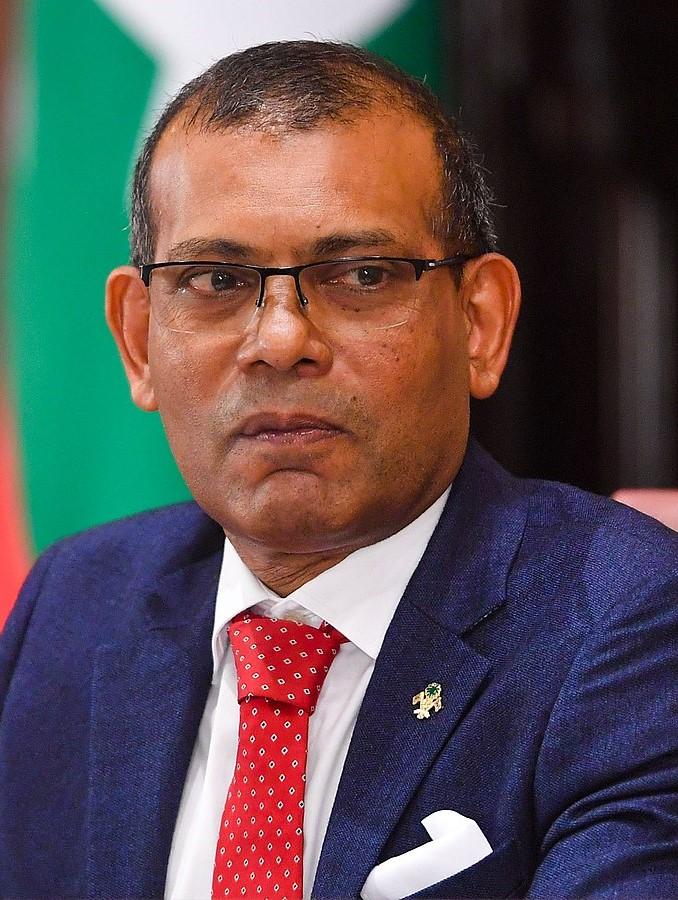
President Mohamed Nasheed, photographed in 2022
Wikimedia Commons · CC BY-SA
b. 1967Fourth president of the Maldives

Mohamed Nasheed.

A former journalist and Amnesty-recognised prisoner of conscience, Mohamed Nasheed became the country's first democratically elected president in October 2008, ending thirty years of Gayoom rule. He governed for three years on an unapologetically environmentalist platform: he promised a carbon-neutral Maldives by 2019, chaired a cabinet meeting in scuba gear six metres below the surface of Girifushi lagoon in October 2009, and made climate change the calling card of Maldivian diplomacy. His presidency ended abruptly in February 2012, under circumstances still fiercely disputed, after which he was tried, imprisoned, exiled and eventually returned as Speaker of the People's Majlis. In May 2021 he survived a serious assassination attempt in Malé. His underwater cabinet photograph remains one of the most reproduced images in the history of climate advocacy.

“If the Maldives cannot be saved today, we do not feel that there is much of a chance for the rest of the world.”

— Mohamed Nasheed, Copenhagen climate summit · 2009
Appears in
  • 17 October 2009The Underwater Cabinet Meeting
  • 2008First Multi-Party Election
  • Today — 2100One-and-a-Half Metres
  • 2013 – 2024The India–China Pendulum
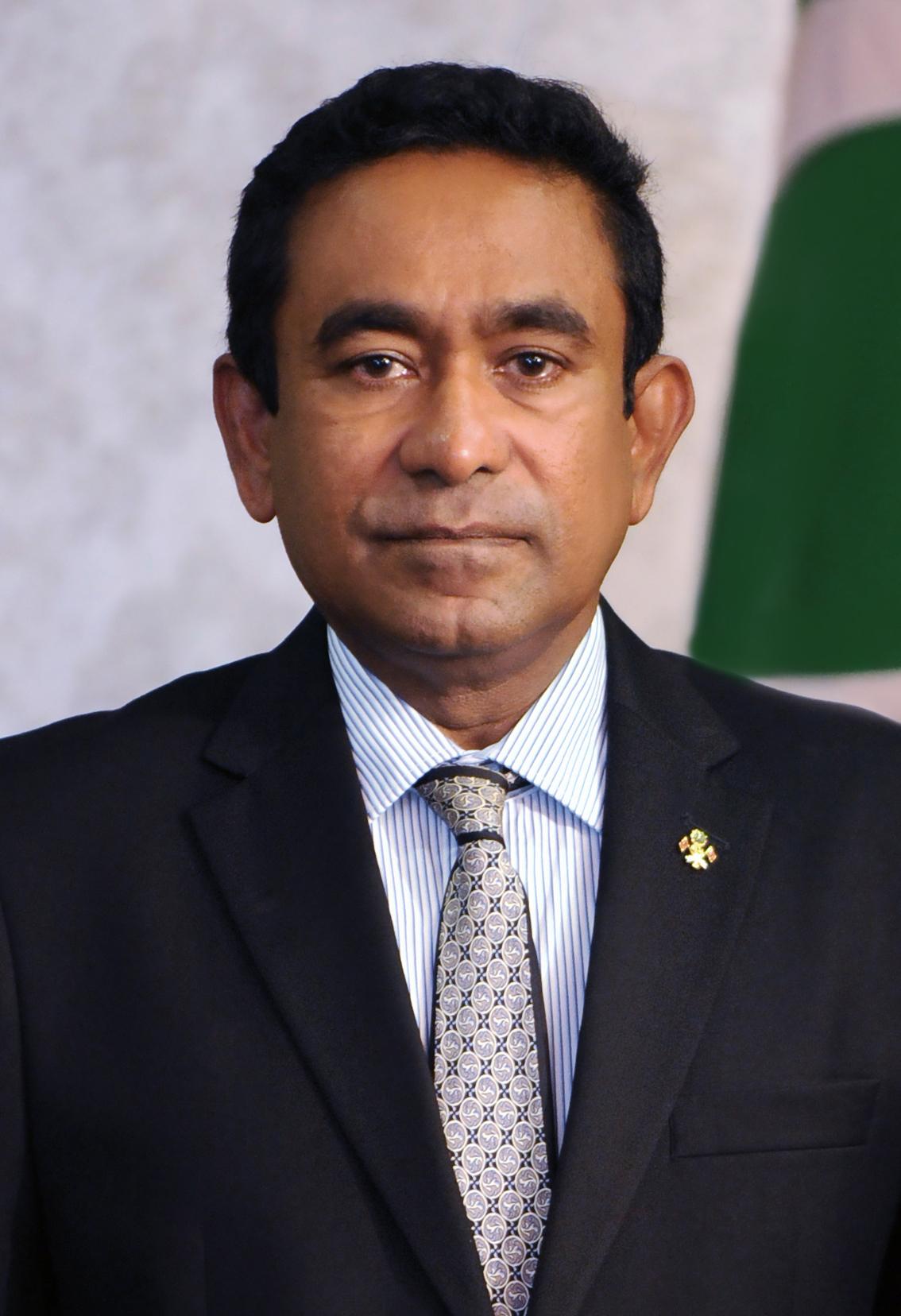
Presidential portrait of Abdulla Yameen
President's Office, Republic of Maldives · Wikimedia Commons · Public Domain
b. 1959President of the Maldives 2013 – 2018

Abdulla Yameen.

The half-brother of former president Gayoom, Abdulla Yameen Abdul Gayoom won the 2013 election in a run-off against Mohamed Nasheed and presided over a dramatic pivot of Maldivian foreign policy towards Beijing. During his five-year term the country joined China's Belt and Road Initiative, accepted Chinese loans for the Sinamalé Bridge and the expansion of Velana airport, and signed a free-trade agreement with the People's Republic. Domestically his tenure was marked by the arrest and exile of senior opposition figures, a brief state of emergency in February 2018, and his own defeat at the polls that September. After leaving office he was convicted on money-laundering and corruption charges, though litigation continues. He remains the symbolic leader of the pro-China pole in Maldivian politics.

Appears in
  • 2013 – 2024The India–China Pendulum
  • 2004 — todayThe Island That Was Built
  • 2008First Multi-Party Election
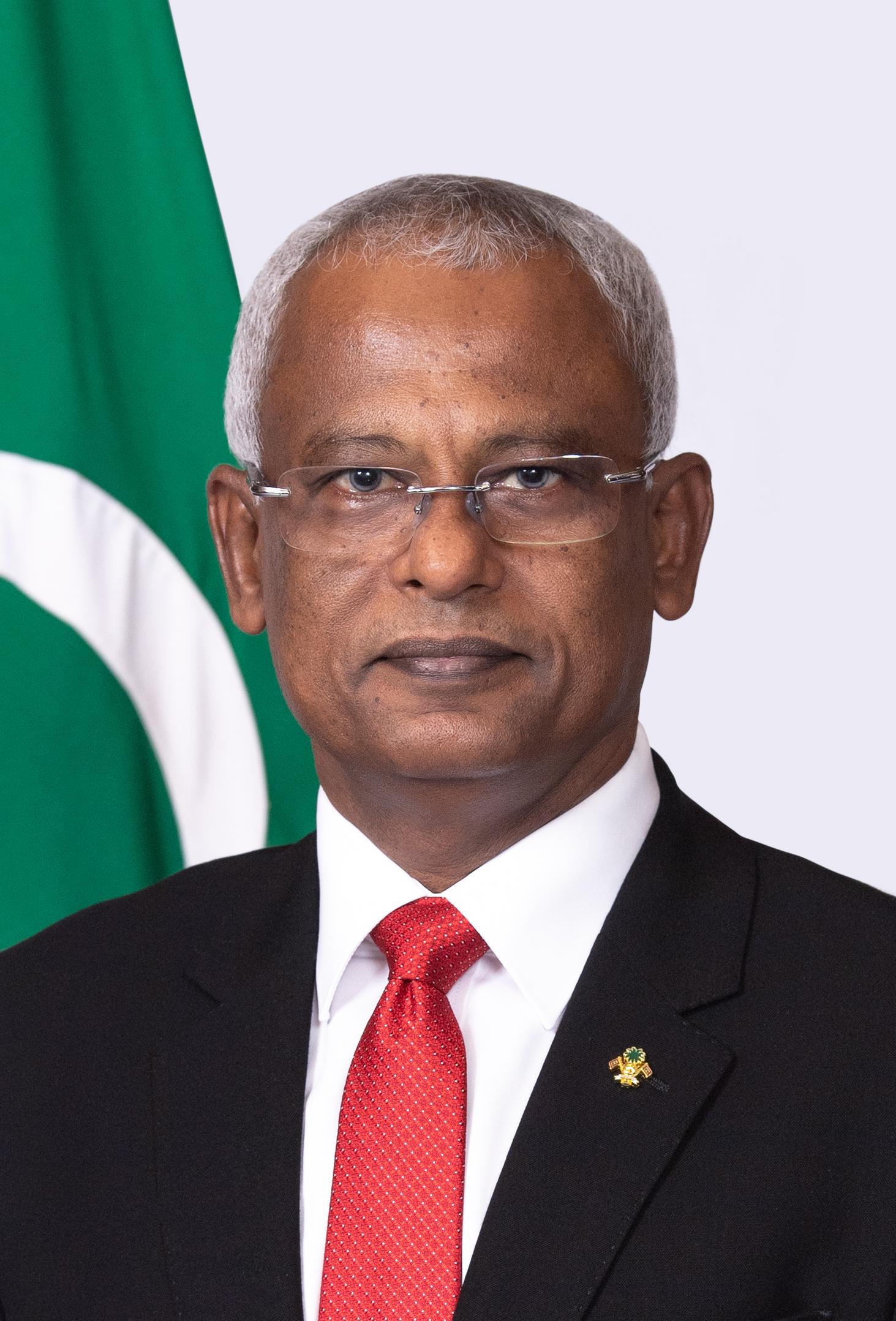
Official portrait of President Ibrahim Mohamed Solih
President's Office, Republic of Maldives · Wikimedia Commons · Public Domain
b. 1964President of the Maldives 2018 – 2023

Ibrahim Mohamed Solih.

A veteran parliamentarian of the Maldivian Democratic Party, Ibrahim Mohamed Solih — universally known by his nickname 'Ibu' — won the September 2018 election as the consensus candidate of a four-party coalition united by opposition to Abdulla Yameen. His five-year term steered the country back towards New Delhi under an 'India First' doctrine, released political prisoners, and managed the Maldivian response to Covid-19. It also coincided with a sharp rebound in tourism, climate-summit diplomacy, and the ongoing expansion of Hulhumalé as the country's new administrative centre. Solih lost the 2023 election to Mohamed Muizzu, a defeat widely read as a rejection of the MDP's India-leaning foreign policy. He conceded gracefully, preserving the norm of peaceful handover that had begun with Gayoom in 2008.

Appears in
  • 2013 – 2024The India–China Pendulum
  • 2008First Multi-Party Election
  • Today180+ Resorts. One Dream.
Dr Mohamed Muizzu, photographed in December 2023
Wikimedia Commons · Public Domain
b. 1978Current president of the Maldives

Mohamed Muizzu.

A British-trained civil engineer who served a decade as Minister of Housing under Abdulla Yameen — during which he oversaw the construction of the Sinamalé Bridge and the first phases of Hulhumalé — Mohamed Muizzu won the September 2023 presidential election on an 'India Out' platform, pledging to withdraw the small Indian military contingent stationed on Maldivian soil. Within weeks of his inauguration he had signed new infrastructure agreements with Beijing, restructured Hulhumalé's expansion, and renegotiated bilateral terms with New Delhi. His presidency will be judged, ultimately, on whether he can extract the country from the sovereign-debt overhang of the Chinese loans and deliver the climate-adaptation works — elevated islands, seawalls, airport resilience — that the rising ocean now compels.

Appears in
  • 2013 – 2024The India–China Pendulum
  • 2004 — todayThe Island That Was Built
  • Today — 2100One-and-a-Half Metres
  • Today180+ Resorts. One Dream.
A note on the record

Some faces the archive never kept.

Several figures on this page have no surviving portrait. Abu al-Barakat left no image; neither did Muhammad Thakurufaanu or Sultana Khadijah or George Corbin — the camera and the court painter simply did not reach them. Where Wikimedia holds a Public-Domain or Creative-Commons photograph, we have mirrored it here. Where it does not, the card stands on words alone.

Return to the timeline

Stay ahead in Maldives travel.

New openings, trade offers, and market intel — straight to your inbox.

Resort Life

The Maldives DMC trusted by tour operators and travel agents across 40+ source markets.

[email protected]+960 335 5767
Luxury resorts guideBeach vacations guideMaldives diving guideTrip cost from IndiaDubai → Maldives flightsAll guides →

Discover

Luxury resorts guideBeach vacations guideMaldives diving guideTrip cost from IndiaDubai → Maldives flightsAll guides →
All resortsBrowse atollsHoneymoonFamily resortsLuxury resortsInteractive mapCompare resorts

Plan your stay

All resortsBrowse atollsHoneymoonFamily resortsLuxury resortsInteractive mapCompare resorts
Luxury travel agencyB2B portalRequest a quoteRegister as agentContact sales

Trade

Luxury travel agencyB2B portalRequest a quoteRegister as agentContact sales

Global offices

Milton Keynes
--:--:--
United Kingdom·GMT+0
3 Whitecastle Way, Kingsmead
Valencia
--:--:--
Spain·GMT+2
Colon Business Center, Office 22
MaléHQ
--:--:--
Maldives·GMT+5
H. Sifa 4, Boduthakurufaanu Magu
Dubai
--:--:--
UAE·GMT+4
Office 807, B2B Tower, Business Bay
Kyiv
--:--:--
Ukraine·GMT+3
Peremohy Avenue 67, Office 305
© 2026 Resortlife Maldives·Est. 2006
About·
Insights·
Events·
Awards·
Maldives history·
Privacy·
Terms·