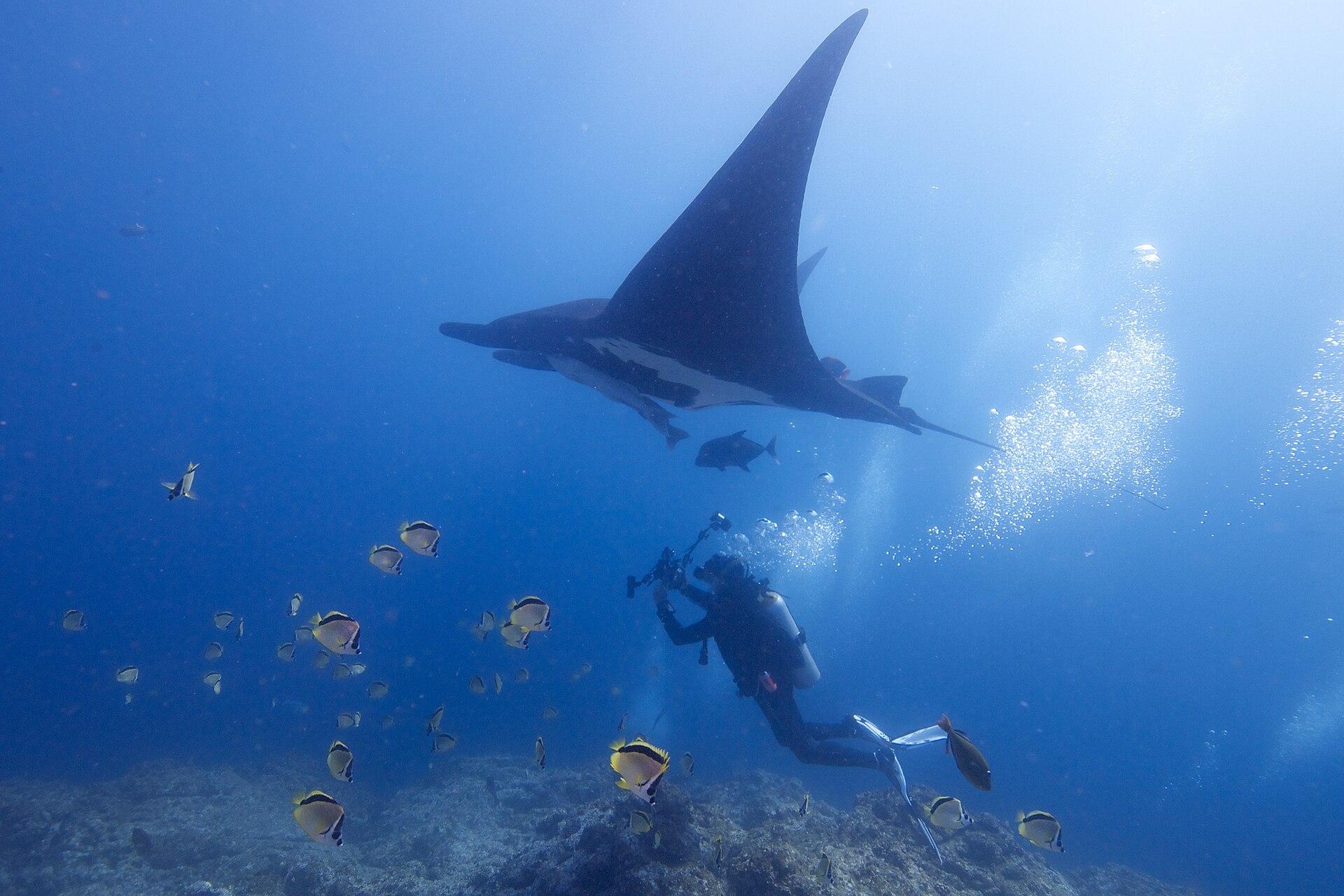
The largest ray on Earth, with a wingspan that can exceed 7 m, roaming the open ocean rather than hugging reefs. Born fully independent, a pup must feed and fend for itself from its first moments. Encounters in the Maldives are rarer and more prized than with the resident reef mantas.
- Size
- Up to ~7 m disc width — the largest ray
- Weight
- Up to ~2–3 tonnes.
- Diet
- Zooplankton, often gathered by diving into deep-water plankton layers.
- Lifespan
- Over 45 years (true maximum uncertain).
- Depth
- Surface to ~1,000 m; dives into the deep scattering layer.
- Reproduction
- Live-bearing; a single pup with multi-year intervals between births.
- Snorkel or dive
- Dive
- Best season
- Variable / opportunistic
- Conservation
- Endangered
How to recognise it
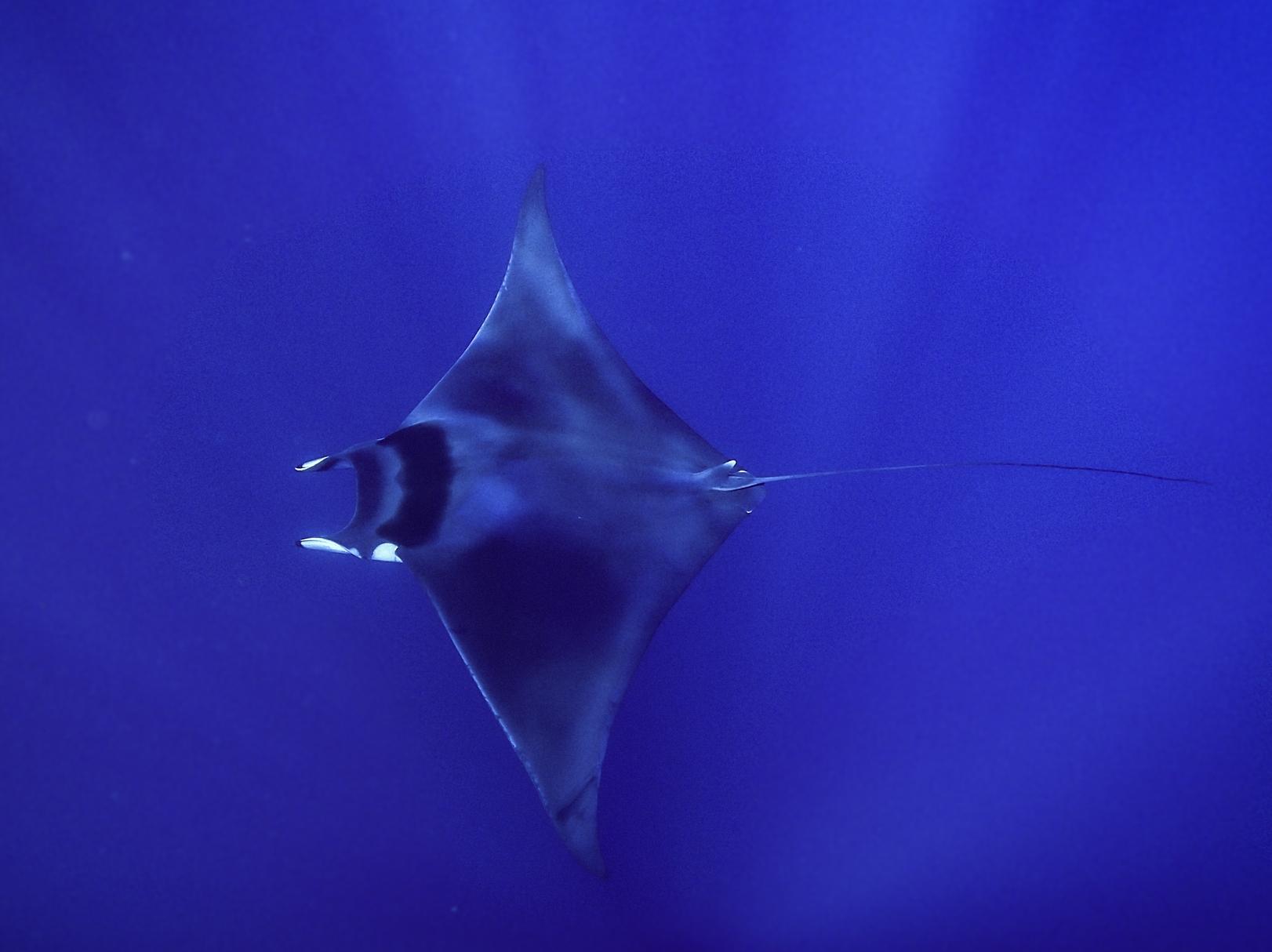
Larger than reef manta; sharply defined T-shaped white shoulder patches; small blister at the tail base.
Behaviour in the wild
More pelagic than reef mantas; ranges deep current-swept channels and seamounts.
Where to see it in the Maldives
Less common than reef mantas; the deep south, notably Fuvahmulah, and outer oceanic channels.
Visual field notes
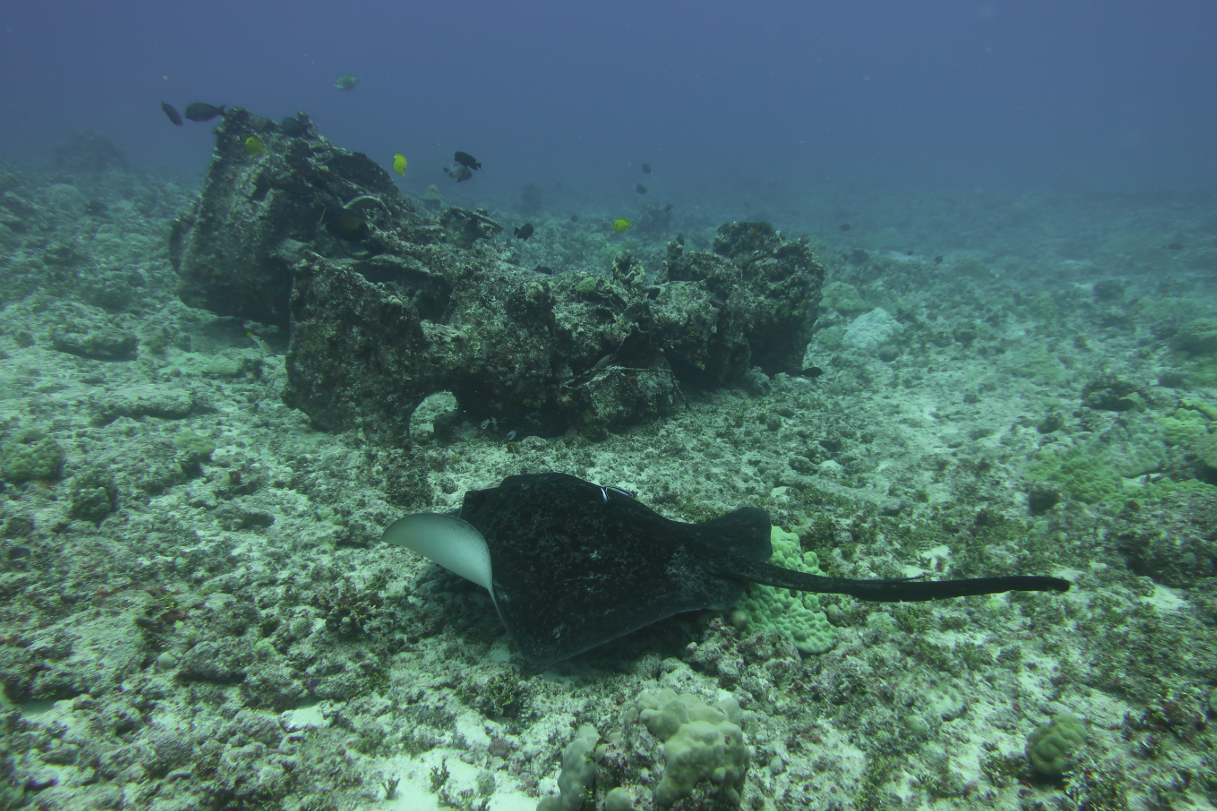
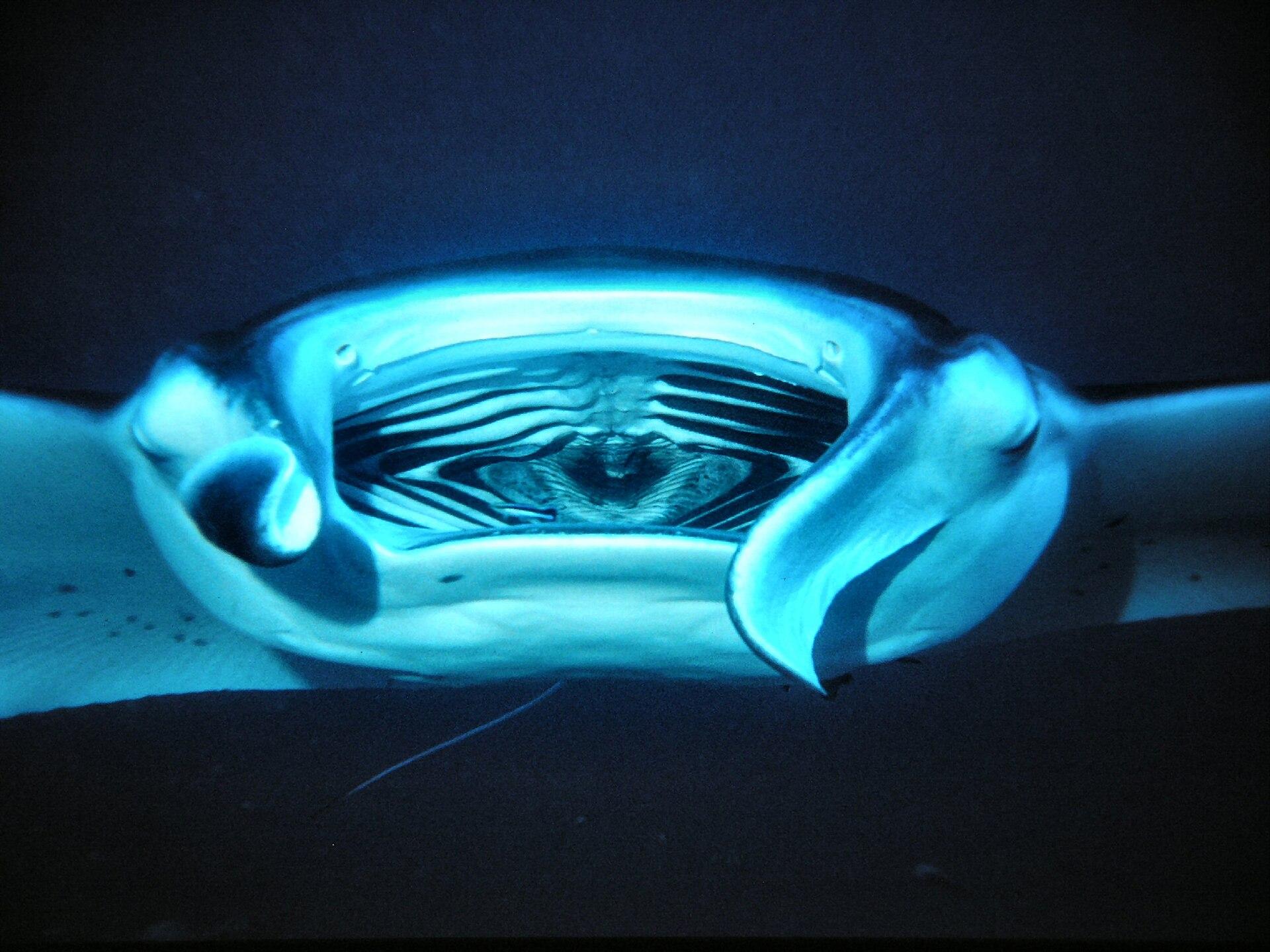
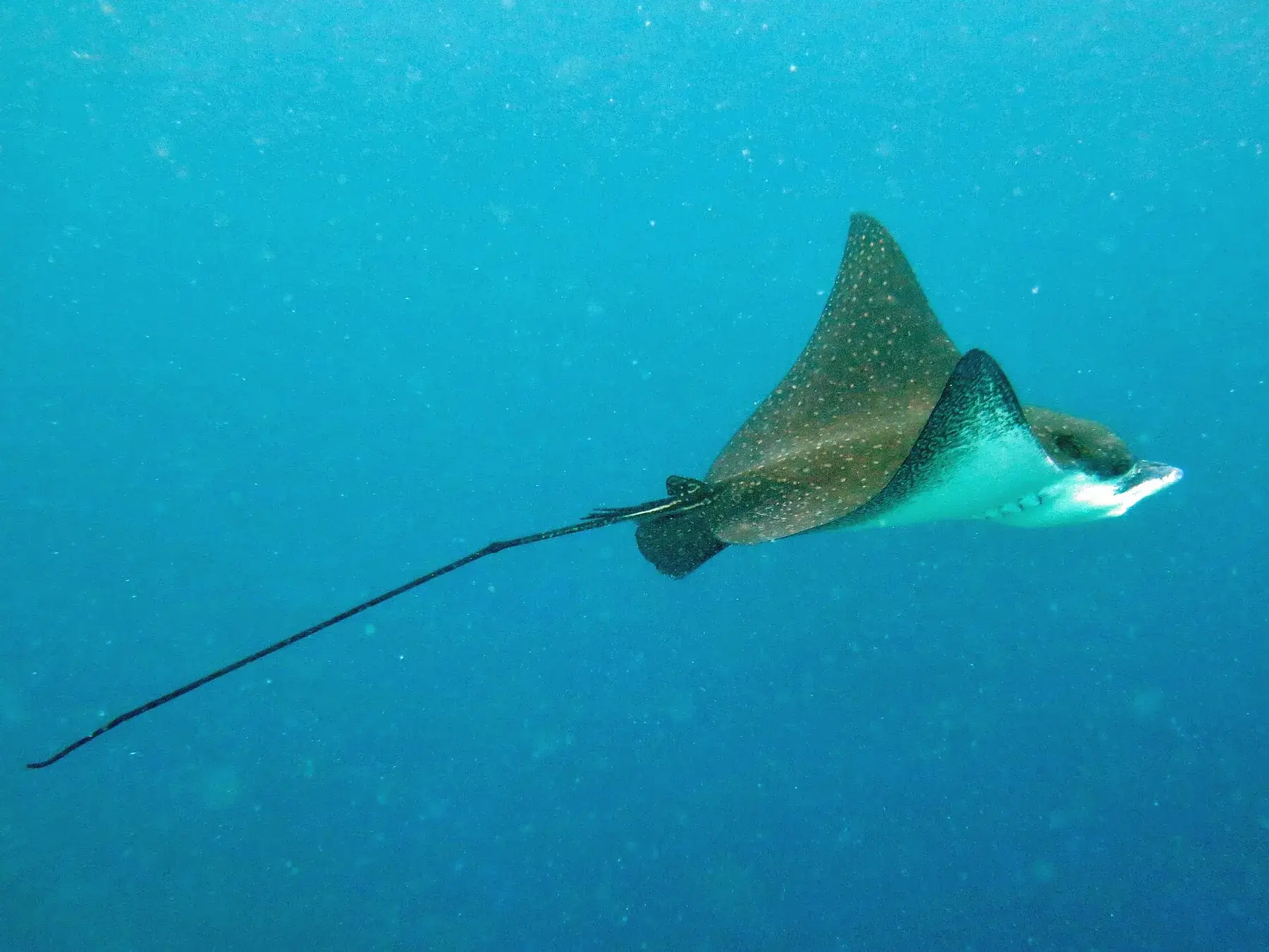
See giant oceanic manta ray from more than one angle.
3 human-reviewed photographs chosen for identity, habitat and behaviour.
01 · Field portrait · Species reference
PhotoElias LevyCC BY 2.0web-adapted
02 · Identification · Maldives photograph
PhotoRichard HarveyPublic domainweb-adapted
03 · Behaviour & scale · Species reference
PhotoArturo de Frias MarquesCC BY-SA 4.0web-adapted
Recorded locations
Build a trip from real sighting records.
Atolls
Dive and snorkel sites
Conservation context
Gill-plate fisheries and bycatch; very low reproductive rate slows recovery.
IUCN · Endangered
Watch responsibly
Approach from the side, never head-on; no touching or chasing, and don't dive down onto them.
Field notes
Has the largest brain-to-body ratio of any fish.
Among the most intelligent fish, with exceptionally large brains; uplisted to Endangered in 2019 after sharp declines.
Collective noun · a squadron of rays
Profile references
References are shown transparently; profile copy may also include editorial synthesis. Seasons and sightings vary with wild conditions.