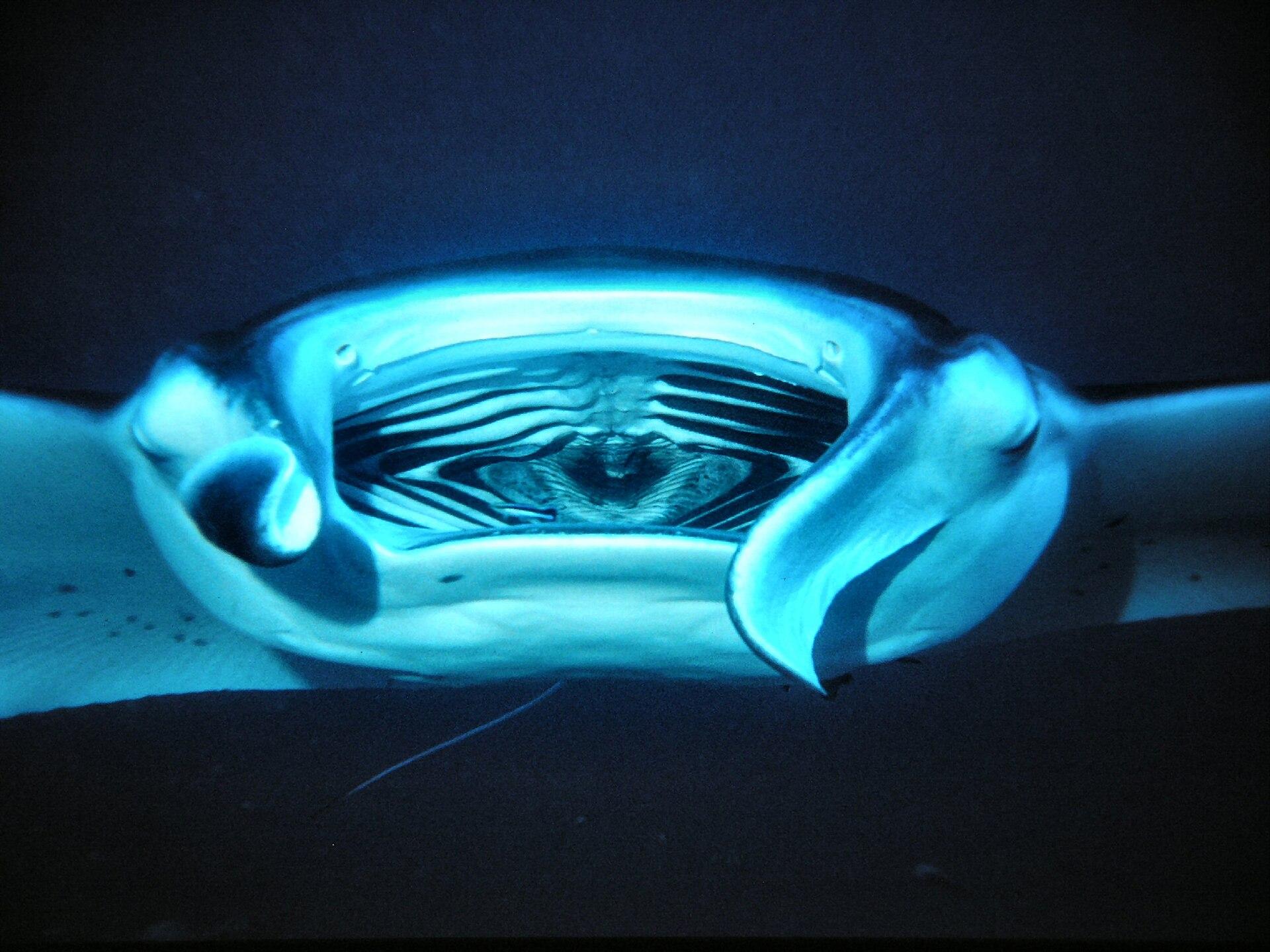
A gentle, plankton-sweeping giant averaging roughly 3–3.5 m across, with a documented maximum disc width of 4.31 m and the largest brain-to-body ratio of any fish. Mirror studies have recorded unusual self-directed behaviour, but whether this proves self-recognition remains disputed. Each individual carries a unique belly-spot "fingerprint", which is how the Maldives' long-running ID database tracks thousands of named animals. They gather in feeding aggregations and visit reef cleaning stations daily.
- Size
- Average 3–3.5 m; maximum 4.31 m disc width
- Weight
- Up to ~844 kg.
- Diet
- Zooplankton, filtered from the water column.
- Lifespan
- At least ~40 years (likely longer).
- Depth
- Surface to ~120 m; dives recorded beyond 300 m.
- Reproduction
- Live-bearing; usually a single pup only once every 2–5 years, gestation ~12–13 months.
- Snorkel or dive
- Snorkel + dive
- Best season
- SW monsoon May–Nov; Hanifaru peak Jul–Sep
- Conservation
- Vulnerable
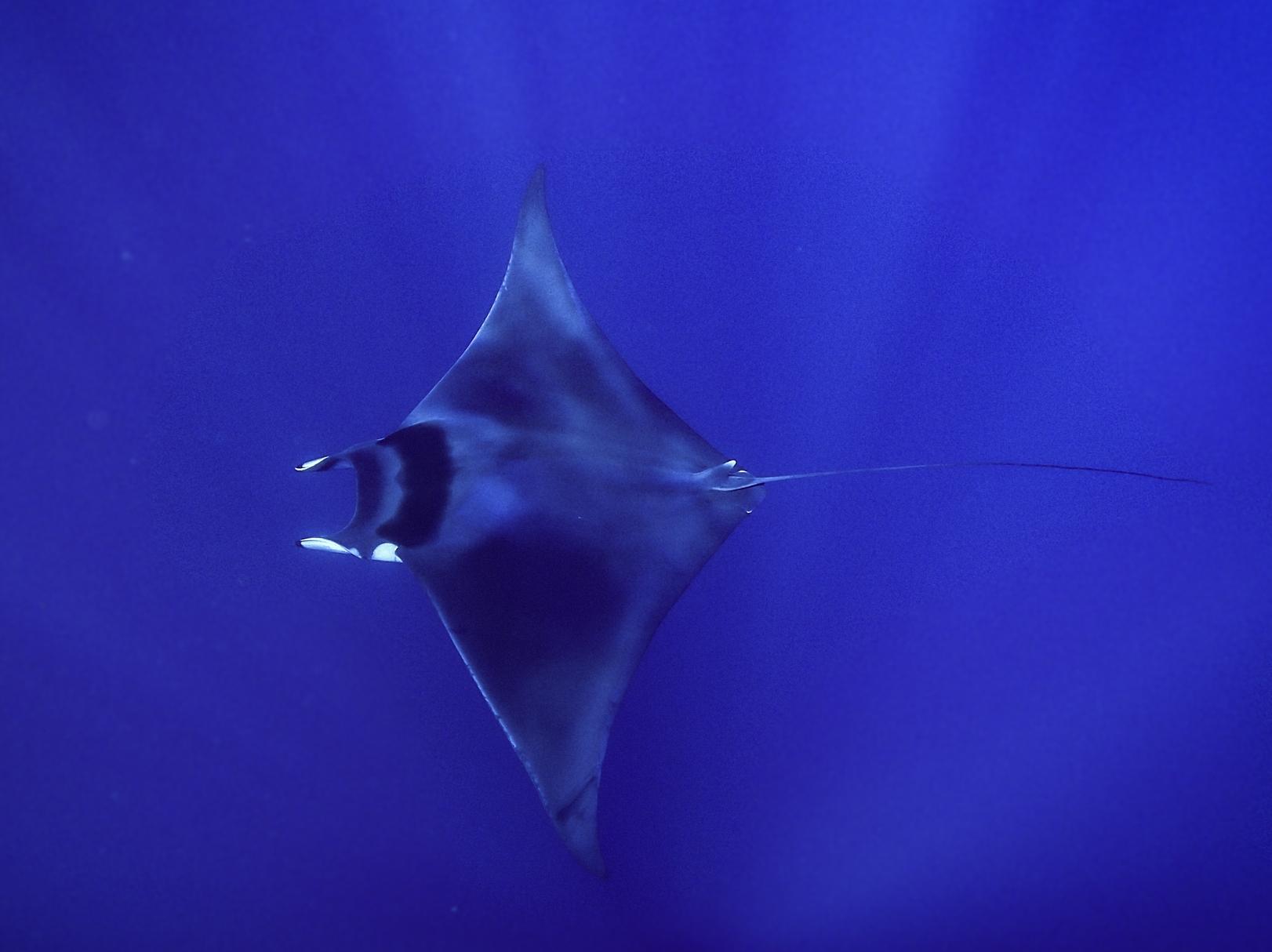
How to recognise it
Y/V-shaped pale shoulder markings that blend into the dark back; belly spots between the gills.
Behaviour in the wild
Filter-feeds on zooplankton, often in coordinated feeding chains; visits reef cleaning stations.
Where to see it in the Maldives
Baa Atoll's Hanifaru Bay (world's largest feeding aggregation, snorkel-only), plus cleaning stations atoll-wide.
Visual field notes
See reef manta ray from more than one angle.
3 human-reviewed photographs chosen for identity, habitat and behaviour.
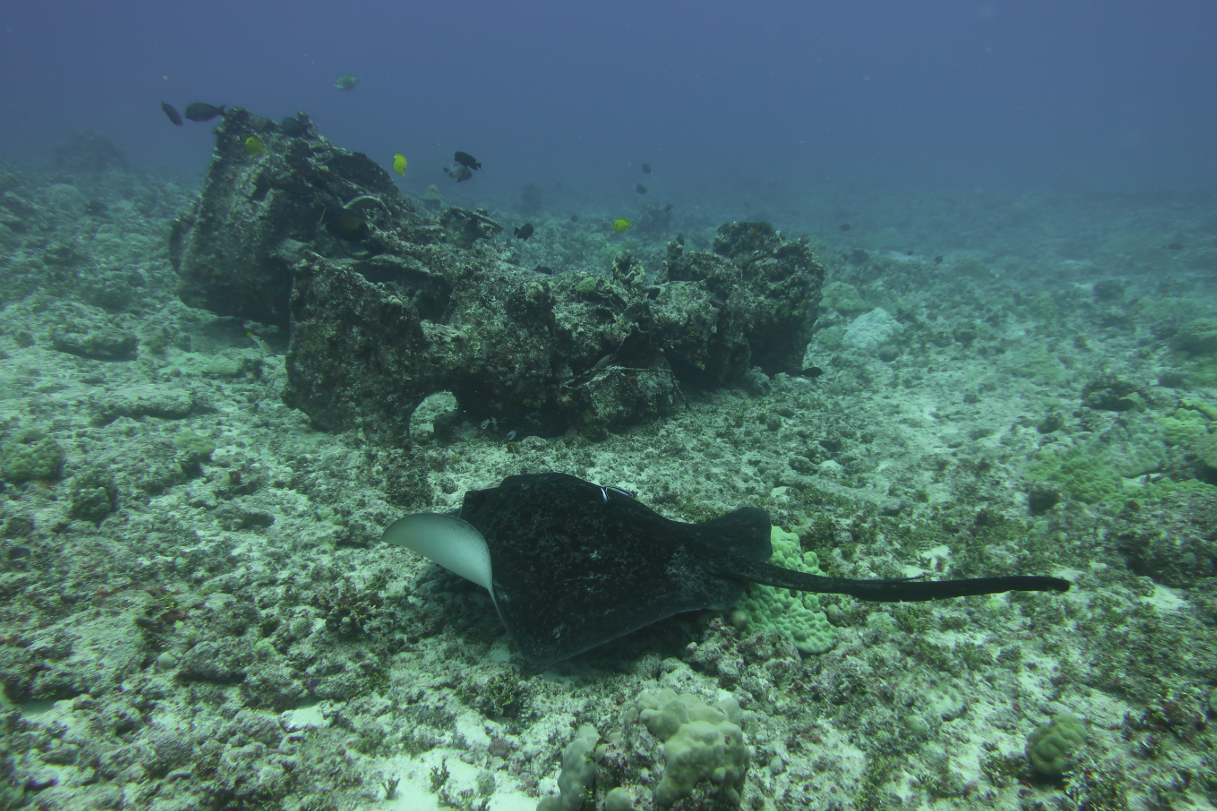
01 · Field portrait · Species reference
PhotoPeter GeymayerPublic domainweb-adapted
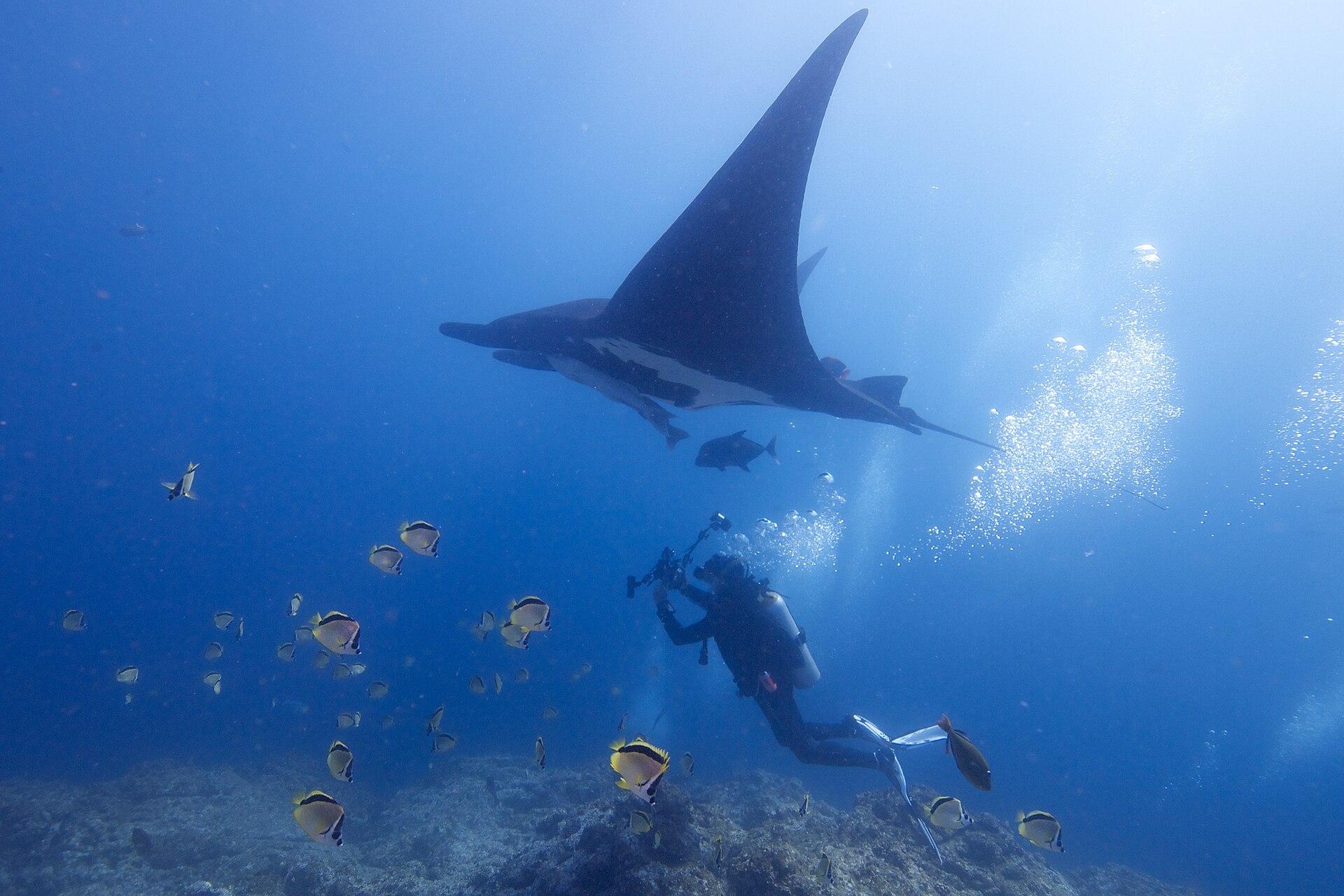
02 · Identification · Maldives photograph
Photoasands from London, UKCC BY-SA 2.0web-adapted
03 · Habitat · Maldives photograph
PhotoTchamiCC BY-SA 2.0web-adapted
Recorded locations
Build a trip from real sighting records.
Atolls
Show 6 more atollsHide extra atolls
Conservation context
Gill-plate fisheries and bycatch, entanglement, boat strikes.
IUCN · Vulnerable
Watch responsibly
Stay low and still, keep ~3 m distance, never touch, chase, or hover above them at cleaning stations.
Field notes
Each manta is identified for life by its unique belly-spot pattern, like a fingerprint.
They perform coordinated "chain" and spiralling "cyclone" feeding, looping head-to-tail to trap denser plankton.
Collective noun · a squadron of rays
Profile references
References are shown transparently; profile copy may also include editorial synthesis. Seasons and sightings vary with wild conditions.