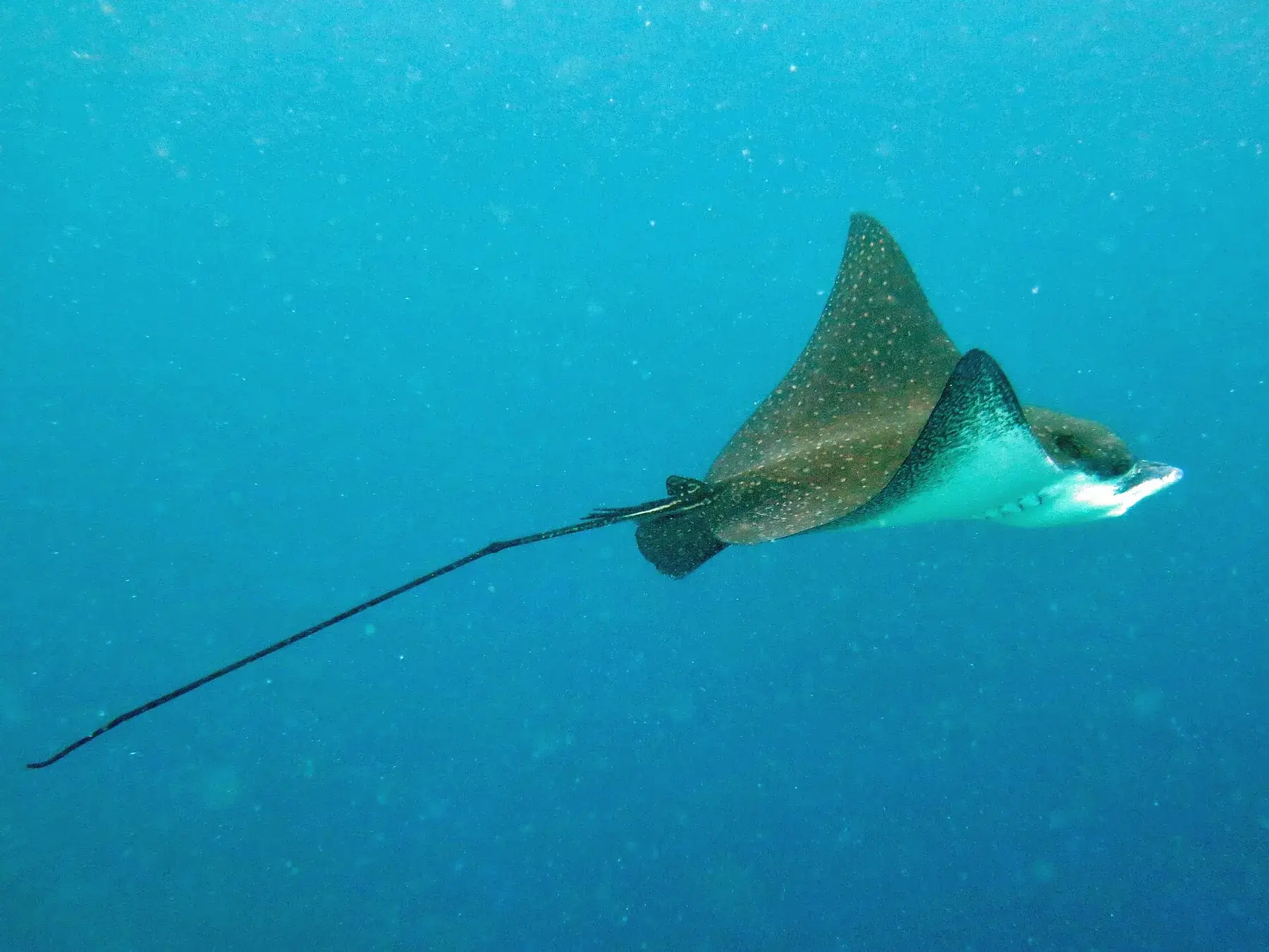
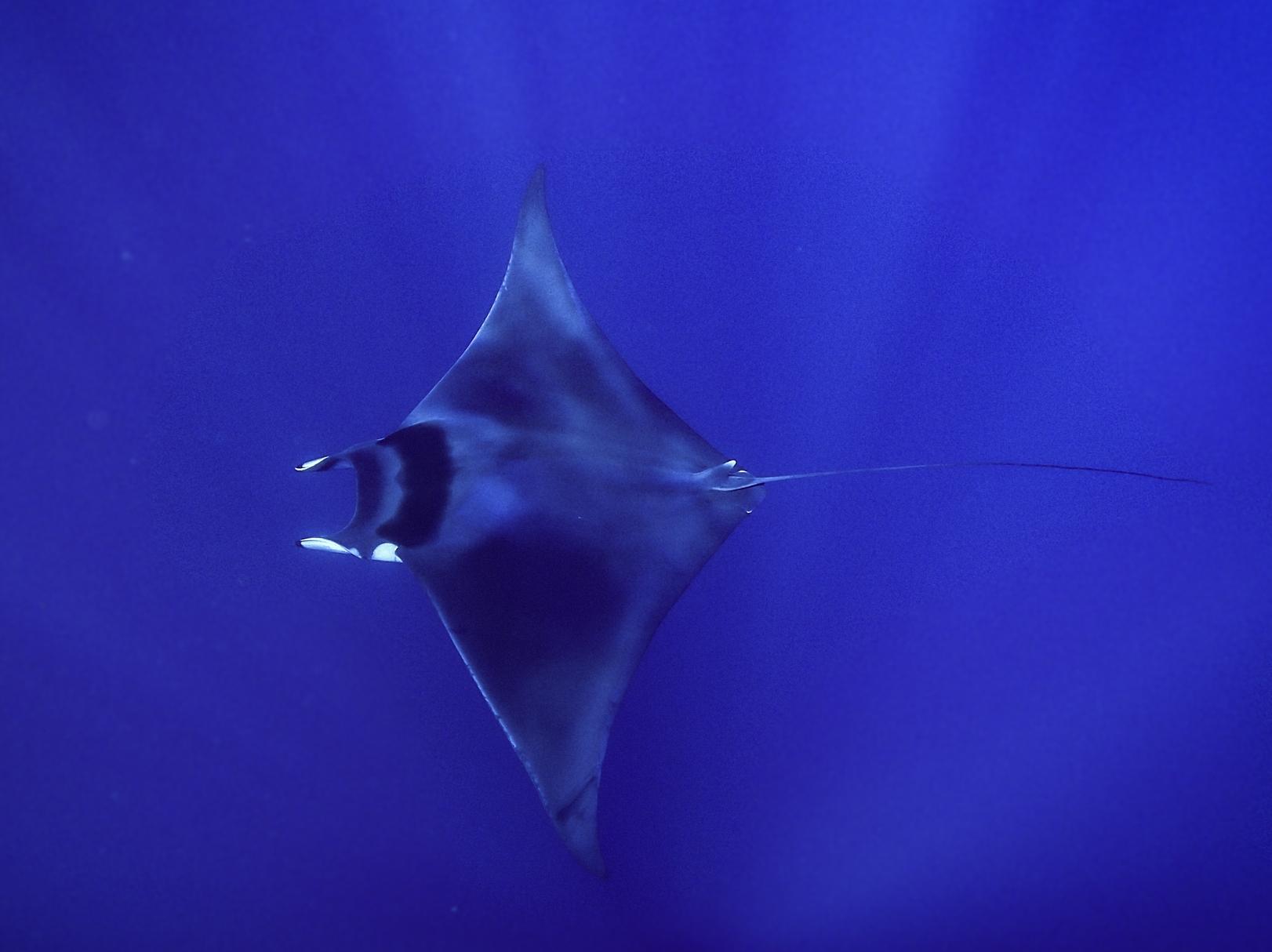
A smaller cousin of the mantas with a slender, whip-like tail, the spinetail devil ray is a fast, schooling filter-feeder of open and coastal waters. It is famous for spectacular breaching — launching clear of the surface and belly-flopping back with a loud slap. Often seen at the surface, sometimes alongside mantas.
- Size
- To ~3+ m disc width
- Weight
- Large specimens to ~1.5 tonnes (disc to ~3.5 m+).
- Diet
- Zooplankton (especially krill) and small schooling fish.
- Lifespan
- ~20 years.
- Depth
- Surface to ~700 m; usually 0–200 m.
- Reproduction
- Live-bearing; a single pup every 1–3 years after ~12-month gestation.
- Snorkel or dive
- Snorkel + dive
- Best season
- Plankton season (with mantas)
- Conservation
- Endangered
How to recognise it
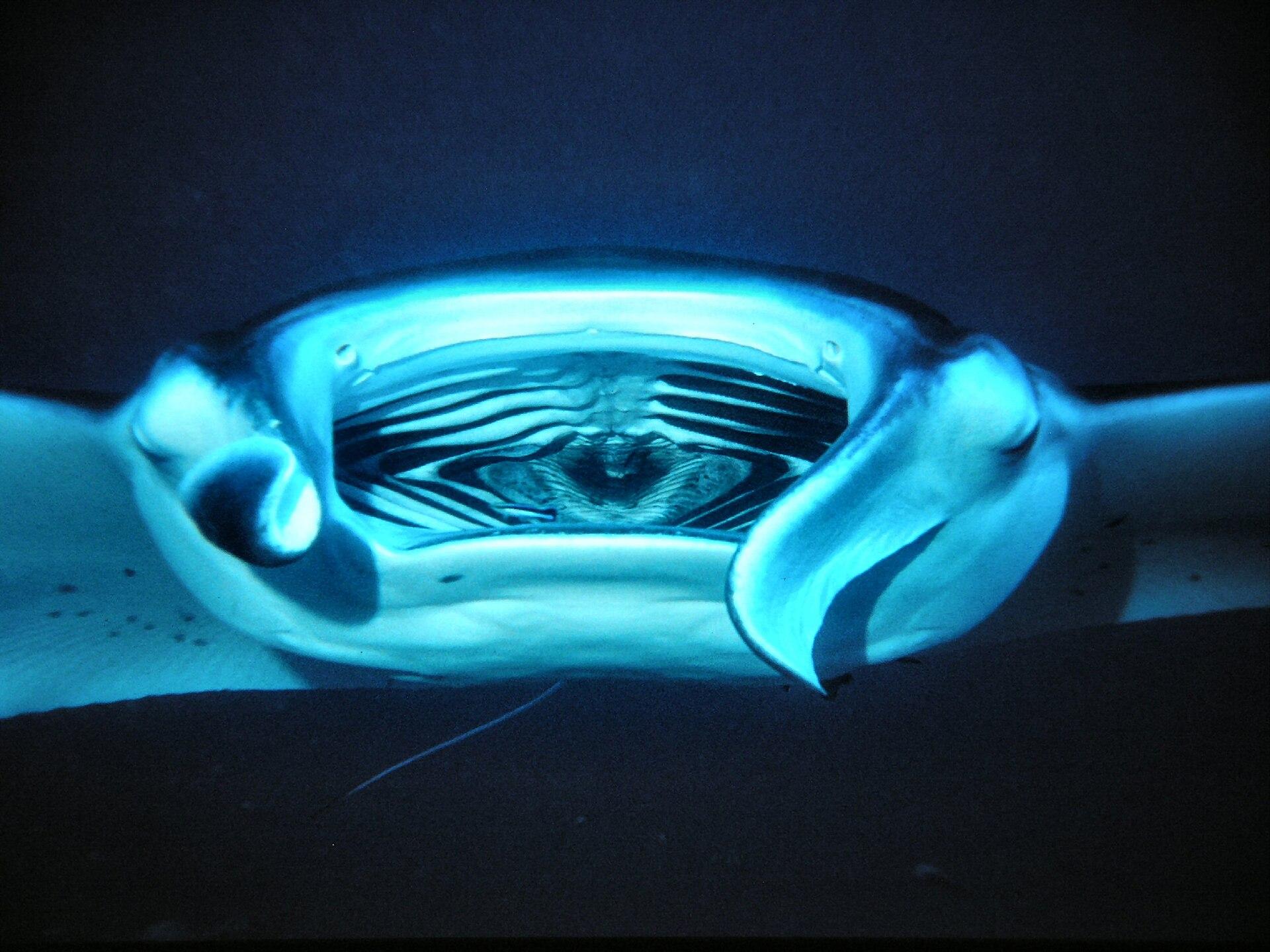
Like a small manta but mouth set under the head (sub-terminal); shorter cephalic lobes; tail spine.
Behaviour in the wild
Schools, sometimes in large numbers; plankton filter feeder; famous for leaping and belly-flopping.
Where to see it in the Maldives
Open water and channels atoll-wide; often schooling at the surface, sometimes alongside mantas.
Visual field notes
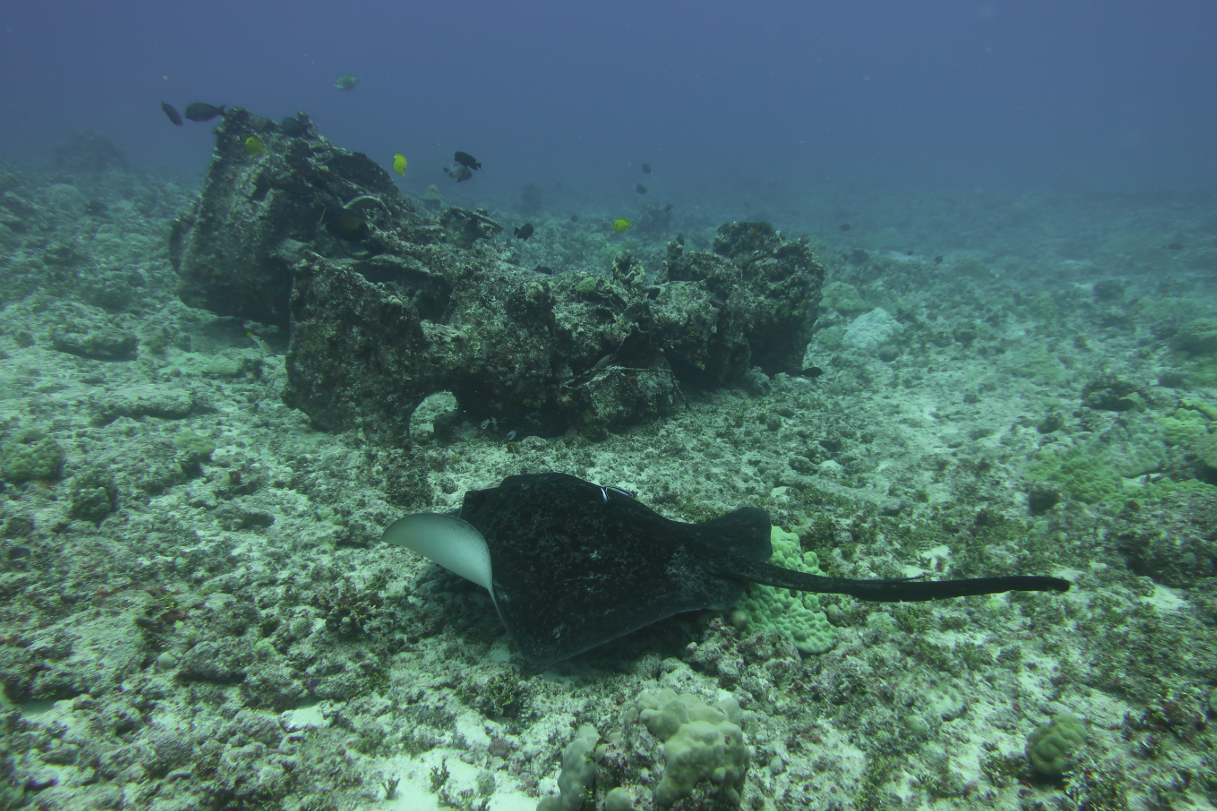
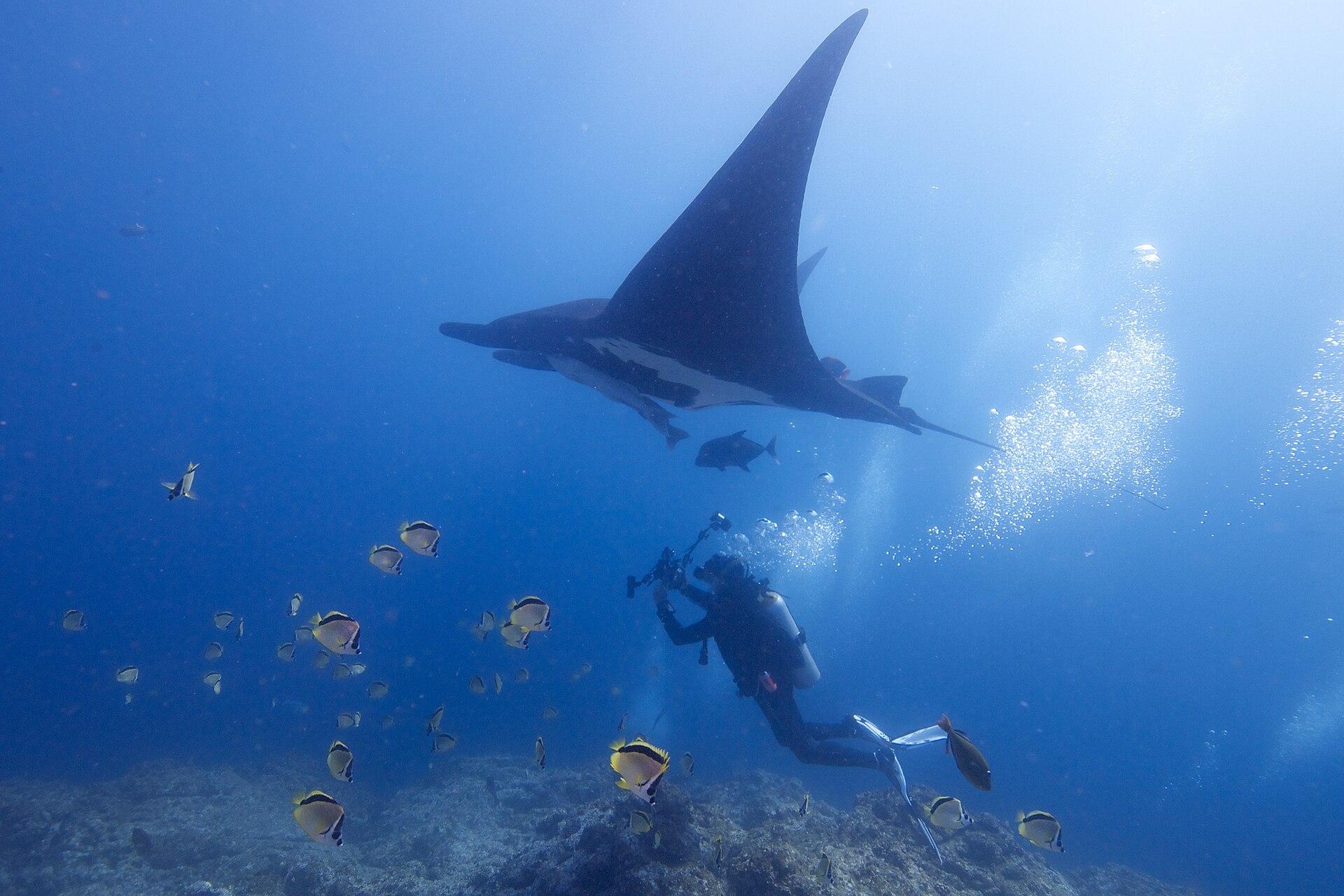
See spinetail devil ray from more than one angle.
One verified identification image is currently available.
01 · Field portrait · Species reference
PhotoJulien RenoultCC BY 4.0web-adapted
Recorded locations
Build a trip from real sighting records.
Atolls
Dive and snorkel sites
Conservation context
Endangered — gill-plate fisheries and bycatch; extremely low reproductive rate.
IUCN · Endangered
Watch responsibly
Don't chase or crowd schools; keep distance and let them feed and pass undisturbed.
Field notes
Devil rays make spectacular synchronized leaps, breaching several feet into the air.
One of the deepest-diving rays known, and a prolific breacher — the reason for the leaps is still debated.
Collective noun · a fever of rays
Profile references
References are shown transparently; profile copy may also include editorial synthesis. Seasons and sightings vary with wild conditions.