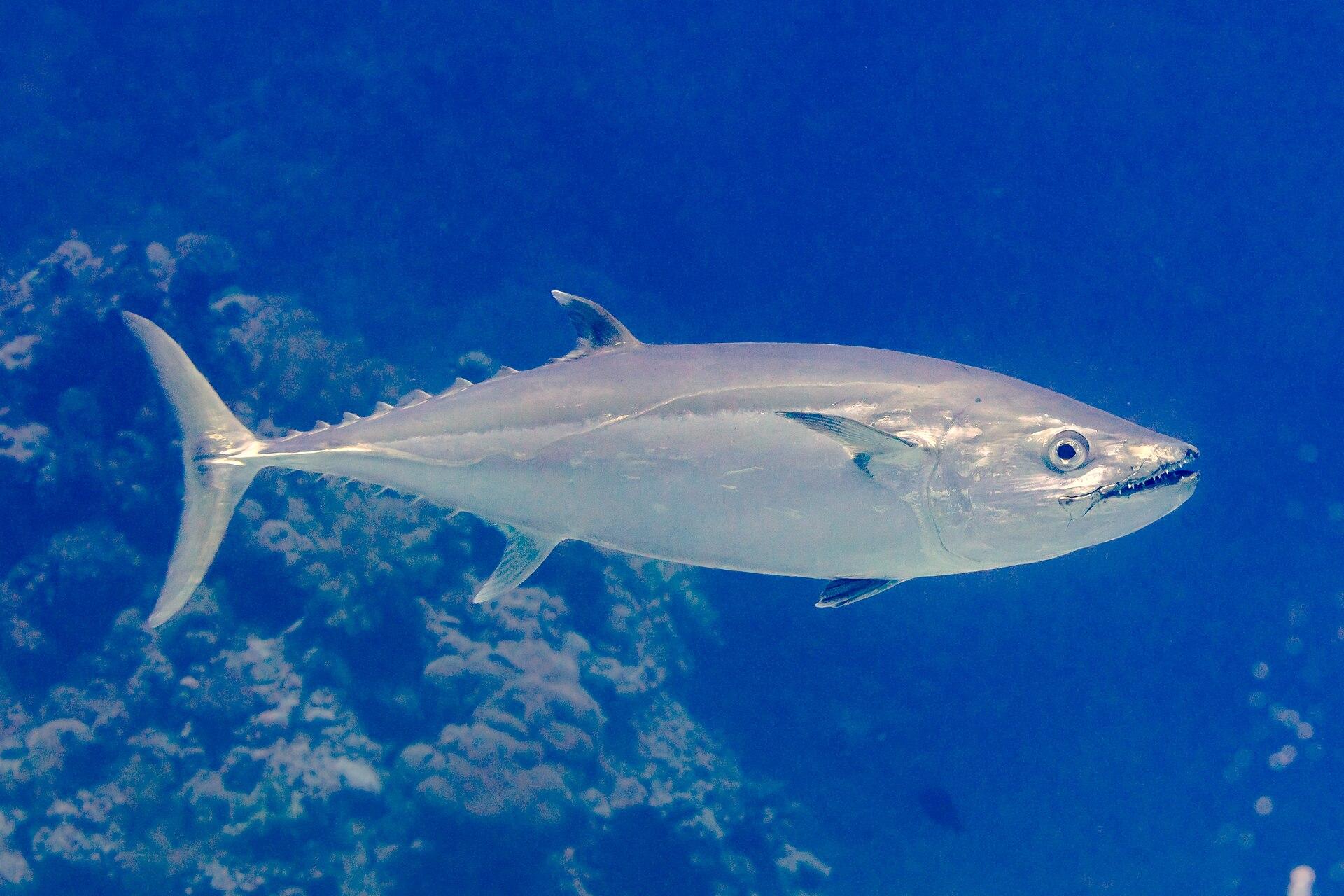
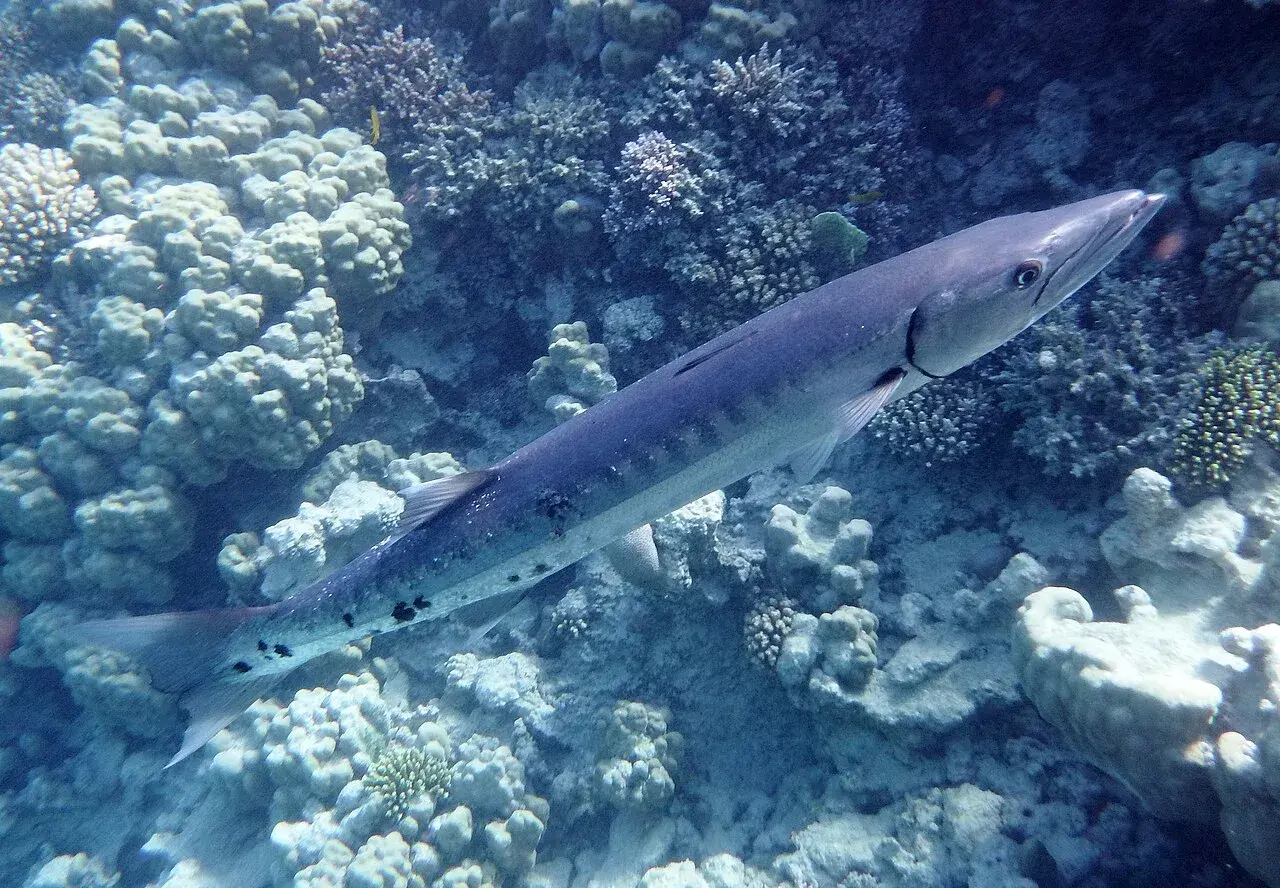
A long, silver ambush predator with fang-like teeth that often hangs motionless in the blue, watching divers as much as they watch it. Despite the menacing look it is curious rather than aggressive, relying on explosive bursts of speed. Older, larger fish can carry ciguatera toxin.
- Size
- Up to ~2 m
- Weight
- Typically 2.5–9 kg; exceptional fish over 23 kg.
- Diet
- Smaller fish, taken by sit-and-wait ambush; also cephalopods.
- Lifespan
- ~10–14 years; females up to ~18.
- Depth
- 0–100 m, usually 3–30 m.
- Reproduction
- Spawns in deeper offshore water; females release tens of thousands of eggs.
- Snorkel or dive
- Snorkel + dive
- Best season
- Year-round
- Conservation
- Least Concern
How to recognise it
Long silver torpedo body; two separated dorsal fins; fang-like teeth; dark blotches low on the flanks.
Behaviour in the wild
Adults often solitary ambush predators; juveniles form daytime schools; curious of divers.
Where to see it in the Maldives
Reef edges, channels and thilas atoll-wide; large daytime schools at sites like Manta Point (N. Malé).
Visual field notes
See great barracuda from more than one angle.
3 human-reviewed photographs chosen for identity, habitat and behaviour.
01 · Field portrait · Species reference
PhotoKora27CC BY-SA 4.0web-adapted
02 · Habitat · Maldives photograph
PhotoAhmed Abdul RahmanCC BY-SA 4.0web-adapted
03 · Identification · Species reference
PhotoJames St. JohnCC BY 2.0web-adapted
Recorded locations
Build a trip from real sighting records.
Atolls
Show 8 more atollsHide extra atolls
Dive and snorkel sites
Explore 11 more recorded sitesHide extra sites
Conservation context
Not globally threatened; localised fishing pressure; ciguatera limits its commercial value.
IUCN · Least Concern
Watch responsibly
Avoid wearing shiny jewellery (it can mistake flashes for prey); don't spear or provoke.
Field notes
Attracted to shiny objects — divers are advised not to wear flashing jewellery.
Its strike is among the fastest of any reef fish — silvery flanks let it vanish until the instant of attack.
Collective noun · a battery of barracuda
Profile references
References are shown transparently; profile copy may also include editorial synthesis. Seasons and sightings vary with wild conditions.