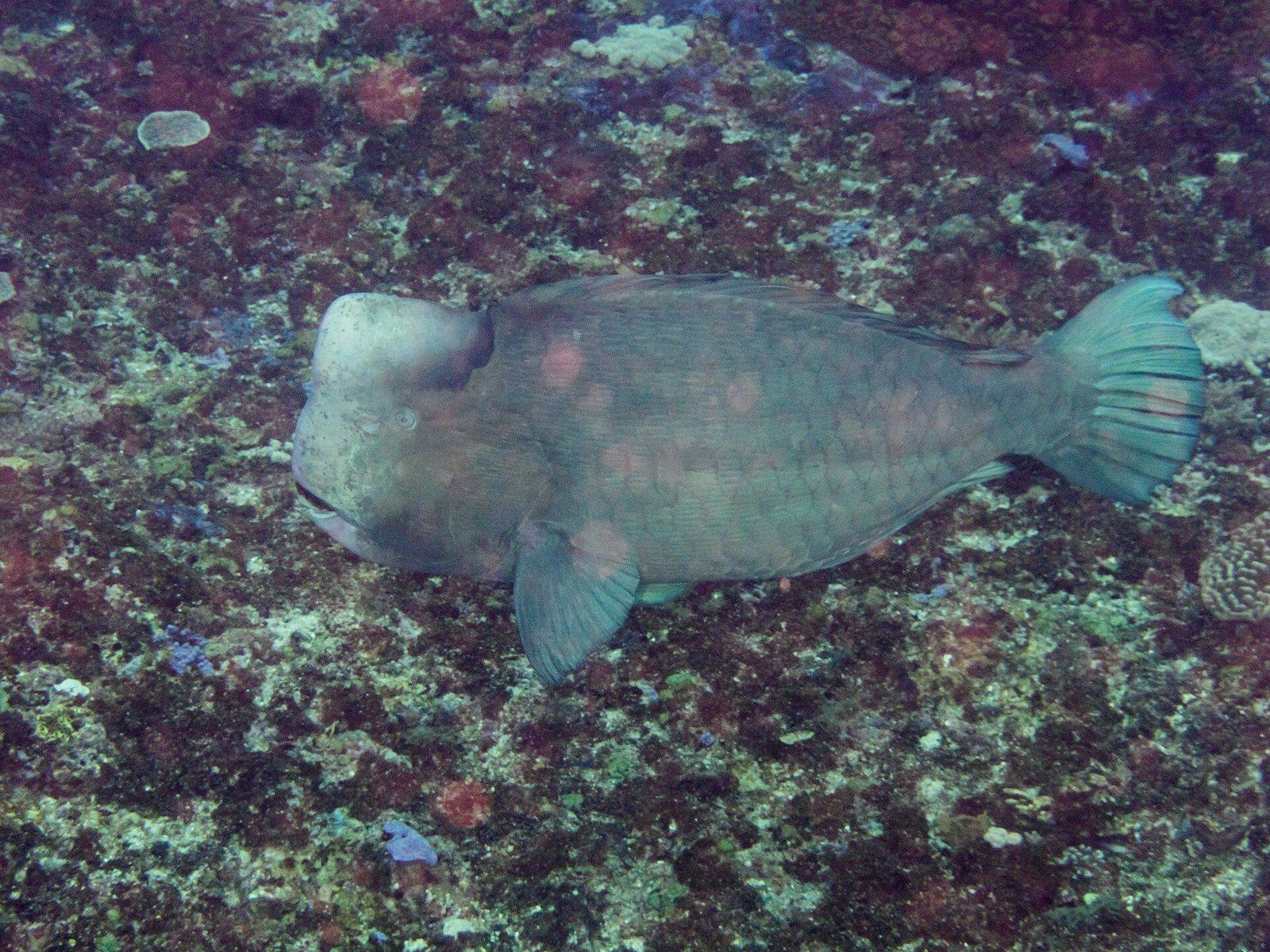
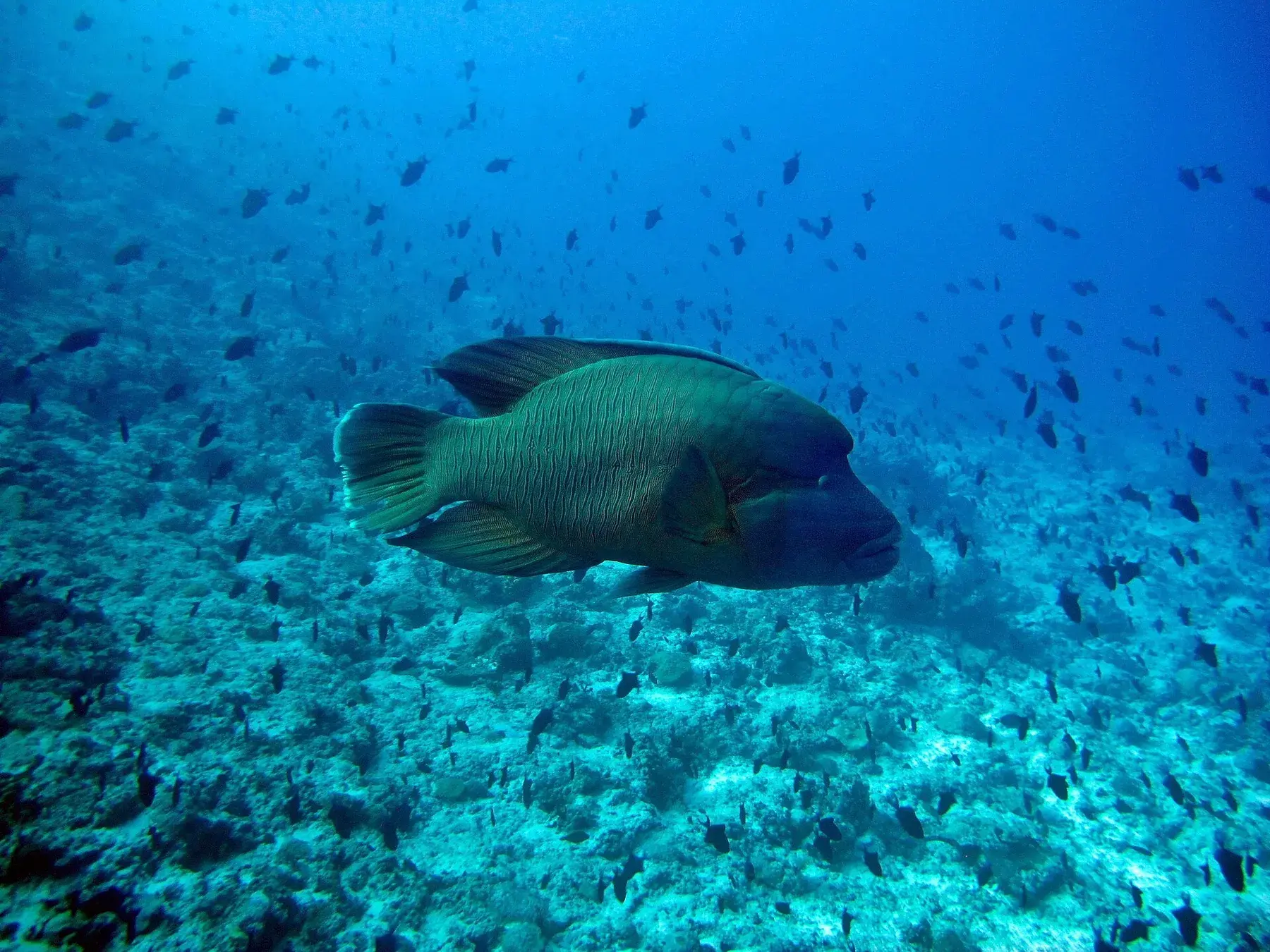
The giant of the reef's wrasse clan — a thick-lipped, fleshy-headed fish that can reach two metres and is often curious and approachable. Many begin life as females and only later transform into males, growing the trademark bulging forehead. Prized in the live-reef-fish trade, it has been fished to Endangered status.
- Size
- Up to ~2.3 m, ~190 kg — the largest wrasse
- Weight
- Males up to ~180 kg; most well under 100 kg.
- Diet
- Hard-shelled invertebrates — molluscs, urchins, crustaceans — plus toxic prey like boxfish and crown-of-thorns starfish.
- Lifespan
- Around 30 years.
- Depth
- Intertidal to ~100 m; adults favour outer-reef slopes and channels.
- Reproduction
- Protogynous hermaphrodite (females may become males ~9 yrs); spawns in aggregations.
- Snorkel or dive
- Dive
- Best season
- Year-round
- Conservation
- Endangered (CITES II)
How to recognise it
Massive size; bulbous forehead hump in adults; thick lips; maze-like markings around the eyes.
Behaviour in the wild
Curious, slow-cruising reef giant; often approaches divers; protogynous hermaphrodite.
Where to see it in the Maldives
Reliable in Ari Atoll (Maaya Thila, Fish Head) and channel/thila sites; Laamu has healthy numbers.
Visual field notes
See napoleon (humphead) wrasse from more than one angle.
3 human-reviewed photographs chosen for identity, habitat and behaviour.
01 · Field portrait · Maldives photograph
PhotoMDC Seamarc MaldivesCC BY-SA 4.0web-adapted
02 · Identification · Species reference
PhotoLeonard LowCC BY 2.0web-adapted
03 · Habitat · Maldives photograph
PhotoJulien Bidet for MDC SeamarcCC BY-SA 4.0web-adapted
Recorded locations
Build a trip from real sighting records.
Atolls
Show 6 more atollsHide extra atolls
Dive and snorkel sites
Explore 9 more recorded sitesHide extra sites
Conservation context
Overfishing for the live reef food-fish trade, cyanide and spearfishing; CITES Appendix II.
IUCN · Endangered (CITES II)
Watch responsibly
Enjoy its curiosity but never feed or hand-bait it; keep movements slow.
Field notes
Long-lived (30+ years) and slow to mature — highly vulnerable to the live-reef-fish trade.
One of the most valuable single fish in the live-reef trade — the core driver of its decline.
Profile references
References are shown transparently; profile copy may also include editorial synthesis. Seasons and sightings vary with wild conditions.