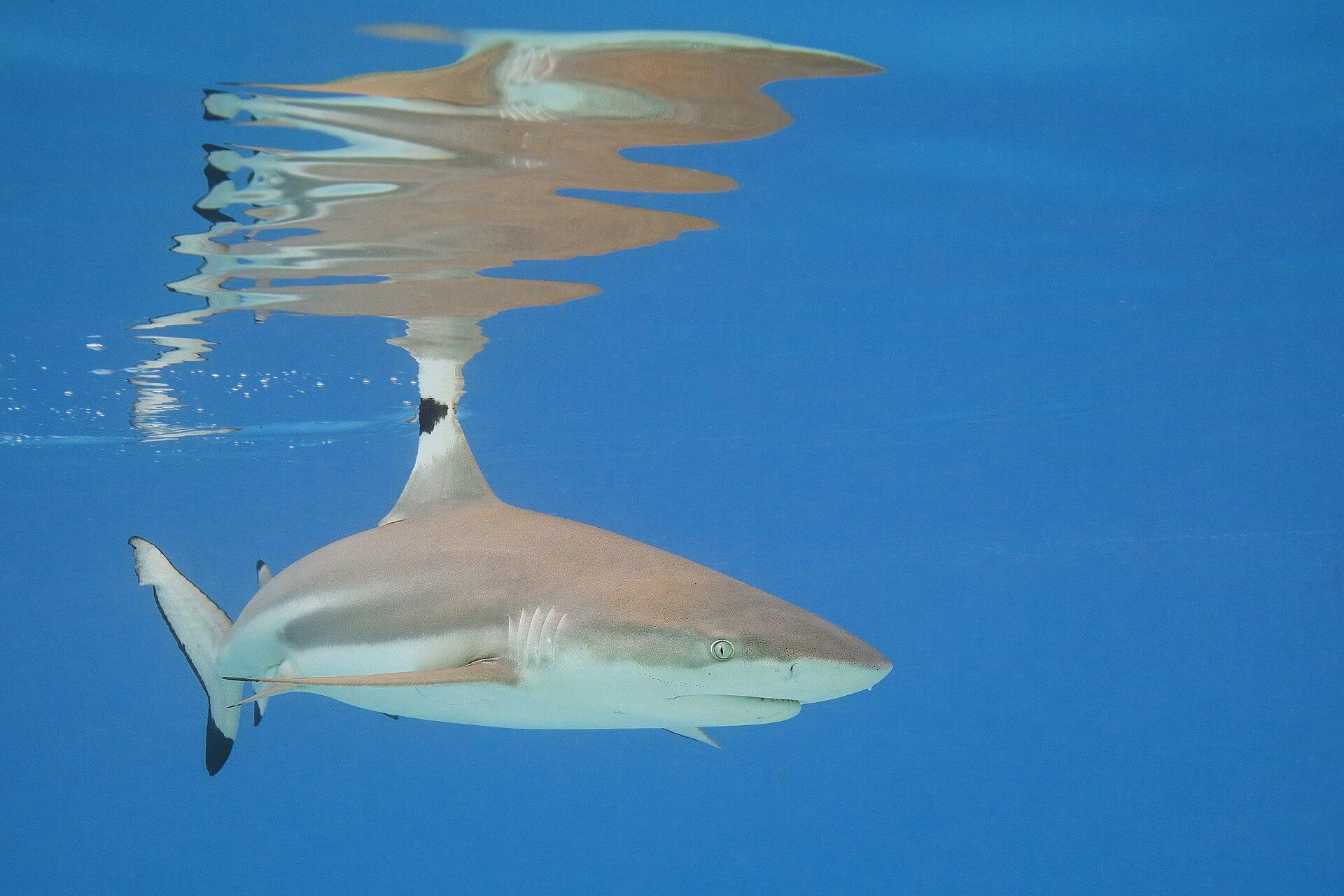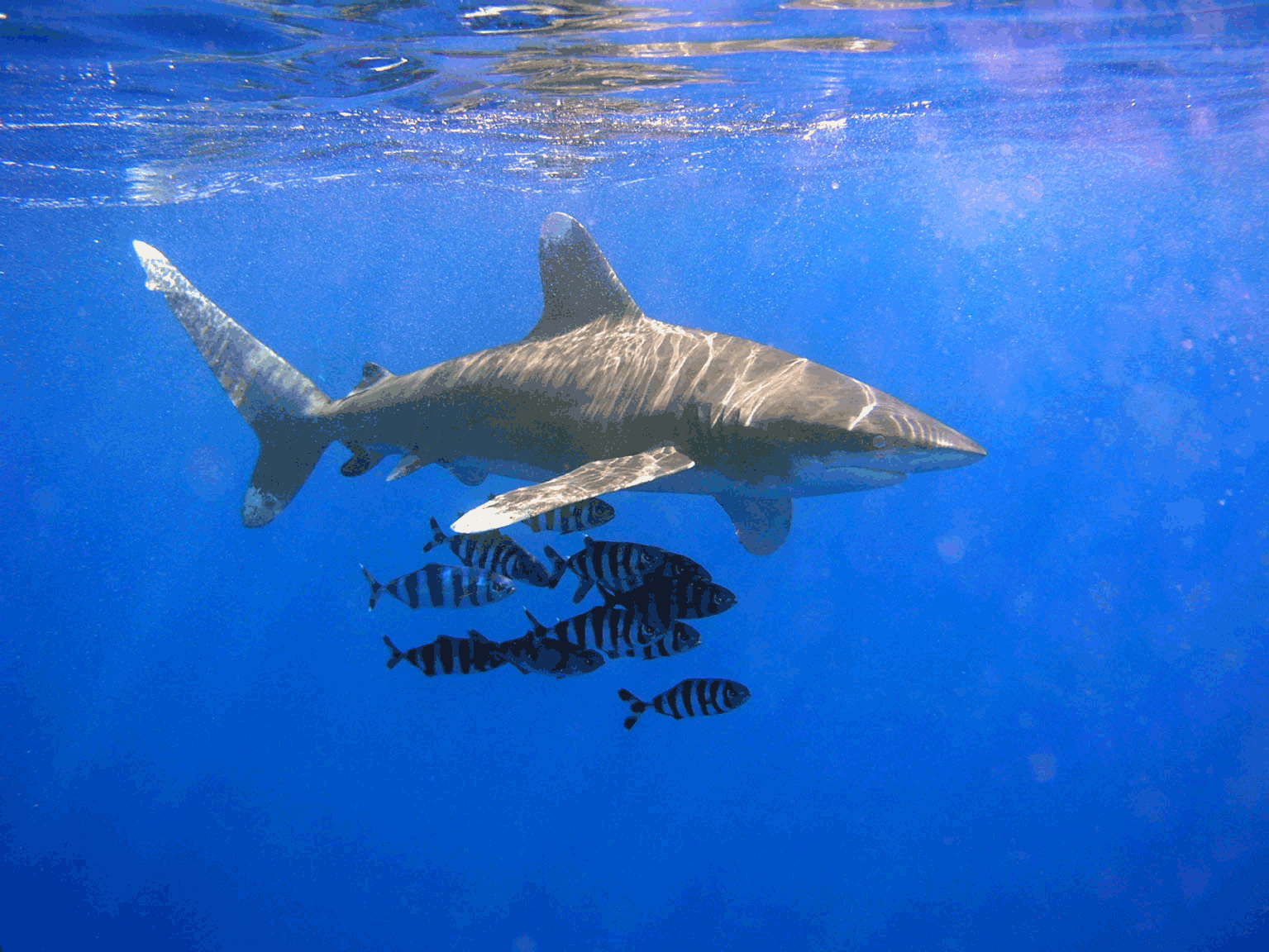
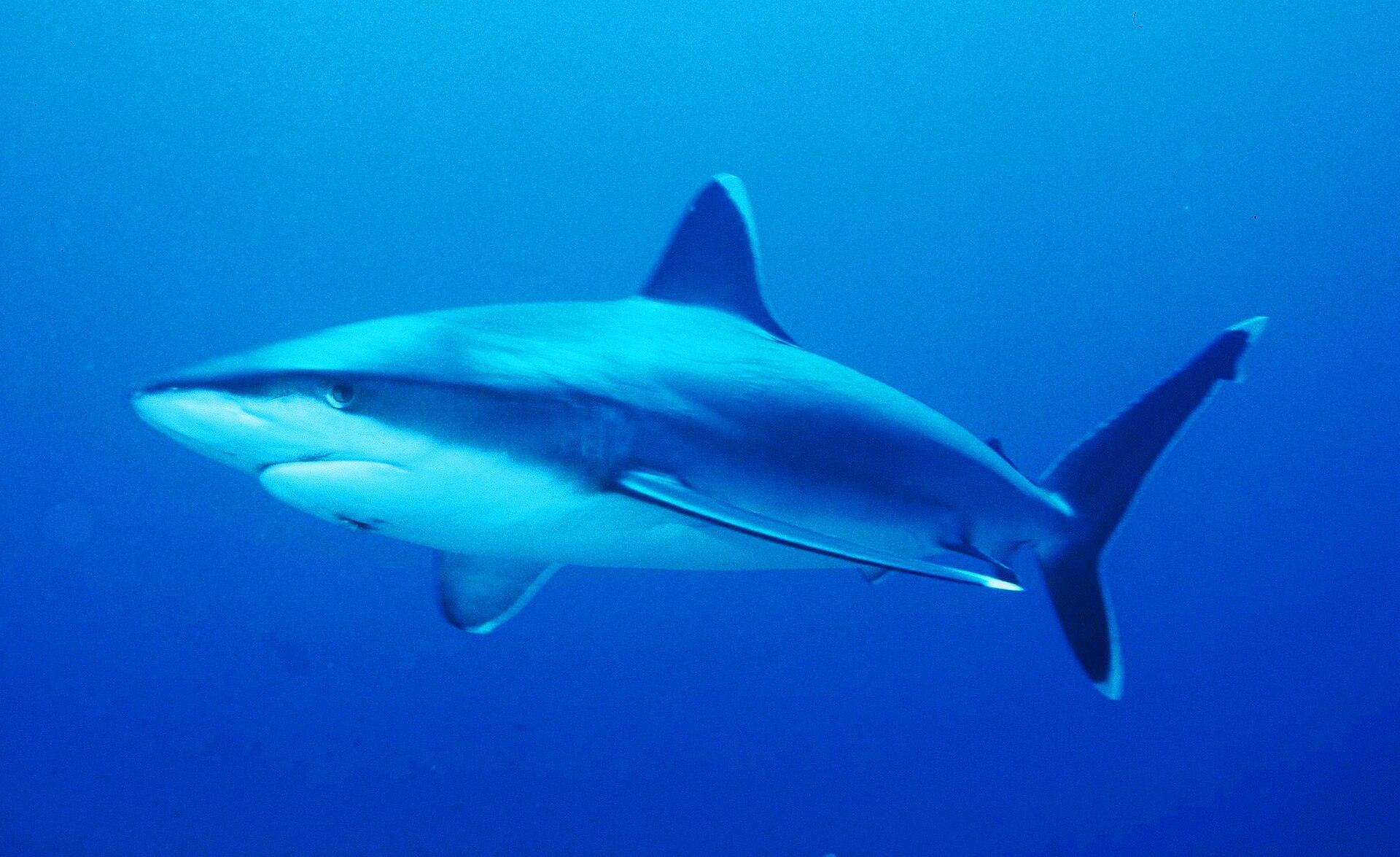
A large, robust requiem shark with brilliant white-edged fins and a bold, confident manner around offshore reefs and seamounts. Bigger and more assertive than the grey reef shark it resembles, it tends to dominate other sharks at a site. Its gleaming fin margins make it one of the most striking sharks in blue water.
- Size
- ~2.5–3.0 m
- Weight
- Up to ~160 kg.
- Diet
- Mid-water and bottom bony fishes, plus rays, smaller sharks and cephalopods.
- Lifespan
- Not firmly established; likely ~20–25+ years.
- Depth
- Surface to ~800 m; offshore reefs, banks and island slopes.
- Reproduction
- Live-bearing; ~1–11 pups (avg 5–6), roughly biennial.
- Snorkel or dive
- Dive — advanced
- Best season
- Year-round (current-dependent)
- Conservation
- Vulnerable
How to recognise it
Robust grey body with distinct white/silver margins on all fins; larger than a grey reef.
Behaviour in the wild
Bold and dominant; patrols outer-reef drop-offs, pinnacles and current-swept seamounts.
Where to see it in the Maldives
Outer-reef pinnacles and channels in the south — Huvadhoo and Fuvahmulah.
Visual field notes
See silvertip shark from more than one angle.
2 human-reviewed photographs chosen for identity, habitat and behaviour.
01 · Field portrait · Species reference
PhotoAlbert kokCC BY-SA 3.0web-adapted
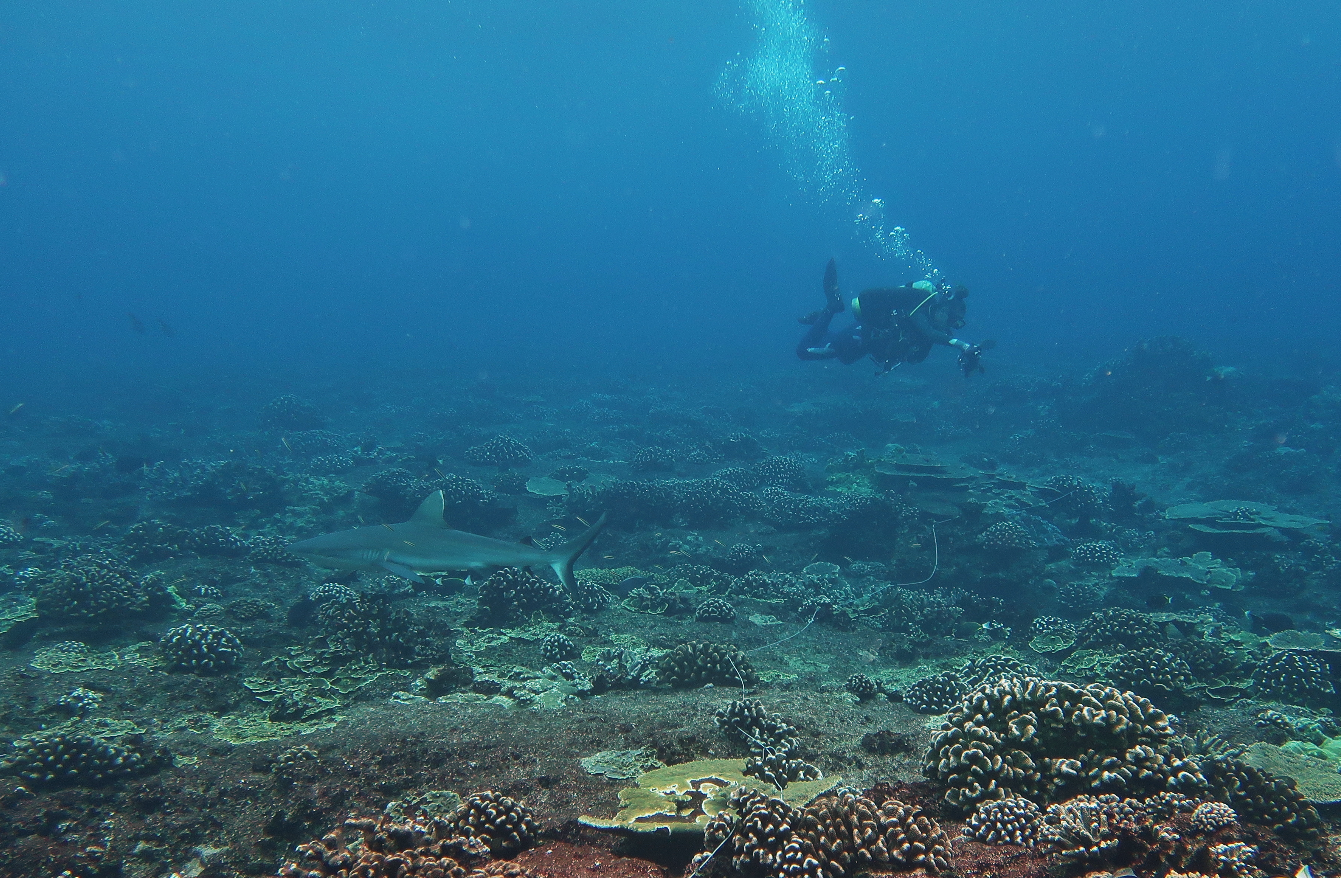
02 · Habitat · Species reference
PhotoNOAA Photo LibraryCC BY 2.0web-adapted
Recorded locations
Build a trip from real sighting records.
Conservation context
Vulnerable — targeted and bycatch fisheries, finning; site fidelity makes it easy to deplete.
IUCN · Vulnerable
Watch responsibly
Stay aware and keep distance (it can be bold); avoid spearfishing scenarios and never feed.
Field notes
Often the boldest shark on a reef, known to approach divers head-on before veering away.
Often bears small bite scars from scuffles — it's notably aggressive toward other silvertips at feeding sites.
Collective noun · a shiver of sharks
Profile references
References are shown transparently; profile copy may also include editorial synthesis. Seasons and sightings vary with wild conditions.