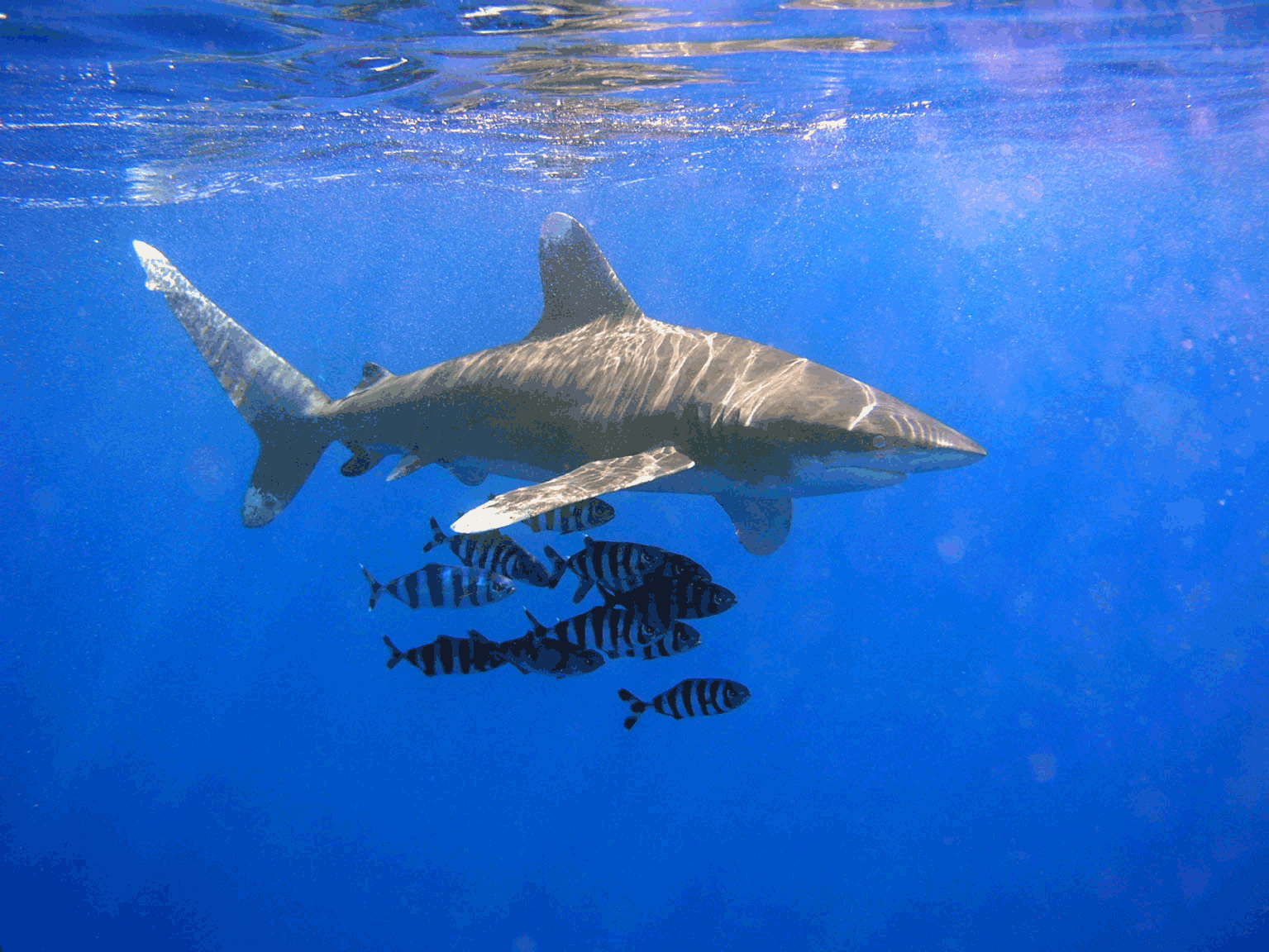
A stocky open-ocean wanderer with huge, rounded, white-mottled fins — once among the most abundant large animals on Earth, now one of the most endangered. Bold and persistent, it is unforgettable in the blue. Encounters are now a rare highlight in deep Maldivian waters.
- Size
- ~3.0–3.5 m
- Weight
- Up to ~170 kg.
- Diet
- Pelagic fishes (tuna, dolphinfish), squid, plus turtles, seabirds and carrion.
- Lifespan
- ~13–25 years (newer ageing suggests older; uncertain).
- Depth
- Mainly the sunlit surface layer, 0 to ~150–200 m.
- Reproduction
- Live-bearing; ~1–14 pups, gestation ~10–12 months.
- Snorkel or dive
- Dive only — advanced
- Best season
- Opportunistic
- Conservation
- Critically Endangered
How to recognise it
Stocky; very long rounded paddle-like pectoral fins with mottled white tips.
Behaviour in the wild
Bold, slow-cruising open-ocean predator; persistent around divers; rarely near reefs.
Where to see it in the Maldives
Deep south, Fuvahmulah and outer oceanic waters; uncommon and opportunistic.
Visual field notes
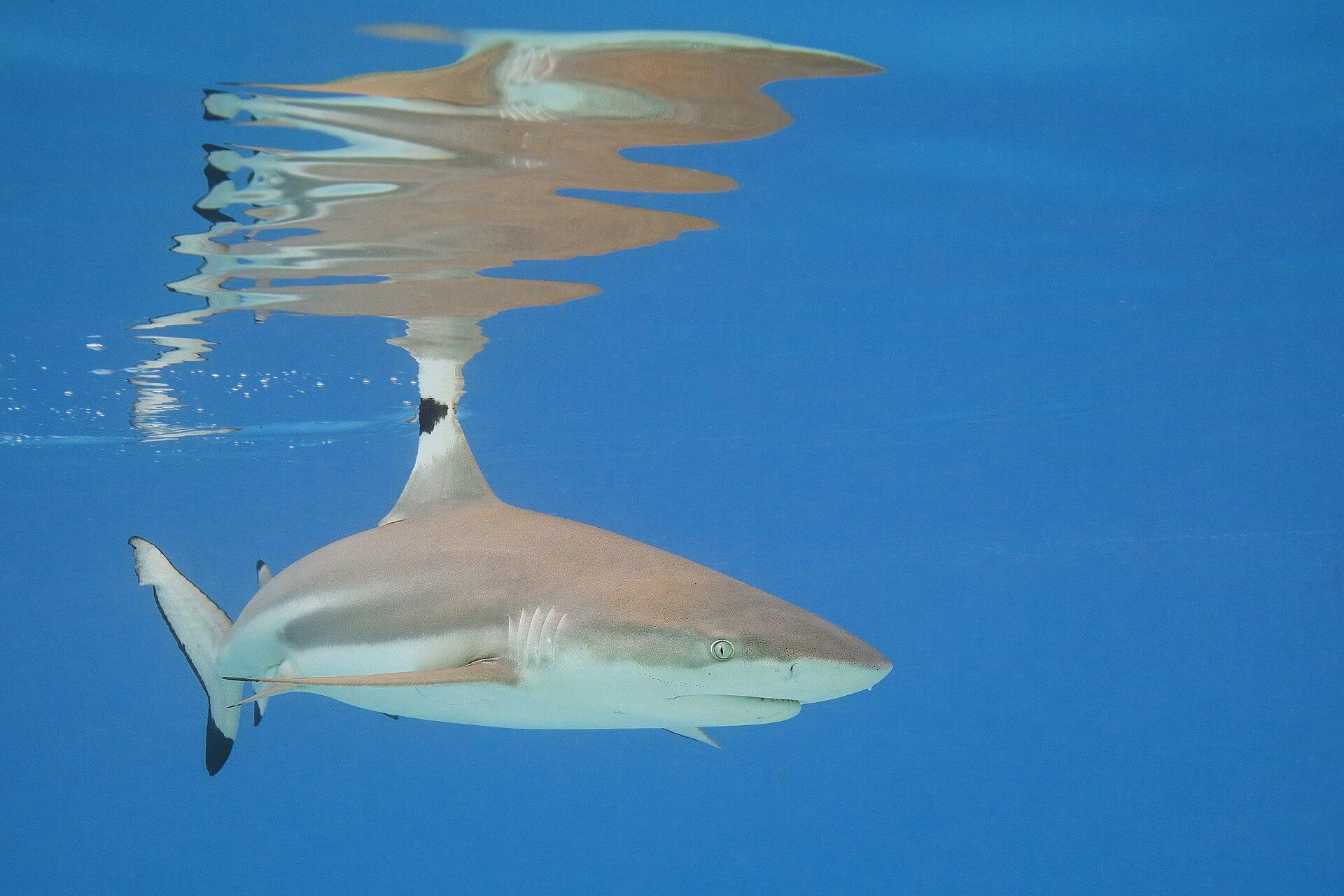
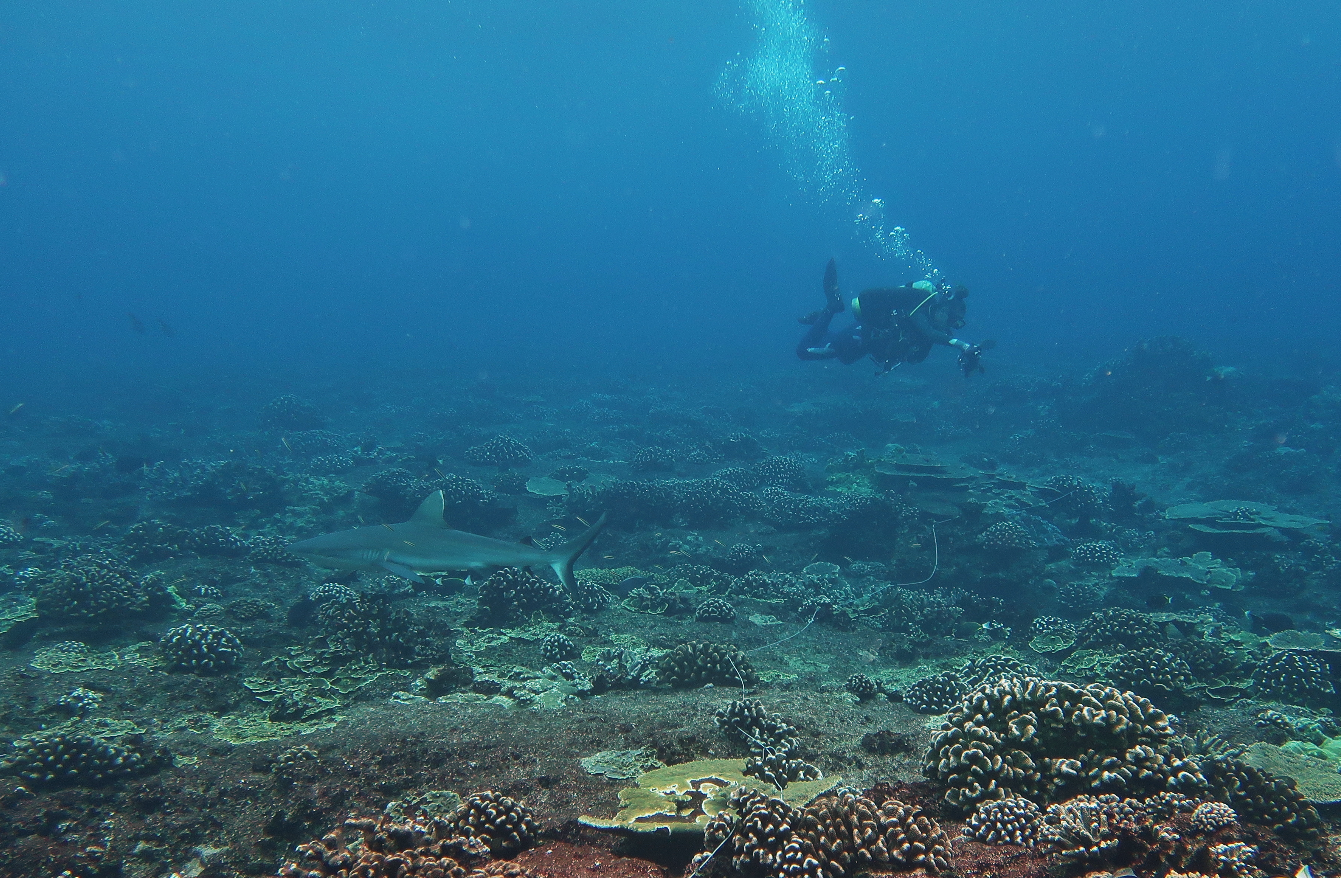
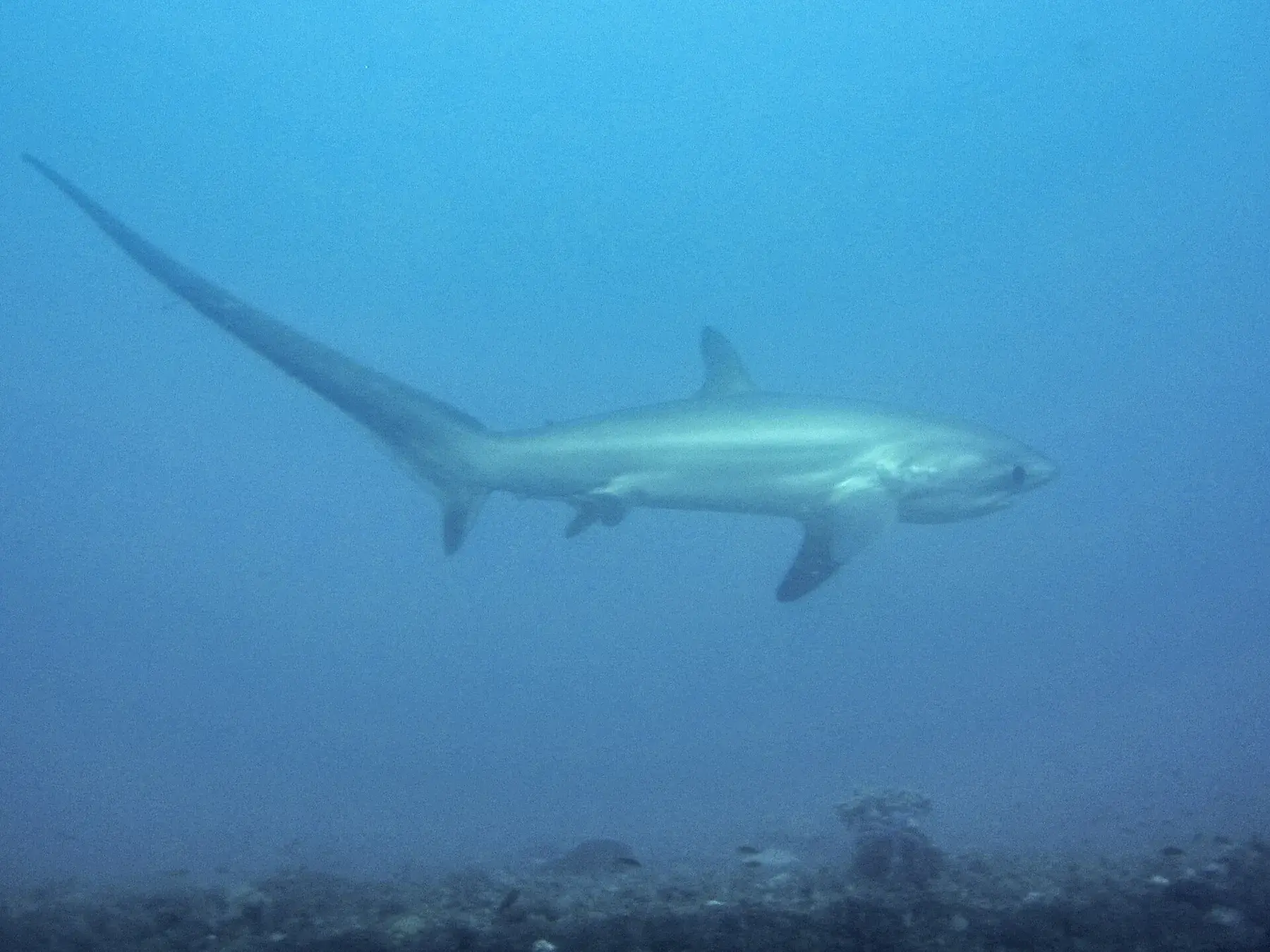
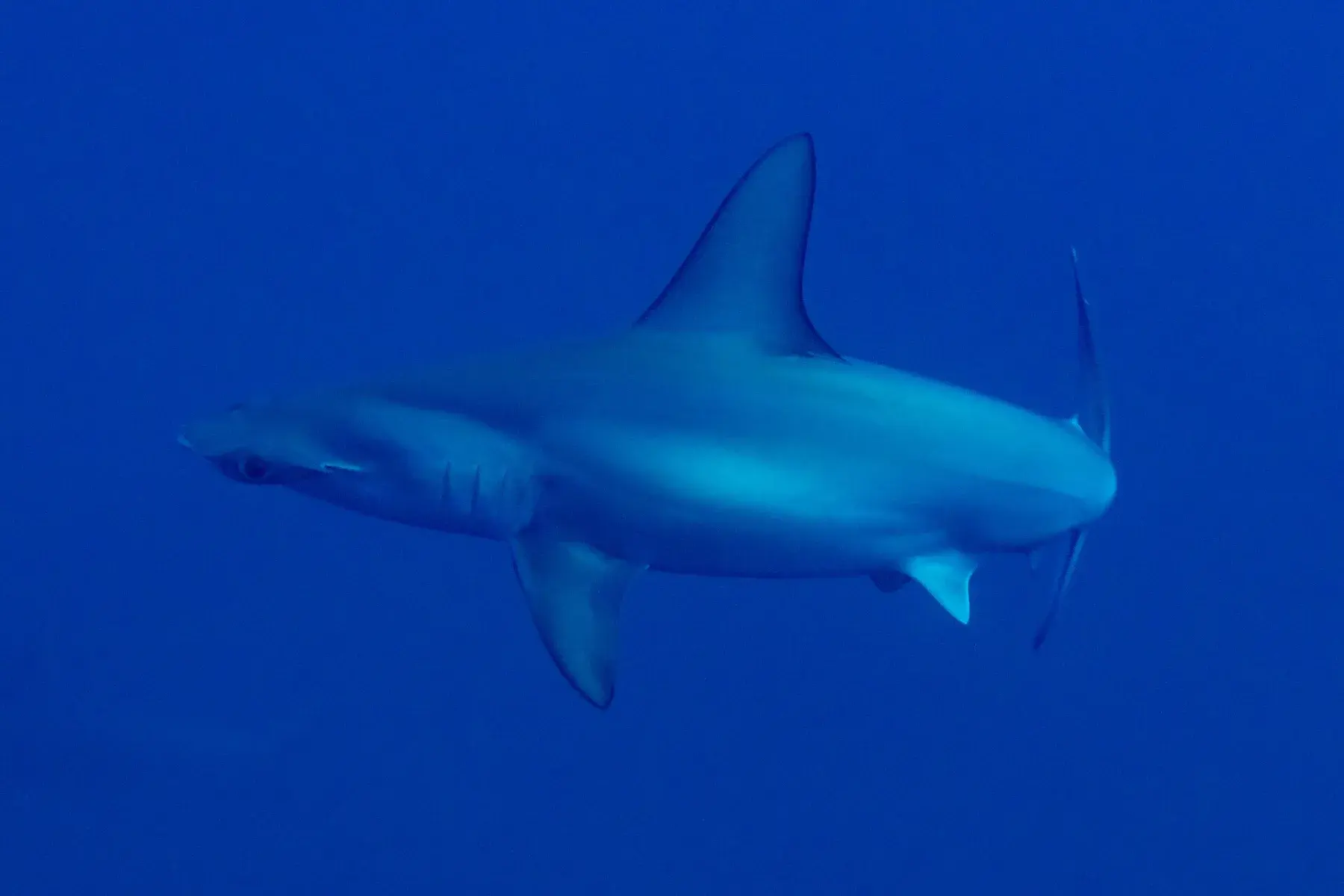
See oceanic whitetip shark from more than one angle.
3 human-reviewed photographs chosen for identity, habitat and behaviour.
01 · Field portrait · Species reference
PhotoThe original uploader was OldakQuill at English Wikipedia.CC BY-SA 3.0web-adapted
02 · Habitat · Species reference
PhotoDiego DelsoCC BY-SA 4.0web-adapted
03 · Identification · Species reference
PhotoDiego DelsoCC BY-SA 4.0web-adapted
Conservation context
Critically Endangered — collapsed by over 90% in places, from longline bycatch and the fin trade.
IUCN · Critically Endangered
Watch responsibly
Hold a confident posture, stay with the group, keep distance, never feed (it is naturally bold).
Field notes
Cousteau called it the most dangerous shark; it's now among the most endangered, down ~75%.
Often escorted by pilot fish; today you are vastly more dangerous to it than it is to you.
Collective noun · a shiver of sharks
Profile references
References are shown transparently; profile copy may also include editorial synthesis. Seasons and sightings vary with wild conditions.