
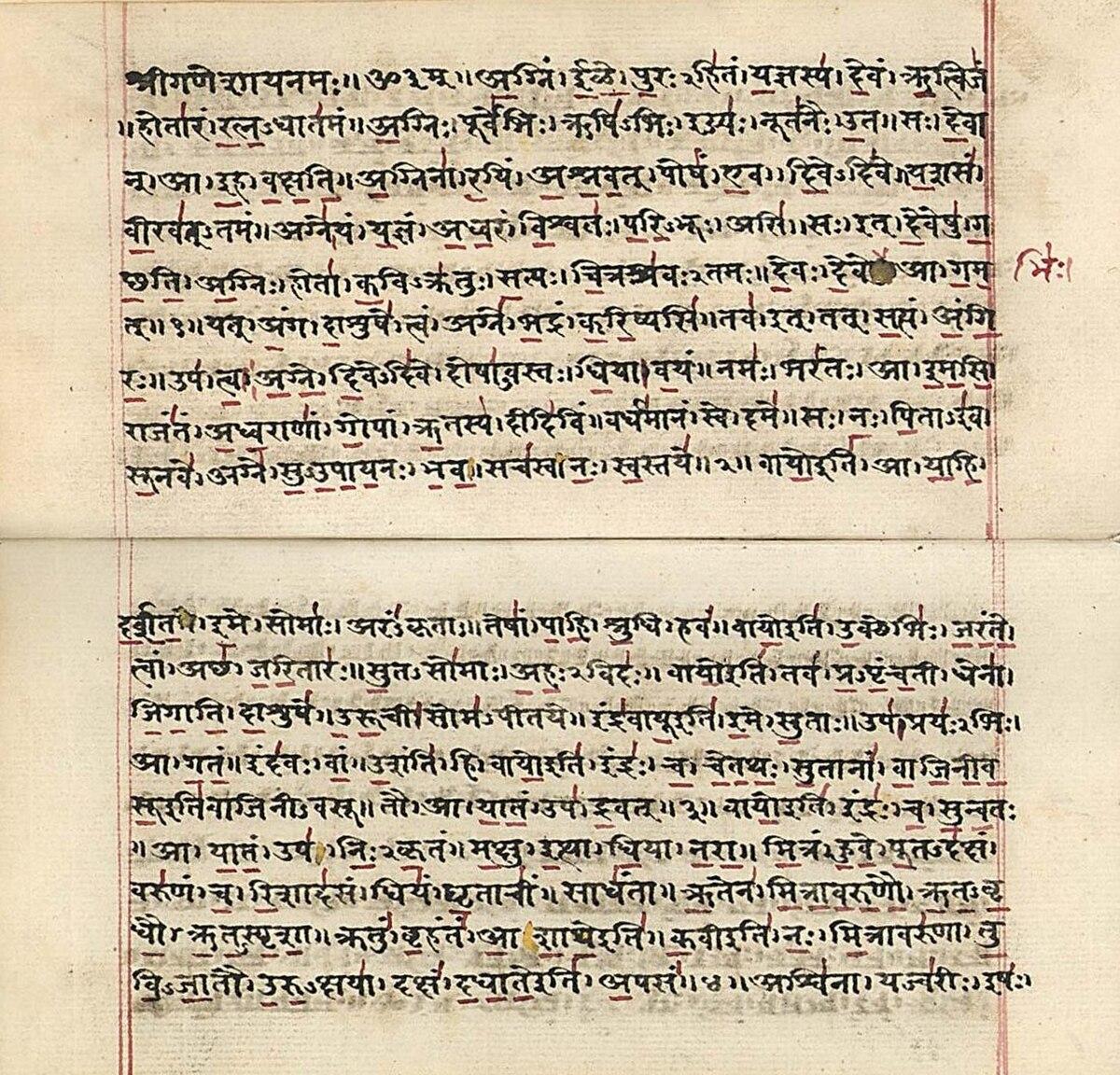
The Garland of Islands.
Sanskrit poets of the Vedic age name these scattered reefs Mālādvīpa — the 'garland of islands'. The Mahābhārata and later Purāṇas record the archipelago long before any foreign ship drops anchor, a sign that South Asia knows its southern maritime frontier intimately.
The first written trace of the Maldives is not a map but a name. Vedic literature of the mid-2nd millennium BCE calls the islands Mālādvīpa — the 'garland of islands' — a poetic description that captures the look of the atolls scattered like flower loops across the equator.
By 483 BCE, the Buddhist Pāli canon speaks of '2,000 small islands' south of the Indian subcontinent. Long before Ptolemy's charts or Roman coins find their way to Thoddoo, the Maldives already exist as a known fixture on the mental map of South Asia.
The precise moment of first settlement is genuinely unknown. Early buildings of wood and palm frond leave almost no trace in the salty, acidic island soils. But linguistics, oral tradition and scattered archaeological fragments all suggest humans have been settling and re-settling these reefs for at least 3,500 years.
There are said to be 2,000 parittadīpa, small islands scattered in the great ocean south of our coasts.
Continue the timeline.
- Maloney, Clarence. People of the Maldive Islands (1980)
- Mohamed, Naseema. Pre-Islamic Maldives (National Centre for Linguistic and Historical Research)
Two thousand years of history — one extraordinary place to experience it.
The atolls in this story are the islands you can stay on today: private-island resorts and overwater villas, planned by a team that works from inside the Maldives.