
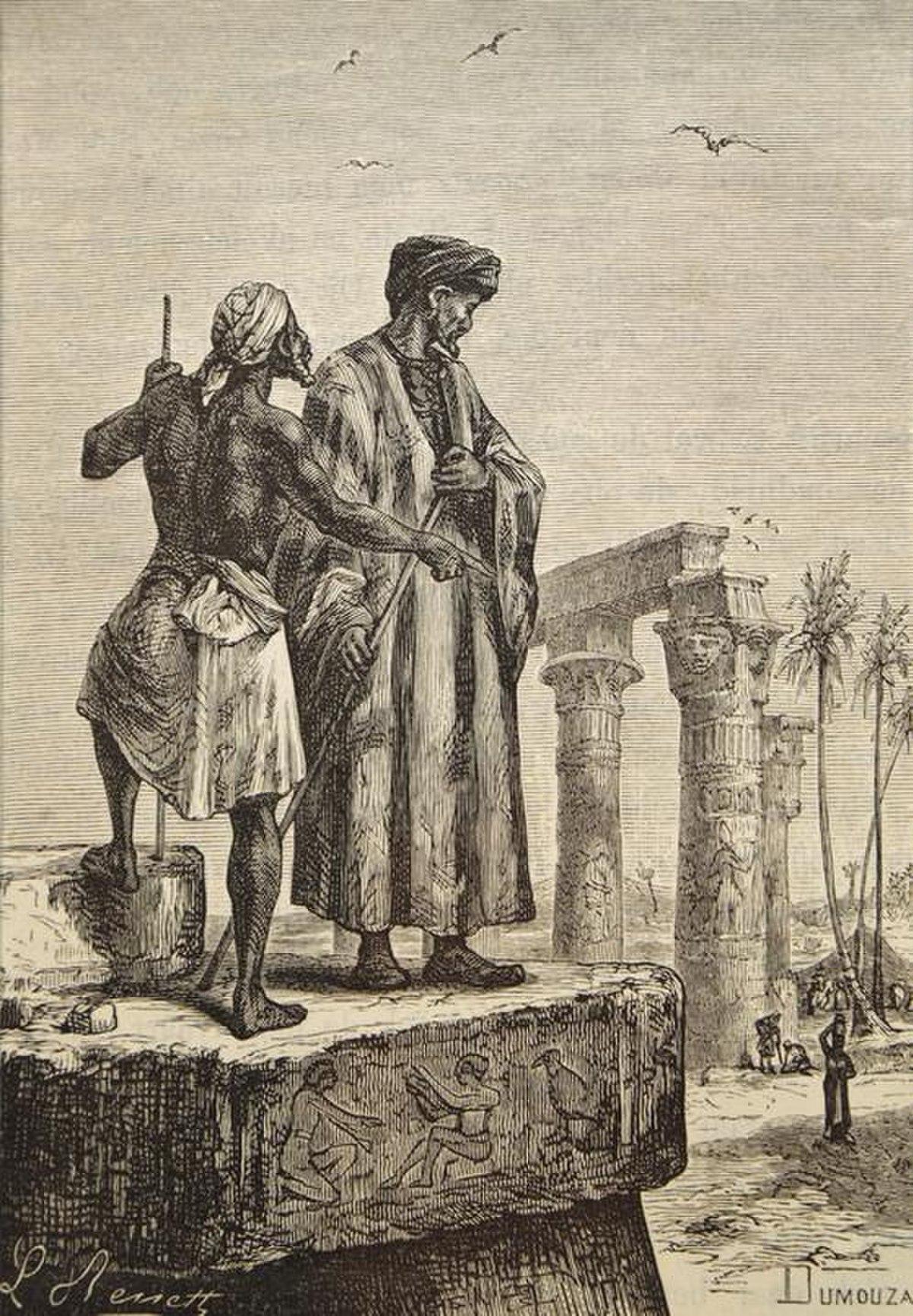
The Traveller Who Became a Judge.
He meant to pass through. The court made him Chief Judge, married him into the royal family, and kept him a year.
The legendary Moroccan explorer Ibn Battuta arrives around 1343 — some scholars place it as early as 1341 — and is appointed Chief Judge for roughly nine months. His writings remain one of the richest medieval accounts of Maldivian life — cowrie shells as currency, royal banquets, and the quiet rhythm of island existence.
Pressed into service.
Ibn Battuta reached the Maldives in late 1343, near the end of a career that had already carried him from Morocco to China. He hoped to slip through unnoticed — but a court desperately short of trained Islamic jurists discovered his credentials, appointed him Chief Qāḍī, and married him into the royal family to be sure he stayed.
He hated the job, loved the islands.
He praised the smoked tuna, the coconut wine, the fourfold abundance of the palms. He recorded the cowrie economy, the royal court, the naval organisation, the marriage customs and the mosques — an ethnographic portrait so rich that historians still mine it today.
Two things appalled him: that devout Maldivian women did not cover their upper bodies, a custom he tried and failed to legislate away; and that wives would not eat in their husbands' presence, so he never once saw his own wife take a meal.
Four wives and a portrait.
He enforced Shariah strictly, quarrelled with the vizier of Sultana Khadijah, and fled when the political heat grew too high — leaving behind four wives, a stack of judicial rulings, and the most vivid written portrait of the medieval Maldives that survives.
The inhabitants of the Maldives are all Muslims, pious and upright. Their islands are very numerous, and their chief city is Mahal.
The long arc.
- Late 1343
Anchor drops
Ibn Battuta arrives and is pressed into the role of Chief Judge.
- 1343–44
On the bench
He records the cowrie economy, the court and island custom in extraordinary detail.
- 1344
The escape
After clashing with the vizier, he leaves the islands behind.
- c. 1355
The Riḥla
His travel account preserves the richest surviving portrait of the medieval Maldives.
Continue the timeline.
- Ibn Battuta, The Travels (Gibb translation, Hakluyt Society)
The islands that kept Ibn Battuta a year still keep their guests longer than planned.
He came to pass through and stayed nine months. Plan your own stay across the same atolls with a team that works from inside them.