
Navigating the Maldives in 2026
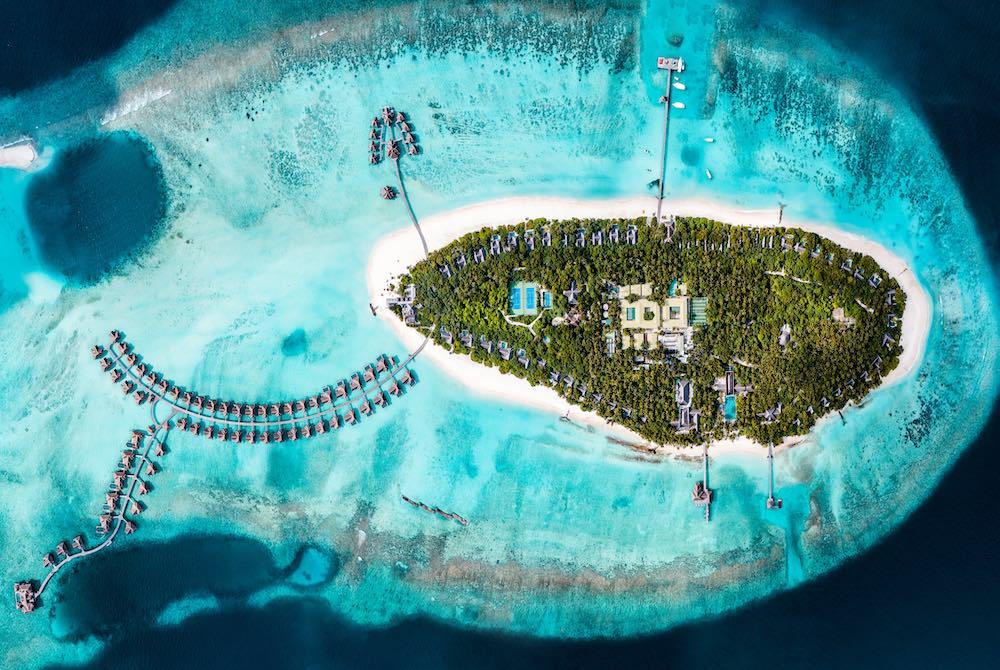
The Maldives is no longer a single idea. In 2026 it is a 1,190-island archipelago with 179 resorts, 911 guesthouses, 169 safari vessels and 16 hotels spread across 26 natural atolls — and the distance between a reef-edge water villa in Raa and a backpacker guesthouse in Maafushi is measured not in kilometres but in entire holiday concepts. Planning well starts with understanding that geography.
This guide gives you the 2026 fundamentals: how to get there, when to go, which atoll suits which traveller, and the transfer logic that quietly determines whether a week feels like a dream or a disjointed sequence of connections.
The country in numbers
The government target for 2026 is 2.5 million arrivals, up from 2.2M in 2025. Q1 2026 already recorded a 5.6% year-on-year uplift. Velana International Airport (MLE) on Hulhulé island still handles roughly 98.5% of all tourist movement — every other regional airport combined accounts for the balance.
- 1,190 coral islands across 26 natural atolls (administratively grouped into 20 atolls)
- Land area: 298 km². Sea area: ~90,000 km². The country is 99% water.
- Capital: Malé, one of the densest cities on earth
- Language: Dhivehi; English is near-universal in tourism
- Currency: Maldivian Rufiyaa (MVR), but resorts and guesthouses quote and settle in USD. Cards are accepted almost everywhere that matters.
- Time zone: GMT+5 year-round (no daylight savings)
The two seasons you actually need to know
The Maldives has two monsoons, each named in Dhivehi:
Iruvai — the dry northeast monsoon (December → April)
This is high season. Skies are clear, humidity drops, lagoons are glass. February is the driest month of the year. Rates are highest from mid-December through early January (Christmas/New Year is priced as a separate animal entirely).Hulhangu — the wet southwest monsoon (May → November)
Shorter storms, warmer seas, cheaper rooms. May and October are the wettest months on average. Crucially, this is also when plankton blooms along the eastern reef walls and manta rays and whale sharks arrive in force — Hanifaru Bay's legendary manta feeding events happen between June and October.If you want sun, go in the dry months. If you want big marine life and better value, the wet season rewards you. The myth that Hulhangu means "non-stop rain" is false — you get heavy bursts, not grey weeks.
> The best time to visit the Maldives is the week that fits your life. Every month has something.
Understanding atoll geography (and why it dictates your trip)
Every Maldivian atoll has a different personality. Three practical clusters matter most:
North & South Malé Atolls — closest to the airport
Reachable by speedboat in 15–90 minutes. This is where most first-time visitors stay. Popular water-sports resorts, house reefs within swimming distance, and a mix of mid-market through premium properties. North Malé's highlights include Banana Reef, HP Reef and the artificial reef at Manta Point (Lankan).Ari Atoll — whale sharks and big fish
Accessible by seaplane (25–35 min) or by a new domestic flight + speedboat combination. South Ari Atoll is the most reliable place on earth to see whale sharks year-round. Maaya Thila in North Ari is one of the best night dives in the country.Baa Atoll — UNESCO Biosphere Reserve
A 30-minute seaplane from Malé. Hanifaru Bay is the reason this atoll is famous: during the southwest monsoon, up to 200 manta rays gather to feed in a single lagoon. Only snorkelling is permitted inside the bay itself, and access is tightly managed.Further afield — Raa, Noonu, Lhaviyani, Dhaalu, Laamu, Gaafu
These atolls have reopened meaningfully since 2023 with the opening of regional airports. Transfers are longer but the reefs are less-dived and new ultra-luxury builds (Soneva Jani in Noonu, Joali Being in Raa) are concentrated here.Transfers — the decision that shapes your week
Getting from MLE to your resort is part of the holiday — or it's the thing that ruins day one. Three transfer modes:
Speedboat (15 minutes to ~90 minutes)
- When: Resorts in North and South Malé Atoll
- Runs: 24/7, weather permitting
- Cost: Typically $150–$250 return per adult
- Good for: Late arrivals, older travellers, families with young children
Seaplane (25–50 minutes)
Operated primarily by Trans Maldivian Airways (TMA) — the world's largest seaplane operator, with 55+ De Havilland Twin Otters, moving over a million passengers a year to 80+ resorts. Manta Air runs a smaller fleet focused on Dhaalu and nearby atolls.- When: Ari, Baa, Noonu, Raa and most mid-to-far atoll resorts
- Critical constraint: Daylight only. The last seaplane leaves Malé around 15:30 and lands at 16:30 at the latest. If you land at MLE after 14:00, expect an overnight at a transit hotel unless your resort confirms a charter.
- Cost: $450–$800 return per adult on most routes
- Good for: Anyone going beyond South Ari — the flight itself is one of the best experiences of the trip
Domestic flight + speedboat (50 min flight + 15–45 min boat)
Used to reach the far south (Addu, Gaafu), the far north (Haa Alifu), or any atoll where a seaplane transfer would be prohibitively long. Maldivian (the flag carrier) and Manta Air operate Dash 8 and ATR aircraft into the regional strips.- When: Addu, Gaafu Alifu, Gaafu Dhaalu, Haa Alifu, Haa Dhaalu, Laamu
- Good for: Late arrivals to far atolls, anxious flyers who prefer pressurised aircraft to open-door floatplanes
Who flies there directly?
As of April 2026, 43 airlines serve Velana from 76 airports worldwide. Direct options that matter:
- From the UK: British Airways and Virgin Atlantic from London Heathrow (~10h 35m, typically 787)
- From the Gulf: Emirates, Qatar Airways, Etihad, Flydubai (4–5h)
- From Europe: Seasonal direct services from several German, Italian, French and Swiss cities — most routed via the Gulf year-round
- From Asia: Singapore Airlines, Cathay Pacific, IndiGo and SriLankan all run frequent connections
What a week in the Maldives typically costs
- Guesthouse on a local island: from $80–$140/night, half-board
- Mid-market resort: $500–$1,000/night, full board
- Premium resort: $1,500–$3,000/night, often all-inclusive
- Ultra-luxury (Soneva, Cheval Blanc, One&Only): $3,500–$15,000+/night
> Prices are always quoted nett-of-tax at guesthouse level and gross-inclusive at resort level. Always confirm which you're being shown.
Infrastructure updates that changed 2024–2026
- Velana's new passenger terminal opened in stages through 2025. Peak-hour queuing has dropped dramatically.
- Four new regional airports have opened since 2023 — in Raa, Haa Dhaalu, Faafu and elsewhere — cutting transfer times to previously difficult atolls.
- The Sinamalé Bridge (Malé–Hulhulé–Hulhumalé) is being extended to Thilafushi and Gulhifalhu on the western industrial atolls, opening commuter access and new hotel sites within speedboat reach of the airport.
Final planning checklist
- Book the atoll before the resort. The atoll determines transfer cost and whether you'll see mantas.
- Check arrival time against seaplane cutoff. A 17:00 landing at MLE and a Baa Atoll resort = overnight transit.
- Budget separately for transfers. They are rarely included.
- Bring an underwater camera. Even the simplest house reef will deliver at least one unforgettable moment.
- Let your agent do the mainland transfer bookings. Mismatched flight/seaplane/speedboat windows are the single biggest source of Maldives headaches.
Frequently asked
Common questions
What is the best time of year to see manta rays and whale sharks in the Maldives?
The wet southwest monsoon season, specifically between June and October, is when manta rays and whale sharks arrive in force. Hanifaru Bay in the Baa Atoll is particularly famous for its manta feeding events during this period.
Can I reach my resort by seaplane if my flight arrives at Velana International Airport in the evening?
No, seaplanes only operate during daylight hours. The last seaplane typically departs around 15:30, so arrivals after 14:00 usually require an overnight stay at a transit hotel.
Which atolls are best for travelers who want to avoid long transfer times from the airport?
The North and South Malé Atolls are the closest to the airport, reachable by speedboat in 15 to 90 minutes. These areas are popular for first-time visitors and offer a range of mid-market to premium properties.
Written by
Resortlife Editorial
The editorial team at Resortlife Travel — a Maldives DMC since 2006, writing from Malé, Dubai, and the UK. Our guides are built on first-hand reporting, contracted-rate knowledge, and two decades of agent relationships.