
Why Vaavu Atoll matters
Vaavu (or Felidhe Atoll, to use its Dhivehi name) is the least-populated of the inhabited Maldives atolls and one of the smallest. Only five inhabited islands sit inside its 60-by-30-kilometre lagoon, and just a handful of resort and guesthouse islands operate alongside them. That scarcity is the point. No mass-market scale, almost no boat traffic outside the channels, dive sites that rarely see another group in the water.
For travel planners the appeal is geographic as much as ecological. Vaavu's northern boundary sits roughly 65-80 kilometres south of Velana International Airport — close enough for a 70-to-90-minute speedboat hop, far enough to feel genuinely remote. There is a seaplane option too (about 20 minutes), but the speedboat range is one of the reasons Vaavu sits well within reach for clients who want big-marine encounters without a long transfer day.
The atoll's reputation rests on its channels. Fotteyo Kandu, Miyaru Kandu, Devana Kandu, Alimatha — these names carry weight in dive circles the way Hanifaru does for manta-spotting in Baa. Vaavu also contains Fottheyo, the largest single reef in the Maldives and the easternmost geographic point of the country. For agents pitching dive-led itineraries, an island honeymoon with a credible underwater story, or a quieter alternative to the Ari Atoll crowd, Vaavu's value proposition is unusually clean.
The famous Vaavu channels
A Maldivian kandu is a tidal channel cutting through the atoll rim where the open ocean exchanges water with the inner lagoon. Vaavu has six well-known channels, each with its own current pattern, marine cast and best dive window.
Fotteyo Kandu is the headline act. Widely cited by dive operators and dive publications as the finest channel dive in the Maldives — and not just a Maldives shortlist; it appears in international "best channels in the world" rankings. The reef sits between 8 and 35 metres, with overhangs, caves and soft-coral swim-throughs along the channel walls. The incoming tide pulls grey reef sharks, eagle rays and schooling jacks into the channel entrance; the outgoing flushes out turtles, snapper aggregations and the occasional hammerhead in season. It is an advanced dive: current, depth, drift, and a long surface interval before the boat picks you up downstream.
Miyaru Kandu translates literally to "shark channel". The reputation is earned. Grey reef sharks patrol the channel mouth in numbers; white-tip reef sharks rest on the sandy ledges along the wall; eagle ray squadrons drift through on the incoming tide. This is a drift dive, intermediate to advanced, and best done with a Maldivian dive guide who reads the current.
Devana Kandu is the gentler counterpart — a healthy hard-coral garden, manageable current, and a reliable parade of reef fish that suits intermediate divers building hours before tackling Fotteyo. Alimatha Kandu is best known for its night-dive culture. After dark, dive boats anchor at Alimatha's house reef and a feeding station draws in dozens of nurse sharks, jacks and giant trevally — a chaotic, close-quarters encounter that, done responsibly, is one of the Maldives' signature underwater experiences. Rakeedhoo Kandu and Vattaru Kandu round out the set with quieter channel topography and good macro photography conditions.
A note on certification. Vaavu is not a beginner's atoll. Open Water divers can still find rewarding sites along the house reefs and the inner-atoll shallows, but the famous channels reward PADI Advanced Open Water with a Drift speciality, or equivalent SSI / CMAS qualifications, and at least 30 logged dives. Resort dive centres are explicit about this on the briefing — channel dives are escorted, current-aware, and the guide may turn a diver around if their trim or finning isn't ready.
Where to stay in Vaavu
Vaavu's resort scene is small by design. Five visible resorts plus a deep guesthouse bench on the inhabited islands of Keyodhoo, Felidhoo, Fulidhoo, Thinadhoo and Rakeedhoo.
Resorts
Nakai Resort AlimathaVaavu Atoll✈ 90 min
Alimatha Island has been a working dive resort since 1975 — one of the oldest tourist islands in the country, and the original home of the Maldives night-shark dive. The resort has been through several operator hands and now sits under the NAKAI brand. Rooms are simple beach bungalows and water villas; the draw is the dive operation, the long house reef and the proximity to Fotteyo and Miyaru.
NAKAI Dhiggiri ResortVaavu Atoll✈ 904★
Dhiggiri Tourist Resort, also under the NAKAI brand, is the smaller sister island to Alimatha. The atmosphere is even quieter — a single-island, mostly-Italian repeat clientele, dive-focused, with a long-standing operator relationship. Good fit for agents whose clients want the Vaavu diving without the bigger group dynamics of Alimatha.
Cinnamon Velifushi MaldivesVaavu Atoll✈ 255★
Cinnamon Velifushi sits at the more polished end of Vaavu inventory. A four-star Sri Lankan-managed property with a full all-inclusive option, family pool, spa and a credible house reef. Suits agents booking clients who want the channel diving as a feature, but not the only feature — the food, the spa programme and the room hardware are all dialled up a notch above Vaavu's older dive lodges.
Cocogiri Island Resort MaldivesVaavu Atoll✈ 75 min
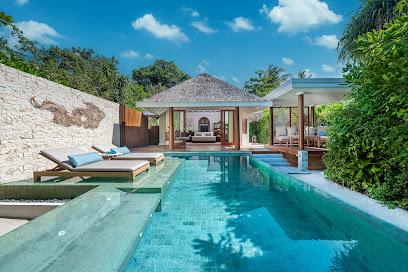
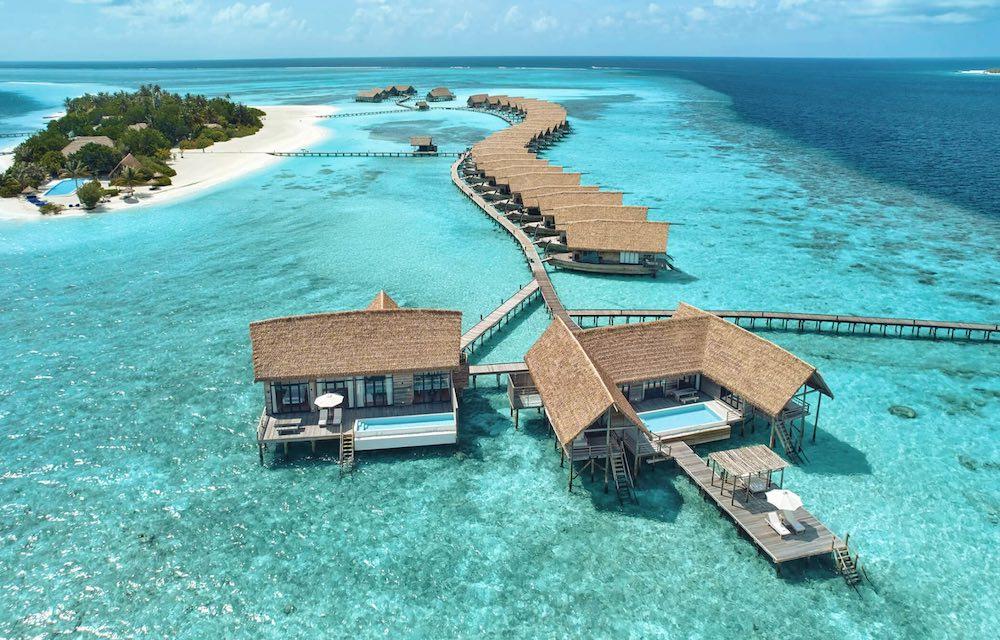
Cocogiri is a small, design-led private island with overwater villas and a quiet, couples-leaning character. Less talked about than the NAKAI properties but a strong card for honeymooners who want the channel diving experience without the bigger dive-resort culture.
NOOE Maldives KunaavashiVaavu Atoll✈ 25 min
NOOE Maldives Kunaavashi is the newest entrant — a renovated property with a contemporary design language and a more international guest mix. Strong for agents who want a fresher hardware play in Vaavu rather than the older heritage dive resorts.
Local-island guesthouses (selected)
Plumeria MaldivesVaavu Atoll4★
Plumeria on Thinadhoo island is one of the longer-established guesthouses in the atoll, with a tight house-reef, a working dive centre and a budget-friendly proposition that lets divers run Vaavu's full channel programme without committing to a resort stay.
Finolhu Beach Guest HouseVaavu Atoll
Finolhu Beach Guest House on Fulidhoo is positioned right next to the local-island beach, with easy access to the Fulidhoo nurse-shark and stingray feeding spot — a snorkel-from-shore experience that has become its own micro-attraction in the atoll.
Getting to Vaavu
Vaavu is a speedboat atoll. Most resorts run a 70-to-90-minute scheduled speedboat from Velana International Airport, timed against international arrivals. A seaplane is available too (around 20 minutes airborne) but unnecessary for the geography — the cost-to-time trade-off is one of Vaavu's quieter advantages. Clients arriving on a late international flight can usually still transfer the same day, because speedboats operate after sunset; seaplane-only atolls force an airport-hotel overnight if you land after roughly 4 PM. For agents quoting short stays (5-6 nights), Vaavu is one of the better atoll choices precisely because the transfer window doesn't eat a full day.
Best time for Vaavu
Vaavu shares the central Maldives monsoon pattern. The Iruveli season (November to April, dominated by the northeast monsoon) delivers calm seas, the best surface visibility and the most reliable dive conditions across the channels. Iruveli is the obvious window for first-time Maldives divers and for snorkel-led trips.
The Hulhangu season (May to October, southwest monsoon) brings stronger currents through Fotteyo and Miyaru, which paradoxically is when the channels are at their pelagic best. The water is more nutrient-rich, visibility drops from 30-plus metres to roughly 15-20, but the volume of sharks, eagle rays and schooling fish rises sharply. Experienced divers often pick Hulhangu for exactly this reason.
For most travel-trade quoting, the simple rule is: November to April for the picture-perfect, calm-sea, beginner-friendly Vaavu; June to September for the pelagic-heavy, currents-on, advanced-diver Vaavu. For broader Maldives seasonality including resort pricing windows and shoulder-season opportunities, see the Maldives best-time guide.
Diving and snorkelling deep dive
The bar for serious channel diving in Vaavu is PADI Advanced Open Water (or the SSI/CMAS equivalent) with a Drift speciality, plus at least 30 logged dives. Most resort dive centres will assess a diver's trim, buoyancy and current-handling on a check-out dive before signing them off for Fotteyo or Miyaru. This is not theatre — channel currents in Vaavu can run 2-3 knots and a poorly-positioned diver gets swept out of the briefing zone.
For Open Water divers there is still plenty to do. Inside-atoll thila dives, house-reef wall dives along the older resort islands, and the gentler Devana Kandu are all within scope. Vaavu's house reefs are unusually intact compared to the more heavily-trafficked North Malé and South Ari atolls, partly because the resort count is so low and partly because the dive operators here run a strict no-touch, no-feed culture across most sites.
Night diving culture is a Vaavu speciality. The Alimatha jetty is the famous one, but several other resorts run guided nurse-shark and ray night dives off their house reefs, with feeding controlled by the dive centre. The experience is polarising — feeding wild predators raises ethical questions agents should be ready to discuss with conservation-minded clients — but it is undeniably one of the most viscerally close-quarters predator encounters available in recreational diving anywhere in the world.
Snorkellers are well-served too. Most resort house reefs drop into the channel system within fin-distance of the beach, and the resort dive boats run scheduled snorkel-only trips to the channel mouths on slack tide for non-divers travelling with a dive partner.
Plan your Vaavu trip
Vaavu rewards travellers who know what they came for. Channel diving, nurse-shark nights, quiet beaches, and the satisfaction of staying on an atoll that the mass market has largely passed over. For agents the planning calculus is simple: pick the resort tier (heritage dive lodge, all-inclusive four-star, or design boutique), match the season to the client's experience level, and confirm transfer timing against the international flight pattern.
The Resortlife concierge team handles Vaavu itineraries weekly — contracted operator relationships across all five resorts, multilingual ground handling at Velana, and the local fixers that make late-arriving clients and special-diet requests work. Browse the full Vaavu Atoll resort list or contact the team to discuss a specific trip.
Frequently asked
Common questions
How do I get to Vaavu Atoll from Male?
Vaavu is a speedboat atoll. Most resorts run a scheduled 70-to-90-minute speedboat directly from Velana International Airport to the resort jetty, timed against international flight arrivals. A 20-minute seaplane is also available but rarely necessary given the distance. Speedboats run after sunset, so clients arriving on a late international flight can still transfer the same day rather than overnighting in Male.
Is Vaavu Atoll good for beginner divers?
Vaavu has options for Open Water divers along the house reefs and the gentler Devana Kandu, but the famous channel dives (Fotteyo Kandu, Miyaru Kandu) are not beginner sites. Resort dive centres expect PADI Advanced Open Water with a Drift speciality (or SSI/CMAS equivalent) plus at least 30 logged dives, and will run a check-out dive before signing newer divers off for channel trips. Beginners are still well served, but the headline sites need experience.
Can you see sharks in Vaavu without diving?
Yes. The Alimatha jetty draws nurse sharks at night and they are visible from the resort jetty itself, and many Vaavu snorkel trips run to the channel mouths on slack tide where grey reef sharks and white-tips can be seen from the surface. Fulidhoo local island also has a well-known shore-based nurse-shark and stingray feeding spot accessible to snorkellers without a boat trip.
When is the best time to dive in Vaavu Atoll?
November to April (the northeast monsoon, locally Iruveli) gives the calmest seas and 30-plus metre visibility — ideal for newer divers and photography. May to October (Hulhangu, the southwest monsoon) brings stronger channel currents and nutrient-rich water; visibility drops to 15-20 metres but the volume of sharks, eagle rays and pelagics through Fotteyo and Miyaru rises sharply. Experienced divers often pick Hulhangu for exactly that reason.
Are there family-friendly resorts in Vaavu?
Cinnamon Velifushi is the strongest family fit in Vaavu — a four-star all-inclusive with a family pool, kids club and standard family-room hardware. The NAKAI dive resorts (Alimatha, Dhiggiri) are skewed strongly toward couples and dive groups. NOOE Maldives Kunaavashi has a more flexible programme that can work for older children. For under-12s the practical choice is usually Cinnamon Velifushi.
Is Vaavu cheaper than Baa or North Male atolls?
Vaavu typically prices below Baa Atoll (a UNESCO biosphere reserve premium) and competitively against South Male and outer North Male, particularly for the older heritage dive resorts. The cost-saving is mostly transfer-related — a speedboat from Velana avoids the seaplane surcharge that distant atolls like Baa, Noonu or Raa carry. For agents quoting dive-led trips on a moderate budget, Vaavu is one of the most cost-efficient atolls in the country.
What is the difference between Vaavu and Ari Atoll for diving?
Ari Atoll (especially South Ari) is the Maldives' headline whale-shark destination — year-round resident whale sharks along the southern atoll rim. Vaavu does not have a reliable whale-shark population. What Vaavu offers in exchange is the channel-diving experience: tide-driven drift dives at Fotteyo and Miyaru with grey reef sharks, eagle rays and schooling pelagics in a way Ari's reef topology does not replicate. Many serious dive itineraries combine the two atolls.
Can I plan a Vaavu trip with a DMC?
Yes — Resortlife operates as a Maldives DMC and handles Vaavu trip planning weekly. That covers contracted rates across the five resorts, multilingual ground handling at Velana International Airport, transfer coordination against international flight times, dive-package booking and conservation-minded itinerary design. Travel agents apply for partner access for net-rate quoting; independent travellers can request a tailored itinerary directly.
Written by
Resortlife Editorial
The editorial team at Resortlife Travel — a Maldives DMC since 2006, writing from Malé, Dubai, and the UK. Our guides are built on first-hand reporting, contracted-rate knowledge, and two decades of agent relationships.