
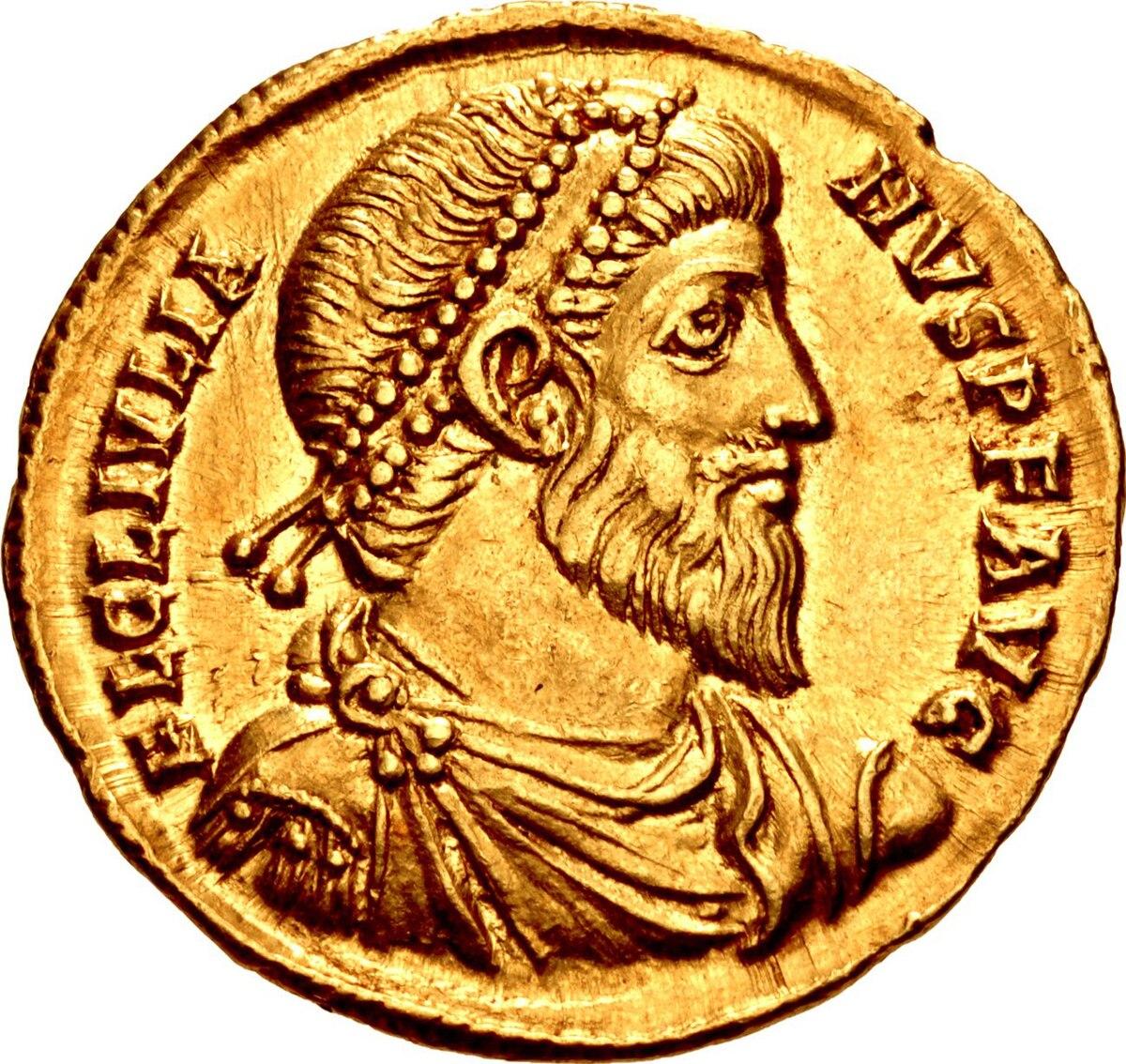
Envoys to Emperor Julian.
The Roman historian Ammianus Marcellinus records that delegates from the 'Divi' — the Maldivians — arrive at the court of Emperor Julian bearing gifts. Centuries later, archaeologists will dig a Roman denarius from a buried Buddhist temple on Thoddoo, confirming the Mediterranean touched these atolls long before any European ship.
In Book 22 of his Res Gestae, the Roman historian Ammianus Marcellinus lists the embassies that arrived at the court of Emperor Julian in 362 CE. Among the Persians, Armenians and Indians, he names the 'Divi' — a people from far islands who travelled to offer gifts and diplomatic ties to the last pagan ruler of Rome.
For centuries the reference seemed puzzling. Then, in a buried Buddhist temple on Thoddoo island in Ari Atoll, archaeologists unearthed a Roman Republican denarius of Caius Vibius Pansa — originally minted in 90 BCE but in circulation for generations afterwards. The coin is physical, datable proof that long-distance trade between the Mediterranean and the Maldivian reefs was real.
It is a quiet thing to hold a small silver Roman coin pulled from beneath the coral foundations of a Maldivian temple. A thousand miles of ocean, a thousand years of silence, and suddenly the two ends of a trade route touch.
From the Divi and the Serendivi, who are sunburnt and live near the sun, legations came bearing gifts.
Continue the timeline.
- Ammianus Marcellinus, Res Gestae (Book 22, ch. 7)
- Mikkelsen, Egil. Archaeological Excavations on Kaashidhoo, Maldives (Oslo, 2000)
Two thousand years of history — one extraordinary place to experience it.
The atolls in this story are the islands you can stay on today: private-island resorts and overwater villas, planned by a team that works from inside the Maldives.