
The India–China Pendulum.
The archipelago becomes a proxy in the Indian Ocean's great-power contest. Yameen pivots to Beijing, Solih swings back toward Delhi, and Muizzu campaigns on 'India Out' in 2023 — only to quietly reverse course a year later, accepting Indian climate aid and inaugurating an Indian-funded Ministry of Defence building. Sovereignty, the Maldives learns again, is a balancing act.
The Maldives' modern geopolitics is best understood as a pendulum. Under Abdulla Yameen (2013–2018), the country swung hard toward Beijing — Belt and Road loans, a China-built bridge from Malé to Hulhulé, and an 'India Out' foreign policy that shocked New Delhi. Under Ibrahim Solih (2018–2023), it swung back: 'India First' became the official stance, and a comprehensive security agreement brought Indian radar stations, joint patrols, and search-and-rescue aircraft to the islands.
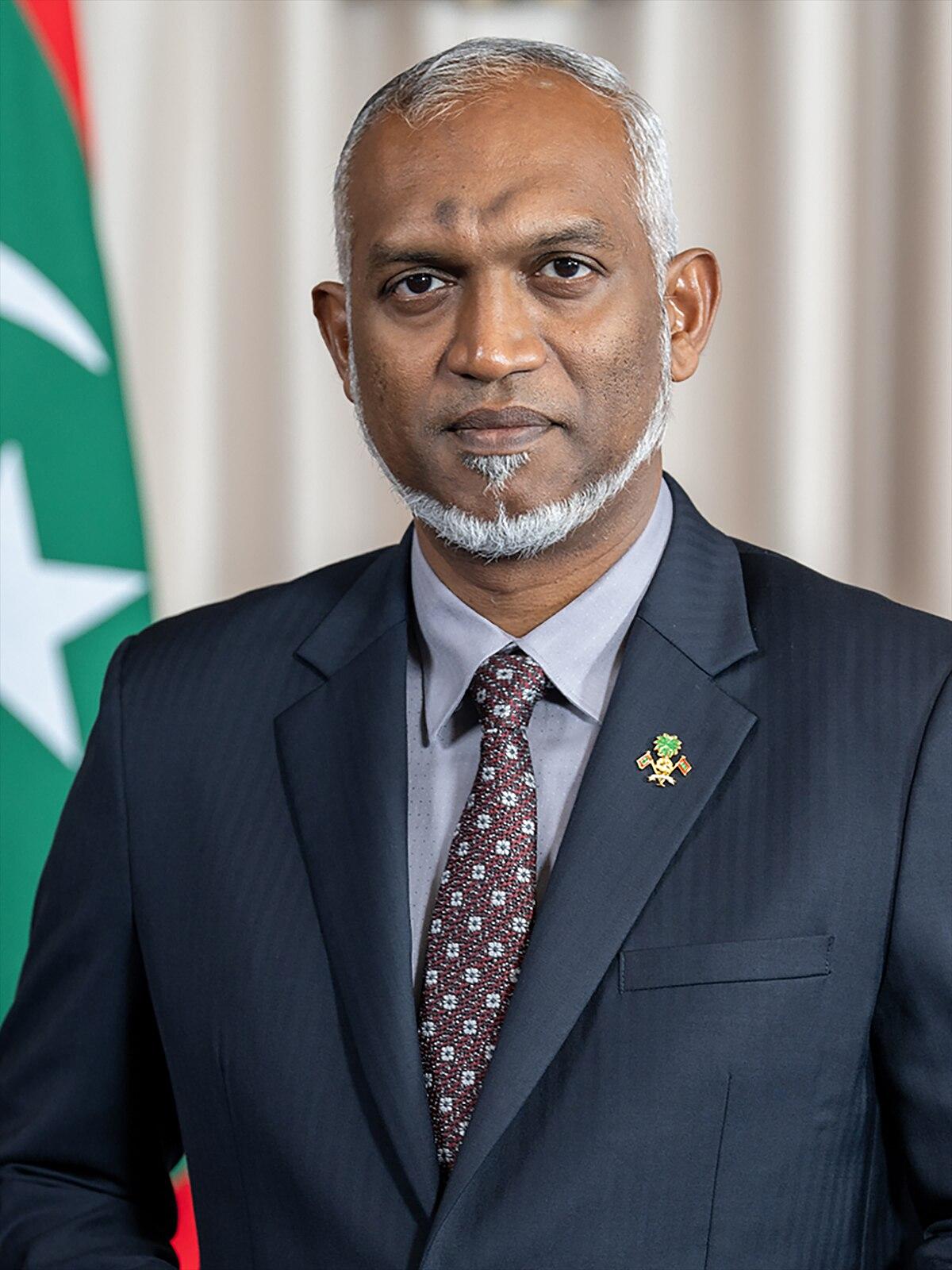
Dr. Mohamed Muizzu, winning the 2023 election on a renewed 'India Out' platform, pushed the pendulum back again. His first state visits were to Turkey and China, deliberately snubbing Delhi. He demanded the withdrawal of Indian military technicians. In early 2024, three of his deputy ministers mocked Prime Minister Modi on social media, triggering a 'Boycott Maldives' campaign among Indian tourists that threatened the bedrock of the Maldivian economy almost overnight.
The reversal that followed was swift and pragmatic. Facing a fiscal crisis and a collapse in tourist arrivals, Muizzu dismissed the offending deputy ministers, wound down the 'India Out' campaign, and welcomed Indian External Affairs Minister S. Jaishankar to Malé as 'one of our closest allies'.
By late 2024 the Muizzu administration was signing on to a 'Comprehensive Economic and Maritime Security Partnership' with New Delhi. India funded a $100 million climate adaptation programme bringing safe drinking water to 32 islands. Modi and Muizzu jointly inaugurated a new Indian-funded Ministry of Defence building in Malé. India doubled training slots for the Maldives National Defence Force. The lesson, quietly absorbed, was the same one Maldivian monarchs had been absorbing for a thousand years: the archipelago's economic survival and security are inseparable from its immediate neighbours.
Continue the timeline.
- Wikipedia — Sinamalé Bridge
- Wikipedia — China–Maldives relations
- Britannica — Maldives: The 21st century
Two thousand years of history — one extraordinary place to experience it.
The atolls in this story are the islands you can stay on today: private-island resorts and overwater villas, planned by a team that works from inside the Maldives.