The largest hard-shelled sea turtle, named not for its shell but for the green fat beneath it — a legacy of its seagrass diet. Adults are among the ocean's few large herbivores, and their grazing keeps seagrass meadows healthy. After a carnivorous, open-ocean youth they switch to a vegetarian life on coastal flats.
- Size
- Up to ~120 cm, ~160 kg
- Weight
- Typically ~68–190 kg.
- Diet
- Adults herbivorous (seagrasses, algae); juveniles eat small invertebrates.
- Lifespan
- Long-lived, commonly 70+ years.
- Depth
- Shallow seagrass/algae flats, typically under 20–40 m.
- Reproduction
- Matures at 25–35 years; nests every 2–5 years, clutches of ~110–115 eggs.
- Snorkel or dive
- Snorkel + dive
- Best season
- Year-round; nesting Jun–Sep
- Conservation
- Vulnerable (Indian Ocean subpopulation)
How to recognise it
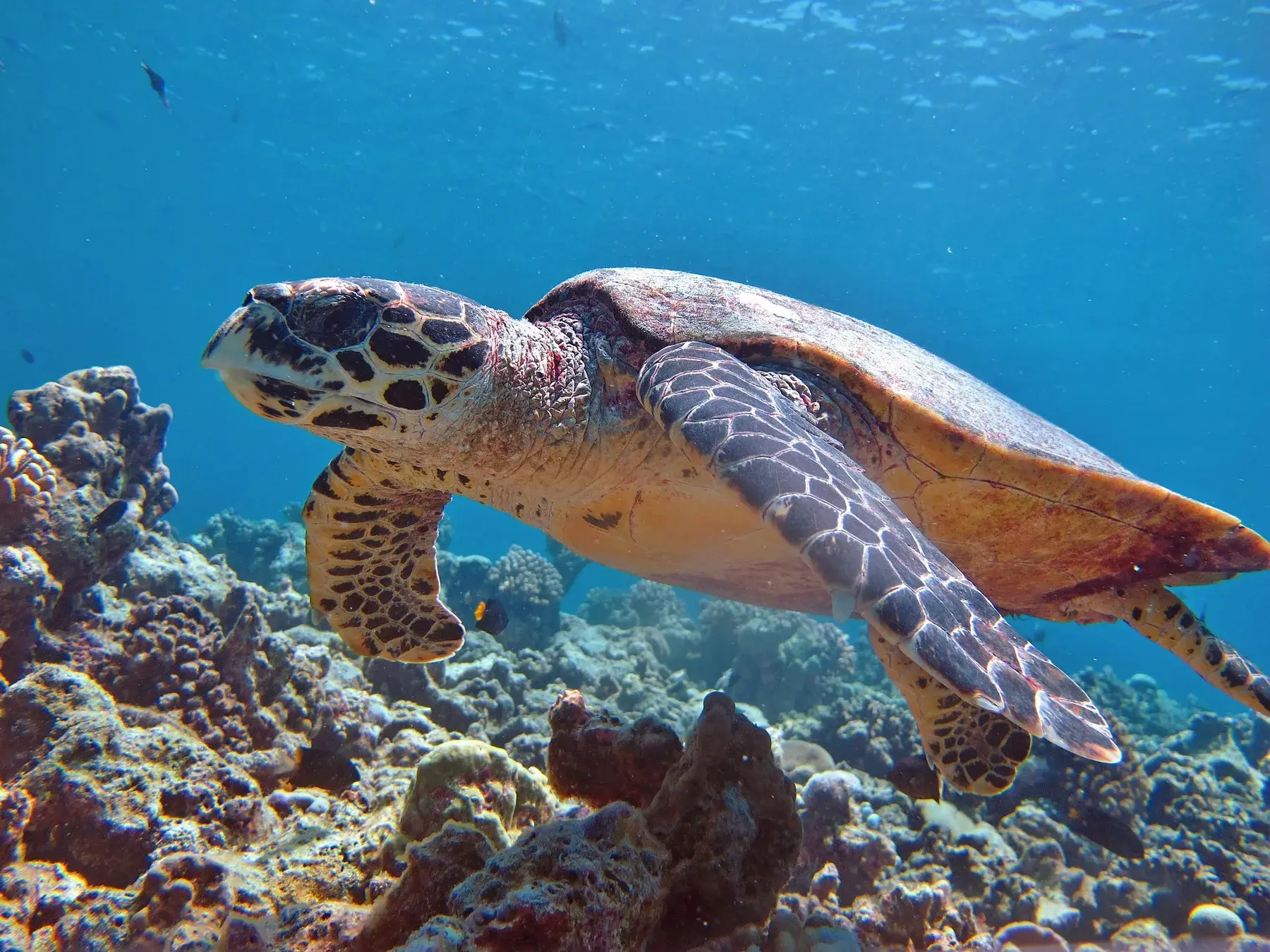
Rounded blunt head with a single pair of prefrontal scales; smooth non-overlapping scutes.
Behaviour in the wild
Adults largely herbivorous (seagrass/algae); often seen grazing or resting on the reef.
Where to see it in the Maldives
The main nesting sea turtle in the Maldives; seen on house reefs and seagrass beds atoll-wide.
Visual field notes
See green turtle from more than one angle.
3 human-reviewed photographs chosen for identity, habitat and behaviour.
01 · Field portrait · Species reference
PhotoDominik KellerCC BY-SA 3.0web-adapted
02 · Habitat · Maldives photograph
PhotoAhmed Abdul Rahman for MDC Seamarc MaldivesCC BY-SA 4.0web-adapted
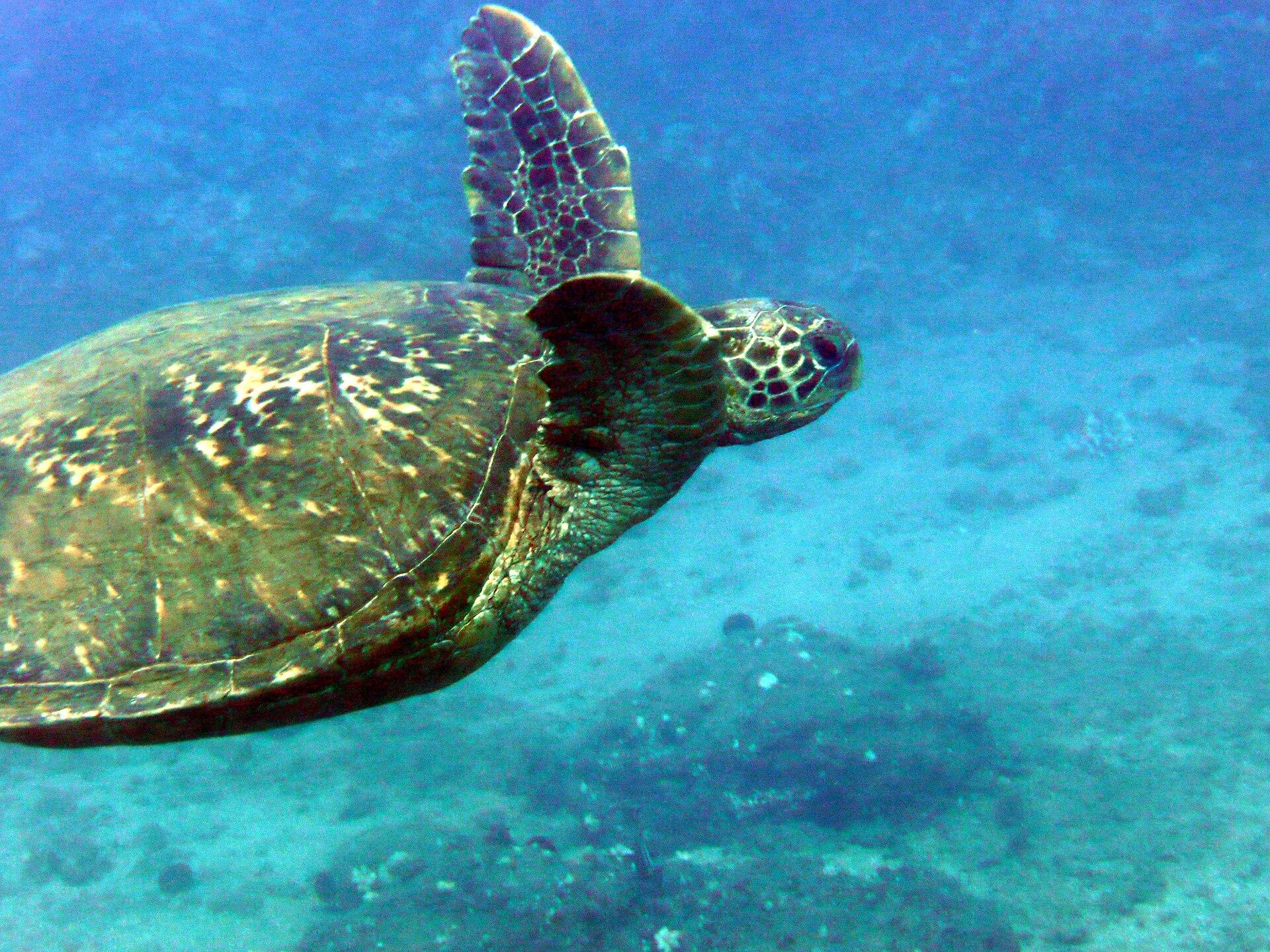
03 · Behaviour & scale · Maldives photograph
Photowardyboy400CC BY 2.0web-adapted
Recorded locations
Build a trip from real sighting records.
Atolls
Dive and snorkel sites
Conservation context
Bycatch, egg/meat harvest, beach loss, the disease fibropapillomatosis, plastic, climate change.
IUCN · Vulnerable (Indian Ocean subpopulation)
Watch responsibly
Watch grazing turtles from a respectful distance; never ride, grab or surround them.
Field notes
Named for the greenish fat under its shell from its plant diet — not its shell colour.
Globally downlisted to Least Concern in 2025 after recovery — but the Indian Ocean (Maldives) subpopulation is still Vulnerable.
Collective noun · a bale of turtles
Profile references
References are shown transparently; profile copy may also include editorial synthesis. Seasons and sightings vary with wild conditions.