

Every flight into the Maldives traces the same long arc across the Indian Ocean, and somewhere off the wing a single green island fills the window — mountains stacked behind a fringe of white surf, rivers braiding through coconut, a coastline that runs on far longer than a country that size has any right to. The Maldives is a horizontal country: a flat scatter of reef and sandbar, all sea and sky, nothing taller than a palm. Sri Lanka is the vertical one — jungle, tea terraces, eight UNESCO World Heritage sites, leopards, ruined royal cities, and a beach for every mood, stitched all the way around the edge.
For twenty years we have sold the Maldives as a full stop — the place you go to do nothing, exquisitely. Sri Lanka is the sentence that comes before or after it. Barely ninety minutes in the air separate Malé from Colombo. That short hop is the entire reason we added it.
This is our field guide to the island next door — coast by coast — and the resorts we book along every mile of it.
> A note on how we sell this. Our Sri Lanka collection is contracted and priced exactly the way our Maldives portfolio is: directly, at trade rates, built into one seamless itinerary. Everything named below is bookable through our team today. Browse the live Sri Lanka collection, or talk to us and we will quote any of it.
Why a Maldives specialist added Sri Lanka
The twin-centre is the oldest move in Indian Ocean travel, and it works because these two destinations are opposites that happen to keep the same calendar.
The Maldives gives you stillness — an overwater villa, a house reef, the discipline of having nowhere to be. Sri Lanka gives you the opposite: a country you move through. Morning surf at Hikkaduwa, lunch inside a 17th-century Dutch fort, an afternoon train hugging the coast with the doors open, a dawn safari among wild elephants. One is a place to be still in; the other is a place to be curious in. The honest pitch we give clients is that this is an "and," not an "or" — a week of doing nothing in the Maldives lands very differently after, or before, a week of doing everything in Sri Lanka.
And the timing is kind. Sri Lanka's marquee south-coast season — roughly December to April — is precisely the Maldives' own high season, so the two halves of a trip slot together without anyone chasing weather across a calendar.
The Golden Coast — Bentota, Beruwala and the road south from Colombo
Turn south out of Colombo and the first stretch of coast is the classic one: the wide, palm-backed beaches of the south-west, threaded by the old Galle Road and the river mouths that open onto the sea. This is Geoffrey Bawa country — the late architect who all but invented tropical modernism kept his garden estate, Lunuganga, just inland from Bentota, and his fingerprints are all over the way Sri Lanka builds by the sea.
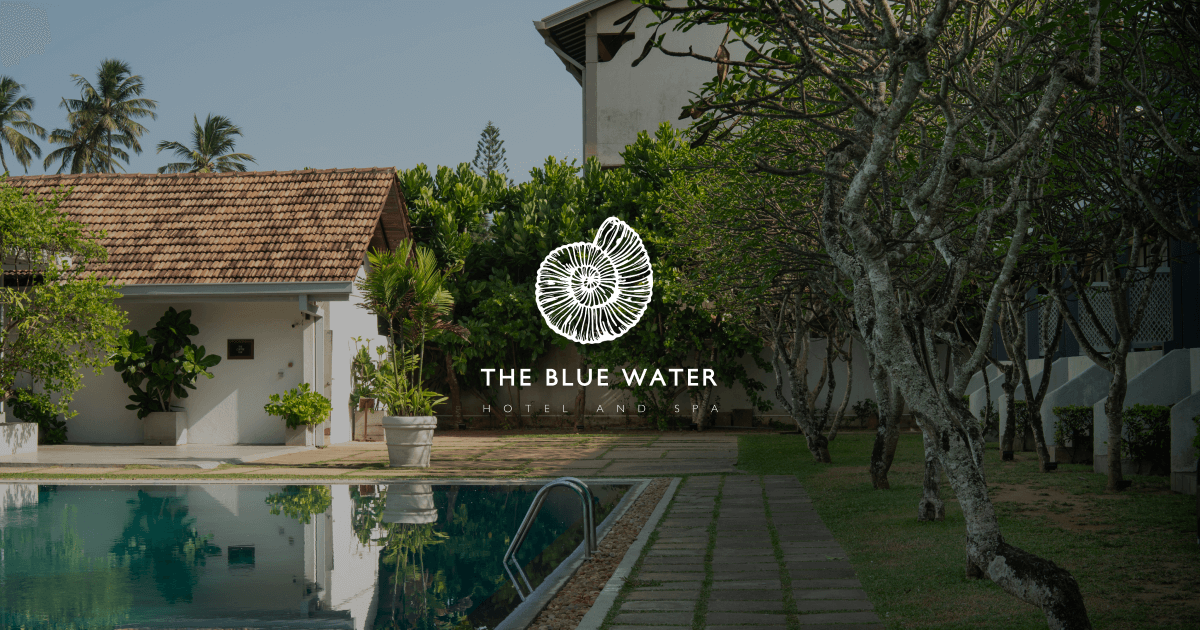
The most literal expression of that is The Blue Water Hotel & Spa at Wadduwa — a genuine Bawa design, all clean white geometry, reflecting pools and a colonnade that frames the ocean like a painting. Up the coast at Beruwala, Cinnamon Bey is the big, polished, family-friendly all-rounder, with The Eden and Earl's Reef rounding out the beach. At Bentota itself, NH Bentota Ceysands sits on a slender spit between river and sea — you reach it by a short hotel ferry, which children never forget — while Joe's Resort Bentota stretches along four kilometres of the Turtle-Village shoreline at Induruwa, where Oasey Beach Hotel and the boutique Temple Tree Resort & Spa also keep their doors. Further options fan out along the belt: Avani Kalutara on the Kalu river mouth, Citrus Waskaduwa with its glass-and-sea modern lines, and the 30-acre all-inclusive Club Palm Bay up at the Marawila fishing village.
Surf, reef and ramparts — Hikkaduwa, Galle and Unawatuna
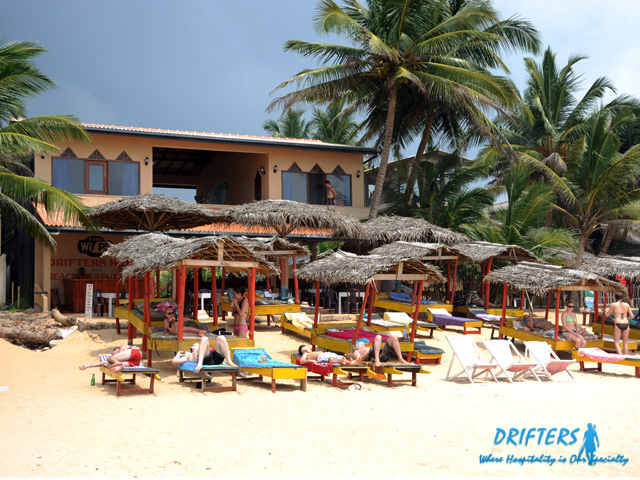
Keep going and the coast gets younger and louder. Hikkaduwa is the original Sri Lankan surf town — a reef break right off the sand, a marine sanctuary you can snorkel straight into, and a beach strip that has been drawing wave-chasers since the 1970s. Drifters Hotel sits directly opposite the main break; Hikka Tranz by Cinnamon is the slick contemporary anchor; and Coral Sands, Coral Rock by Bansei, Citrus Hikkaduwa, Lanka Super Corals, Kai Hikkaduwa and the cheerful Lucky Elephant give the town a property for every budget and temperament.
Twenty minutes on lies Galle — its Dutch-built fort a walled, cobbled, salt-bleached UNESCO World Heritage town that is reason enough to fly here. Radisson Blu Resort Galle is the international flag on its doorstep. Around the headland, the sheltered crescent of Unawatuna is one of the south's most swimmable bays, ringed by a cluster of stays from the five-star Araliya Beach Resort & Spa and the rooftop-infinity Joe's Resort Unawatuna to the boutique Elaya Resort, Hotel Sevonra, Amor Beach Villa and the laid-back Surf Una Beach Hotel.
Turtles, whales and the wild south — Weligama to Tangalle
The deep south is where Sri Lanka turns from beach holiday into something closer to a nature documentary. Weligama is the country's great beginner-surf bay, and Weligama Bay Marriott presides over it with its curved, wave-shaped facade. Cool little Ahangama next door is the surfer-design crowd's current darling, home to clifftop Garton's Cape.
Off Mirissa and Weligama, from roughly November to April, blue and sperm whales cruise the deep water just offshore — one of the most reliable big-whale encounters on earth. Back up the coast at Kosgoda, turtle hatcheries release babies into the surf at dusk, and Sheraton Kosgoda Turtle Beach Resort is named for exactly that. Nearby Ahungalla is home to the big all-inclusive Hotel Riu Sri Lanka.
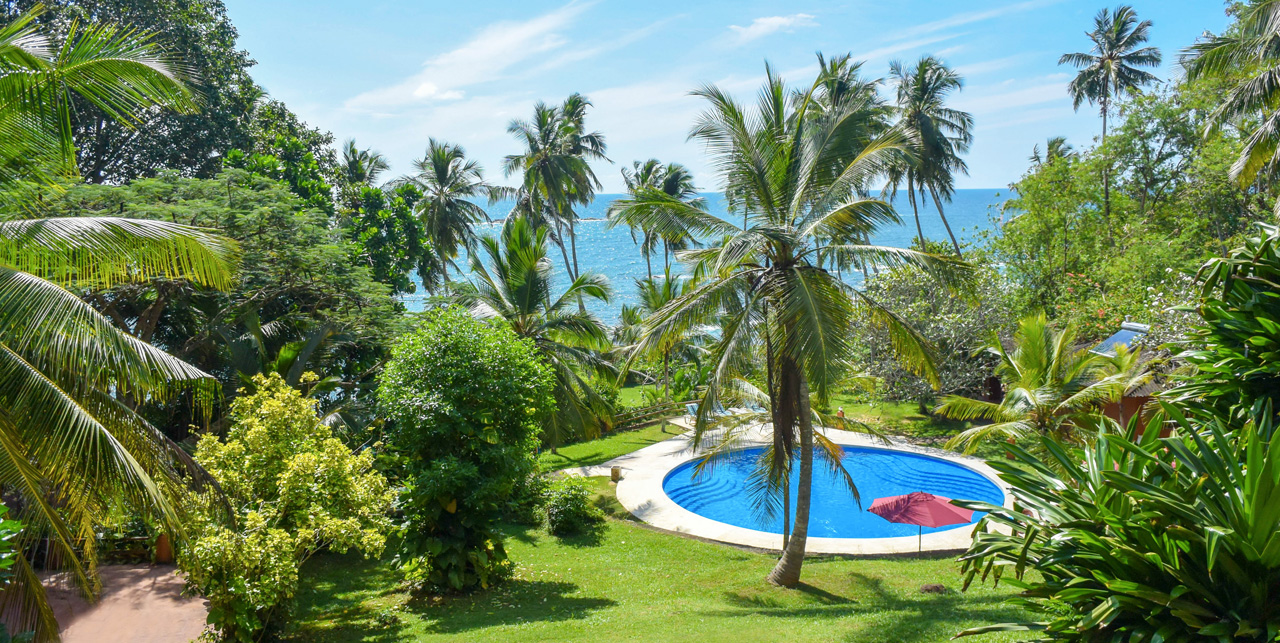
Then the road empties out toward Tangalle, where the beaches go wild and near-deserted and Yala's leopards prowl an hour inland. Here you will find the Ayurveda-and-yoga retreat Eva Lanka Hotel, the long-established beachfront Lagoon Paradise Beach Resort, the clifftop Dickwella Resort & Spa and the breezy Sundowners Hotel.
The other coast — Pasikudah and the east
Here is the move most first-timers miss. Sri Lanka has a second coast, on the far side of the island, and it keeps the opposite calendar. When the south-west turns wet in May, the east coast comes into its own — and its centrepiece, Pasikudah, is a bay so wide and shallow you can wade out for hundreds of metres over warm, glassy, impossibly turquoise water. It is the closest Sri Lanka comes to looking like the Maldives.
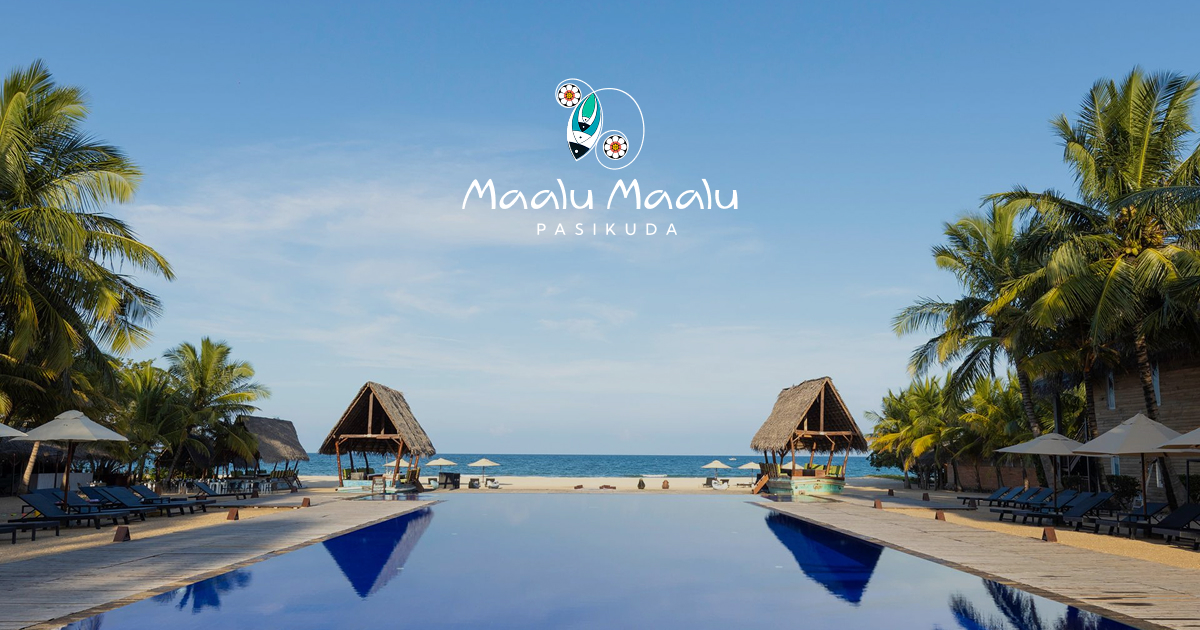
The east is also where the island's quietest luxury hides. There is a neat full-circle to it: Sun Siyam Pasikudah, a polished five-star, is run by Sun Siyam — the very same Maldivian group behind several of the resorts we sell across the atolls. Alongside it, Uga Bay by Uga Escapes is the refined design choice, while Maalu Maalu Resort & Spa styles its rooms as wadiya — the thatched, cadjan-roofed cabanas of the local fishermen. Amaya Beach, Marina Passikudah and Serenade Beach Hotel complete the bay, all of them steps from that long shallow shelf of reef.
When to go: the island with two clocks
This is the single most useful thing to understand about Sri Lankan beaches, so we will say it plainly. The island runs on two opposite monsoon clocks, which means there is always a coast in season:
- South & west coasts (Bentota, Galle, Unawatuna, Tangalle): best December to April — dry, calm and sunny, which is also peak Maldives season.
- East coast (Pasikudah and beyond): best May to September, when the south-west turns showery.
How we put it together
A great Sri Lanka trip is not a single hotel — it is a route. The version we build for clients usually threads two or three of the coasts above into a moving itinerary: a private driver-guide who actually knows the back roads, a leg of the famous coastal railway taken with the doors open and the sea sliding past, a fort wander in Galle, a dawn safari, and then the beach to land on at the end of each day.
And then, when the curiosity is spent, the full stop: the ninety-minute flight south to the Maldives, an overwater villa, and a week of doing gloriously nothing. We sequence both halves as one booking, with the transfers, the timings and the season all lined up — the same way we have built Maldives itineraries since 2006.
If you are a travel agent, the entire Sri Lanka collection is available to you at trade rates through our agents portal. And if you are planning your own escape, tell us what you are dreaming of — a fortnight split between two islands, a surf-and-safari road trip, a quiet Ayurvedic reset on a wild southern beach — and we will price the whole thing, coast to coast.
Browse the full Sri Lanka collection — or tell us your dates and we will build the trip around it.
The island you keep flying over has been waiting the whole time. Next trip, stop.
Frequently asked
Common questions
How far is Sri Lanka from the Maldives?
Colombo is barely ninety minutes by air from Malé, with several flights a day. That short hop makes Sri Lanka the natural twin-centre for a Maldives trip — a week of culture, surf and safari paired with a week of overwater stillness, booked as one itinerary.
When is the best time to visit Sri Lanka's beaches?
It depends which coast. The south and west coasts — Bentota, Galle, Unawatuna and Tangalle — are at their best from December to April, the same months as Maldives high season. The east coast around Pasikudah shines from May to September. There is always a coast in season.
Can I combine Sri Lanka and the Maldives in one trip?
Yes — it is the trip we most often build. We sequence both halves as a single booking, lining up the transfers, internal flights and seasons so the two islands flow together seamlessly.
What is there to do in Sri Lanka beyond the beach?
A great deal: the UNESCO-listed Galle Fort, blue-whale watching off Mirissa, leopard safaris at Yala, the hill-country tea estates and the famous coastal railway. Most clients pair their beach time with a moving itinerary led by a private driver-guide.
Are these Sri Lanka resorts bookable now?
Yes. Our full Sri Lanka collection is contracted at trade rates and bookable through our team today. Tell us your dates and which coast you have in mind, and we will quote any property in this guide.
Written by
Resortlife Editorial
The editorial team at Resortlife Travel — a Maldives DMC since 2006, writing from Malé, London, and Valencia. Our guides are built on first-hand reporting, contracted-rate knowledge, and two decades of agent relationships.


