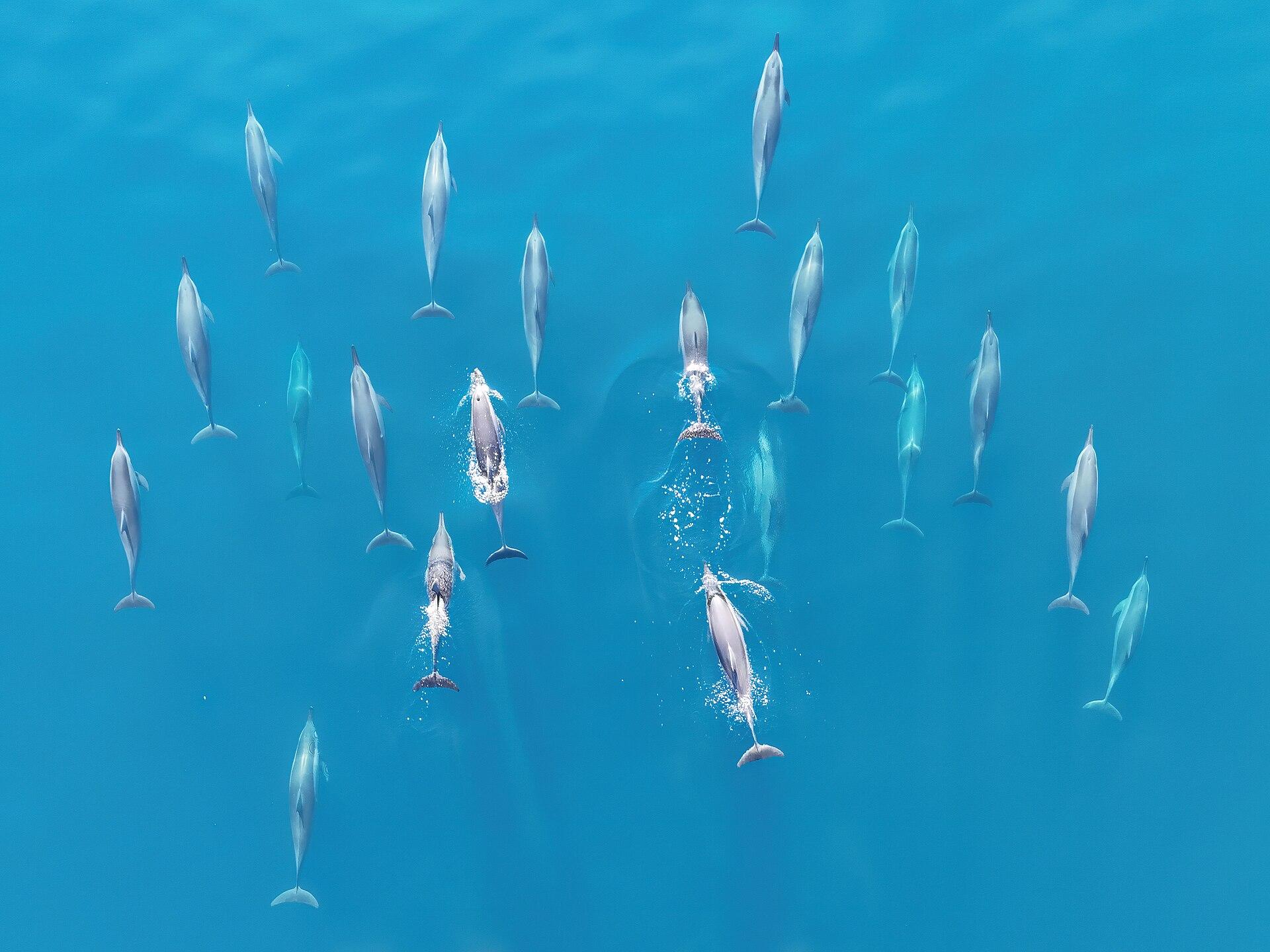
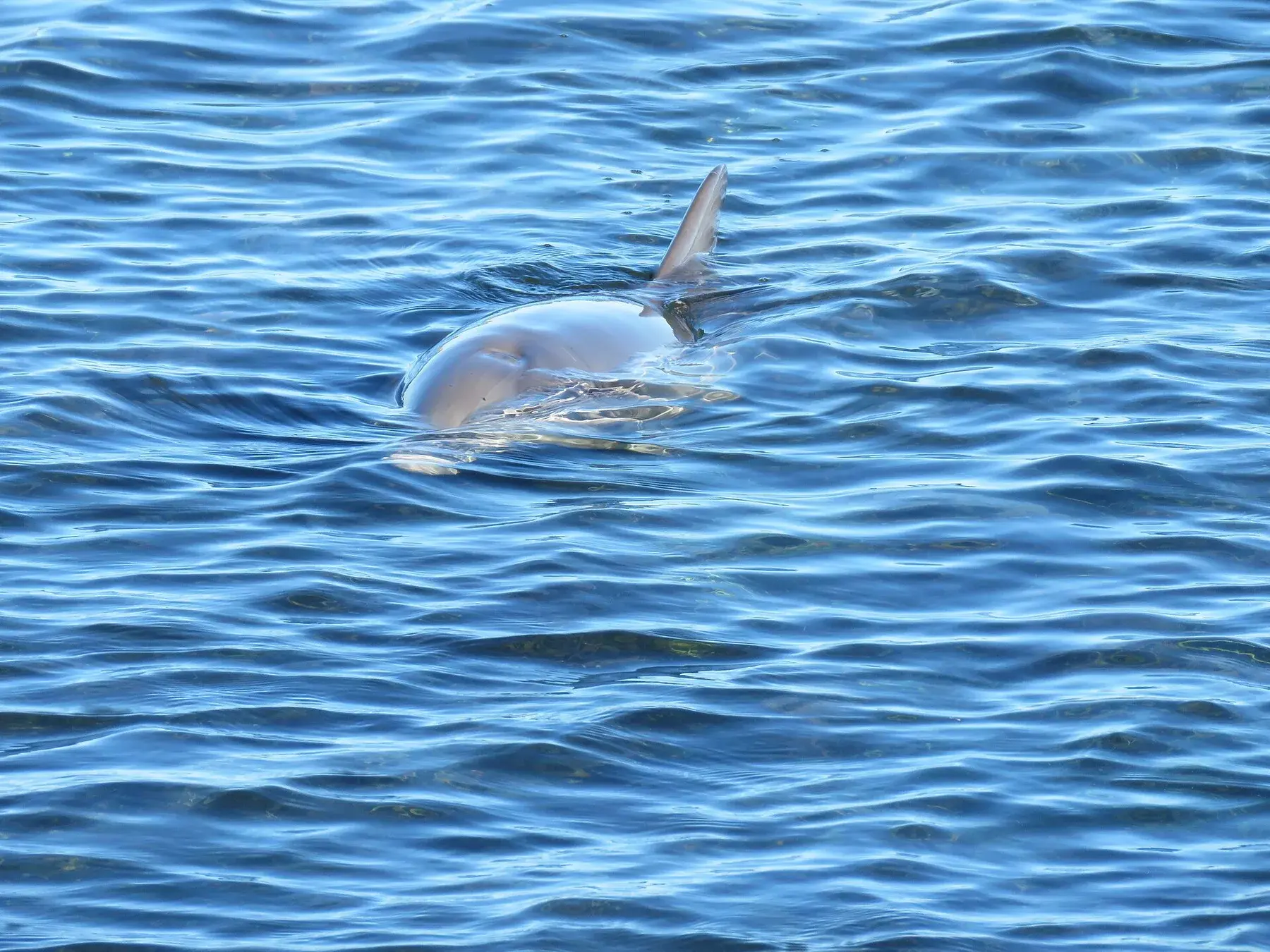
The familiar, perpetually "smiling" dolphin of the Maldives is usually the Indo-Pacific bottlenose. Highly intelligent and social, these dolphins live in fluid groups, use signature whistles as names, and have been documented using tools. They are frequent, confident bow-riders around Maldivian boats.
- Size
- ~2–4 m
- Weight
- Indo-Pacific bottlenose to ~230 kg; common bottlenose heavier.
- Diet
- Mainly fish (~87%) plus squid and octopus; opportunistic and varied.
- Lifespan
- Long-lived, often 40–50+ years.
- Depth
- Mostly shallow coastal waters, generally under 300 m.
- Reproduction
- ~12-month gestation; calves dependent 2–4 years.
- Snorkel or dive
- Boat-based watching
- Best season
- Year-round
- Conservation
- Least Concern (aduncus Near Threatened)
How to recognise it
Robust grey body, short stubby bottle beak, tall falcate dorsal fin.
Behaviour in the wild
Highly social and inquisitive; readily bow-rides boats; smaller, calmer pods than spinners.
Where to see it in the Maldives
Across the atolls but less common than spinner dolphins; seen on dolphin cruises and near channels.
Visual field notes
See bottlenose dolphin from more than one angle.
3 human-reviewed photographs chosen for identity, habitat and behaviour.
01 · Field portrait · Species reference
PhotoCalistemonCC BY-SA 4.0web-adapted
02 · Behaviour & scale · Species reference
PhotoGiles LaurentCC BY-SA 4.0web-adapted
03 · Habitat · Species reference
PhotoCalistemonCC BY-SA 4.0web-adapted
Conservation context
Bycatch, habitat degradation, pollution, boat strikes and disturbance.
IUCN · Least Concern (aduncus Near Threatened)
Watch responsibly
Keep a steady course and let dolphins choose to approach; never feed or jump in to chase.
Field notes
Among the most intelligent animals — they use signature name whistles to identify each other.
Some populations carry sponges on their beaks as foraging tools — culture passed down through families.
Collective noun · a pod of dolphins
Profile references
References are shown transparently; profile copy may also include editorial synthesis. Seasons and sightings vary with wild conditions.